Compare London day trips by train with organised tours on cost, time and effort for Oxford, Cambridge, Windsor, Brighton, Stonehenge and more.
Train vs Tour: The Options at a Glance
Anyone planning London day trips by train eventually hits the same fork in the road: book a seat on National Rail and do it yourself, or pay a tour operator to handle the logistics and narration. Both get you out of the city and back by evening. They do it in very different ways, at different costs, and with different amounts of your own effort required.
The honest starting point is that neither option is universally better. A solo traveller with a railcard and no fixed schedule gets far more value from the train than from a coach tour with twenty other people and a fixed 45-minute stop. A family juggling toddlers, luggage and a tight one-day window in London often does better paying more for a tour that removes the need to navigate ticket machines and platform changes. The right call depends on the destination's rail connectivity as much as on your travel style.
This comparison runs destination by destination, using relative cost bands (low, medium, high) and journey-time ranges rather than fixed prices, because train fares shift with time of day and advance booking, and tour prices vary by operator and season. Check current prices and departure times before you book either option — the point here is to get the decision framework right first.
How independent rail day trips work
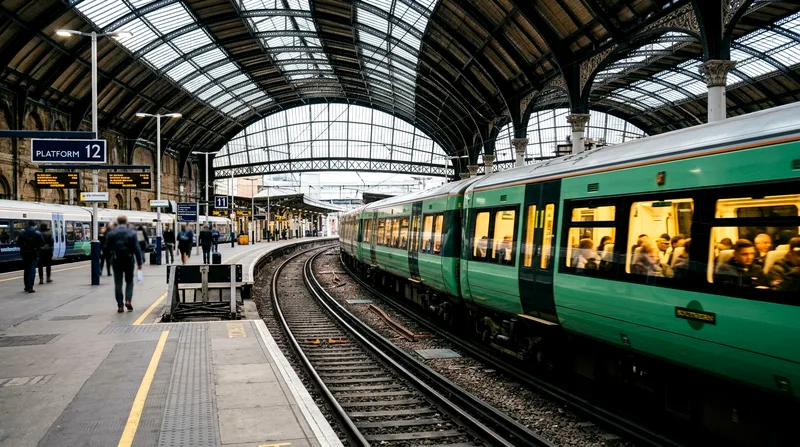
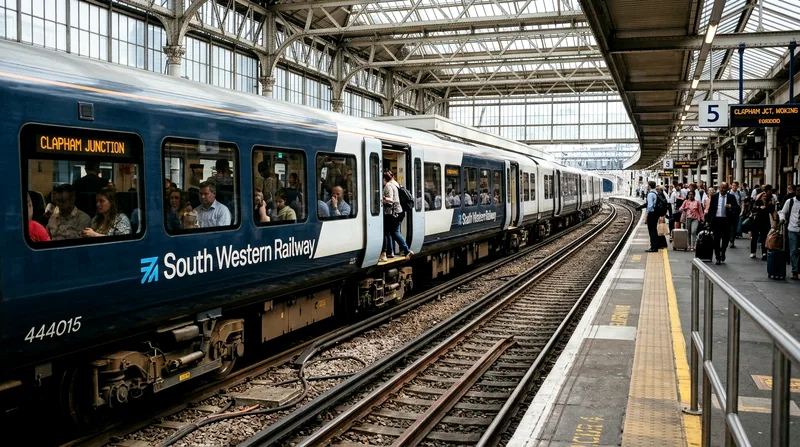
Independent rail day trips start at one of London's main stations — Paddington for Oxford and Bath, King's Cross for Cambridge, Waterloo for Windsor, Victoria for Brighton and Canterbury connections. You buy a ticket (ideally in advance for the cheapest fares), turn up at the platform, and travel on a fixed timetable but without a tour guide or itinerary. Journey times from central London range from under 25 minutes (Windsor via Slough) to around 90 minutes (Canterbury, Bath).
The appeal is flexibility: you decide how long to spend at each site, when to eat, and whether to linger in a museum or skip it entirely. The downside is that you do all the planning — checking last trains back, working out local buses from the station to the actual attraction (Windsor Castle is a 10-minute walk from Windsor & Eton Central, but Stonehenge has no station within reasonable walking distance at all), and buying attraction tickets separately.
What an organised tour includes
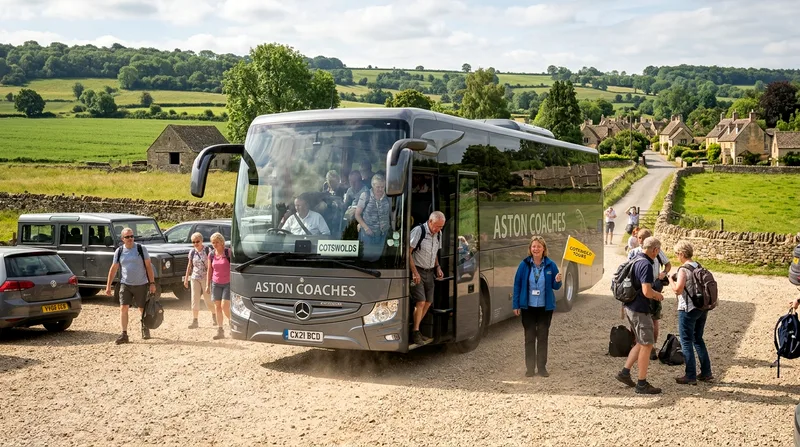
A typical organised day tour from London includes return coach transport, a guide who narrates the journey, and a fixed schedule of stops — often bundling two or three sites into one day, such as Stonehenge and Bath, or Windsor and Oxford. Entry tickets to major sites are frequently included in the price, which saves you queuing.
The trade-off is time control. Tours typically allot 60–90 minutes per stop, which is tight for somewhere like Bath but reasonable for a photo stop at Stonehenge. You also share the pace of the group — if someone's late back to the coach, everyone waits. For first-time visitors to England who don't want to think about tickets, platforms or directions, this is the main selling point: a tour converts a logistics problem into a seat-and-listen experience.
Head-to-Head: Cost, Time and Effort
Cost comparisons between train and tour are often made unfairly — people compare the cheapest possible train fare against a mid-range tour, or vice versa. A fairer comparison looks at total cost including attraction entry, and total time including the planning you'd otherwise have to do yourself.
On pure ticket price, off-peak train travel to places like Cambridge or Brighton is usually the cheaper route, particularly if you travel after the morning peak (typically after 9:30am) and book in advance. Tours cost more per person but that price often includes entry fees that would otherwise add £20–£30 per person at sites like Windsor Castle or Leeds Castle. Once you add those back in, the gap narrows — sometimes it disappears entirely for premium sites.
Cost level, railcards and hidden extras
Railcards change the maths meaningfully. A 16-25 Railcard, Two Together Railcard or Senior Railcard cuts most off-peak fares by around a third, and pays for itself within one or two return trips. If you're planning more than one rail day trip from London, buying a railcard before you travel is one of the easiest savings available — yet a lot of visitors never hear about it because it's aimed at UK residents by default, even though overseas visitors can buy one too.
Hidden extras on the train side include local buses from station to attraction (Stonehenge and Leeds Castle both need one), and the fact that walk-up same-day fares can be two or three times the advance price. On the tour side, watch for "optional" entry fees not included in the headline price, and for single-supplement charges if you're travelling alone. Always check what's actually included before comparing the headline number.
Time on the ground, flexibility and crowds
By train, you control your own clock. Arrive in Oxford at 10am, and you can stay until the last convenient train back — often as late as 9 or 10pm — giving you six to eight hours on the ground rather than the 3–4 hours a tour typically allows once travel time is subtracted. That matters enormously at a place like Cambridge, where wandering the colleges and punting on the river rewards unhurried time.
Tours compress this. A one-day Stonehenge and Bath tour might give you 45 minutes at Stonehenge and 2 hours in Bath — workable for Stonehenge (there's only so much you can do there), tight for Bath. Crowds are also a factor: tour coaches often arrive in blocks, meaning you hit a site at the same time as several other coachloads, whereas an independent early train gets you there before the crowds build.
Destination by Destination: Which Wins?
This is where the decision actually gets made. Some destinations are so well served by rail that booking a tour makes little sense unless you specifically want a guide. Others have such poor public transport links that doing it independently eats your whole day in transfers and waiting for infrequent buses.
Well-connected towns like Oxford, Cambridge and Windsor favour the train, while Stonehenge and Leeds Castle favour a tour.
London day trips by train vs tour: which wins for each destination
| Destination | Train journey time | Train difficulty | Better option |
|---|---|---|---|
| Oxford | approx. 55–65 min | Easy, direct | Train |
| Cambridge | approx. 50–80 min | Easy, direct | Train |
| Windsor | approx. 25–55 min | Easy, short connection | Train |
| Brighton | approx. 50–80 min | Easy, direct | Train |
| Canterbury | approx. 60–90 min | Easy, check service | Train |
| Hampton Court Palace | approx. 35 min | Easy, direct | Train |
| Stonehenge | No direct station | Hard, needs bus transfer | Tour |
| Leeds Castle | No direct station | Hard, needs taxi/bus | Tour |
| Harry Potter Studios | approx. 20 min + shuttle | Moderate, shuttle needed | Either, tour simpler |
Typical figures for guidance only; exact journey times vary by train operator and time of day, so check current timetables before booking.
Easy rail wins: Cambridge, Oxford, Brighton, Windsor
Cambridge (from King's Cross or Liverpool Street, roughly 50–80 minutes), Oxford (from Paddington, about 55–65 minutes), Brighton (from Victoria or St Pancras, around 50–80 minutes) and Windsor (from Waterloo or Paddington via Slough, as little as 25–55 minutes) are all direct or near-direct, frequent, and walkable from the station to the main sights. There's no good reason to pay tour prices for these unless you specifically want a guided walking tour once you arrive, or you're travelling with someone who finds station navigation stressful.
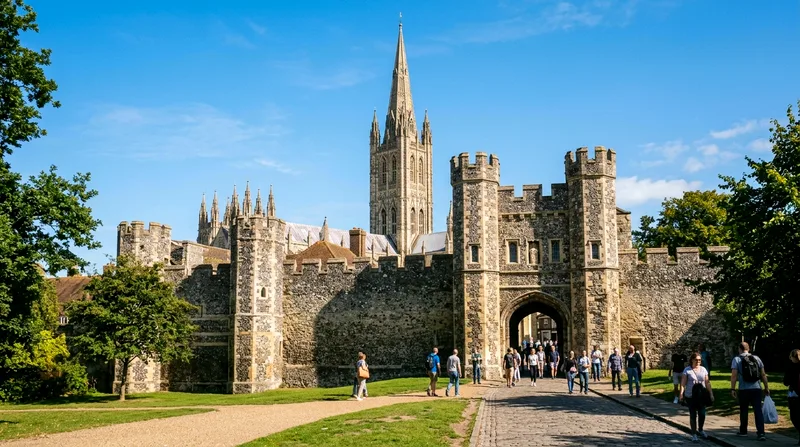
Canterbury sits in a similar bracket — about an hour from St Pancras on the high-speed service — though the slower service from Victoria takes closer to 90 minutes, so check which train you're booking. For all of these, buy an off-peak return, download the city map in advance, and you're set.
Tour-friendly: Stonehenge, Bath, Leeds Castle, Harry Potter Studios
Stonehenge has no train station nearby — the closest is Salisbury, still a 9-mile bus or taxi ride away — so independent travel means train plus connecting bus, often with long waits. A tour that bundles Stonehenge with Bath or with Avebury and Lacock solves this neatly, and it's genuinely one of the strongest cases for choosing a tour over the train.
Leeds Castle, in Kent, is similarly awkward — the nearest station (Bearsted) still needs a taxi or infrequent bus to reach the castle itself. The Harry Potter Studio Tour in Leavesden isn't on the main rail network either; it needs a train to Watford Junction plus a shuttle bus, which is doable independently but fiddly enough that many visitors prefer the direct tour coach. Hampton Court Palace, by contrast, is an easy 35-minute train from Waterloo with a short walk to the gates — skip the tour there and take the train.
When a Tour Is the Smarter Choice
It's tempting to treat "independent and cheap" as always superior, but that's not quite right. A tour earns its price when it removes a genuinely awkward transport problem, or when it lets you see several sites in one day that would otherwise require three separate train-and-bus combinations.
Hard-to-reach sites and multi-stop days
Avebury and Lacock are classic cases. Avebury's nearest station is Pewsey, still a car journey away, and Lacock has no station at all — the closest, Chippenham, needs a taxi or infrequent bus. Trying to combine both independently in one day from London is possible in theory but means a lot of waiting around for connections that run once or twice an hour. A Cotswolds or Wiltshire-focused tour typically links Avebury, Lacock, Bath and sometimes Stonehenge into a single coherent loop, which is exactly the kind of day where paying for a coach seat buys back hours you'd otherwise lose to transfers.
The same logic applies if you want to see Windsor Castle and Oxford in a single day — both are easy solo rail trips individually, but connecting them by public transport on the same day adds up to more transit time than sightseeing time. A combined tour, or simply picking one and doing it properly, usually beats trying to force two rail trips into one day.
Who Should Pick Which
Compare this to day-tripping from other European hubs and the pattern holds: from Paris, independent rail to Versailles or Giverny is straightforward and cheap, much like Oxford from London, while a multi-château Loire Valley day genuinely benefits from a tour because the rail connections are poor. From Rome, the train to Naples or Orvieto is an easy independent trip, but Pompeii-plus-Amalfi-Coast combination days tend to run as tours for the same reason Stonehenge-plus-Bath does from London — awkward onward transport at the far end.
Families, solo travellers, first-timers and budget travellers
Solo travellers and couples comfortable with public transport should default to the train for anywhere on the easy-rail list — it's cheaper, more flexible, and genuinely more enjoyable to do at your own pace. Budget travellers should buy a railcard if doing more than one trip; the saving is real and the card pays for itself fast.
Families with young children often value the tour's door-to-door simplicity enough to justify the extra cost, especially for a first visit when nobody wants to manage a toddler, a pushchair and an unfamiliar ticket machine at the same time. First-time visitors to the UK who feel unsure about buying the right ticket type should know that staff at major stations will help, and that advance tickets bought online the night before are usually both cheaper and simpler than they expect. Senior travellers should check whether a Senior Railcard makes sense before defaulting to a tour purely to avoid ticket machines — many stations now have staffed ticket windows specifically for this.
Frequently asked questions
Is it cheaper to take the train or a tour on a day trip from London?
For well-connected destinations like Oxford, Cambridge or Brighton, an off-peak advance train ticket is usually cheaper than a tour, especially if you already hold a railcard. For sites with included entry fees, like Windsor Castle or Leeds Castle, a tour can come close to or match the train-plus-ticket total once you add up separate attraction costs.
Which London day trips are easiest to do by train?
Windsor, Oxford, Cambridge, Brighton, Canterbury and Hampton Court Palace are the easiest — all have a station within a short walk of the main attraction and frequent direct or near-direct services from central London, typically running every 30–60 minutes throughout the day.
Which day trips from London are better with an organised tour?
Stonehenge, Leeds Castle, Avebury and Lacock all lack convenient direct rail access, requiring taxis or infrequent local buses from the nearest station. A tour that bundles these into a single coach route, often paired with Bath, saves significant time and hassle compared to arranging the connections yourself.
Can you visit Windsor Castle by train from London?
Yes — trains run from London Waterloo (direct, about 55 minutes) or from Paddington with a change at Slough (around 25–35 minutes total). Windsor & Eton Central and Windsor & Eton Riverside stations are both a 10-minute walk from the castle entrance, making it one of the simplest independent rail day trips from London.
Do railcards make independent day trips cheaper?
Yes, substantially. Railcards such as the 16-25, Two Together or Senior Railcard typically give around a third off most off-peak fares and are available to overseas visitors, not just UK residents. If you're taking more than one day trip from London, the card usually pays for itself within the first two journeys.