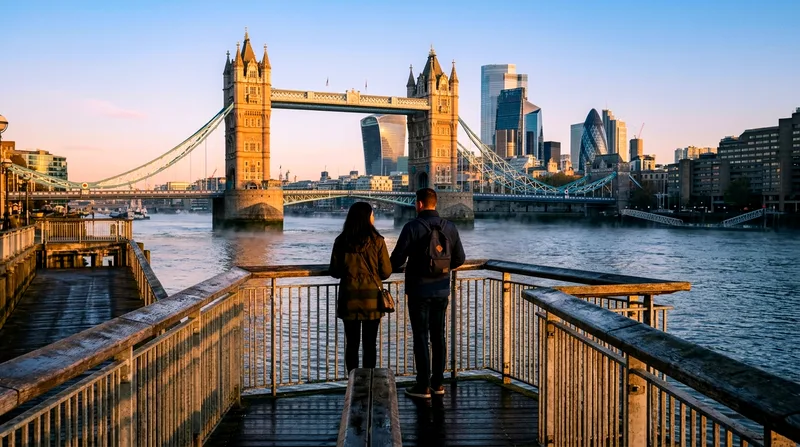
A Weekend in London: 2-Day Itinerary That Works
Plan the perfect London weekend itinerary: a fast-paced 2 days in London with pre-booked timed entries, smart routes and transport tips for city breakers.
10 min read · 21 Oct 2026
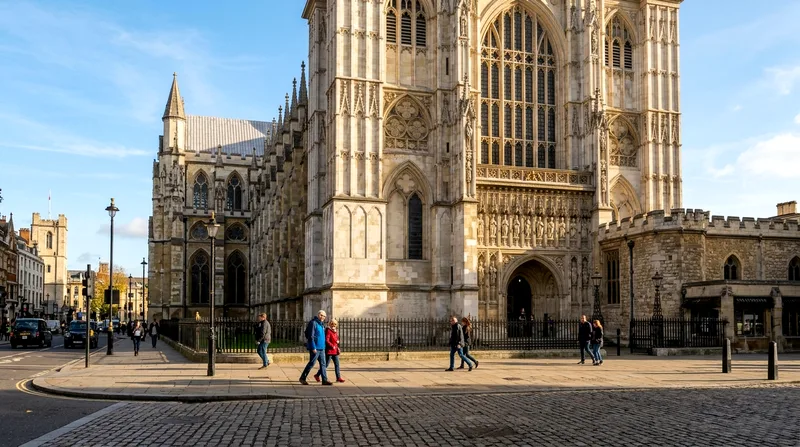
Itineraries
A practical London itinerary for 1 to 8 days, with day-by-day routes, seasonal travel tips, where to stay and the tickets worth booking ahead.
This London itinerary is built around three core days — royal and historic London, museums and South Bank, neighbourhoods and markets — that cover the city's main sights without the backtracking that wastes half of most people's first trip. If you've got longer, days four through eight layer on day trips and slower neighbourhood time rather than repeating the center at a different pace. If you've only got one day, you cut, not compress.
It suits people who want a London travel plan that's already sequenced geographically, because London is not a city where you can bounce between postcodes efficiently. Zone 1 attractions cluster roughly into Westminster/Victoria, the City/Tower, and the South Bank — plan by cluster and you save hours. It's less useful if you want a nightlife-driven trip or you're set on seeing every museum in depth; the Natural History Museum alone deserves a half-day you won't have if you're also doing Buckingham Palace that morning.
Three days covers London's core sights comfortably; beyond that, extra days are better spent on day trips and neighbourhoods than repeating the center.
London itinerary options compared by trip length, pace and focus
| Itinerary length | Pace | Core focus | Advance booking needed | Best added for extra days |
|---|---|---|---|---|
| 1 day | Fast, selective | Westminster plus one river walk | Minimal, just timed entry if open | N/A |
| 3 days | Moderate | Royal London, museums, South Bank, one neighbourhood | Yes, 2-3 key sights | N/A |
| 5 days | Relaxed | Core three days plus Camden or Greenwich | Yes, plus one tour or cruise | Greenwich, Camden |
| 7-8 days | Slow, flexible | Core days plus 1-2 day trips | Yes, plus day-trip transport | Windsor, Oxford, Bath |
Timings are typical; always check official sites for current opening hours and ticket availability before travel.
One day means picking a single area and accepting you'll return. The realistic version: Westminster in the morning, a Thames walk and The Shard viewing deck in the afternoon, dinner in Covent Garden. Three days is the sweet spot for most first-time visitors — it fits the itinerary below almost exactly and covers what most people mean by "things to do in London." Five days adds Greenwich or Camden plus a slower pace with proper museum time. Seven or eight days opens up day trips — Windsor, Bath, or Oxford are each roughly 1-1.5 hours away by train — without the trip feeling padded. Compare this to Paris, where three days covers the Louvre, Eiffel Tower and Montmartre comfortably; London's sights are more spread out, so the same three days feels busier and benefits more from advance tickets.
London seasonal travel changes what you prioritize more than what you can actually do, since most major sights operate year-round. Summer (June-August) brings longer daylight — useful for evening river walks — but also the thickest crowds at Tower of London and Westminster Abbey, so book timed entry at least two to three weeks out. Spring and autumn are the better trade-off: cooler, thinner queues, and parks like St James's and Hyde Park look better than in the grey winter months. Winter is genuinely good for museums (free, indoors, quieter) and for Christmas markets around Covent Garden and the South Bank, but expect rain most days and pack for it — an umbrella is useless in London wind, a proper waterproof jacket isn't.
Day one covers Westminster and the historic government and royal core, on foot, in a loop that avoids doubling back.
Start at Westminster Abbey for opening time — arriving right at opening avoids the worst of the queue, since this is one of the few Day 1 sights with timed-entry tickets worth booking a week ahead. From there it's a five-minute walk to Big Ben and the Houses of Parliament for exterior photos; the clock tower itself is only enterable on separate, limited tours. Walk up Birdcage Walk to Buckingham Palace, timing your arrival for the Changing of the Guard if it's running that day — it typically happens late morning on select days, more frequently in summer, so check the official Royal Household schedule before you go rather than assuming daily. Cut through St James's Park afterward for lunch — the park has reasonable café options and benches if you've packed your own.
Early afternoon, head east by Tube or a 25-minute riverside walk toward the City. This is also where families with young children might swap pace: St James's Park's pelicans and playground area are a better midday break than another queue.
Finish the day at the Tower of London — allow at least two hours if you want to see the Crown Jewels, which is the main reason people queue here, and book timed entry in advance since walk-up tickets cost more and queues can run 30-45 minutes in peak season. Walk onto Tower Bridge afterward for the view back toward the Tower and the river; the glass-floor walkway is a separate paid add-on and, honestly, skippable unless kids are with you. Dinner options cluster around Borough Market (a 15-minute walk across the bridge) or back toward Covent Garden if you want more restaurant variety and don't mind the Tube ride.
Day two shifts south and west, pairing free museums with the South Bank's river walk — one of the better-value days of any London itinerary since most of the morning costs nothing.
Pick one major museum rather than two — the British Museum (Bloomsbury) or the Natural History Museum and Science Museum cluster (South Kensington) are the two realistic options, and trying to fit both into one morning means rushing both. The British Museum is free, doesn't require a ticket for general entry, and the Rosetta Stone and Egyptian galleries alone justify two hours. If traveling with children, South Kensington's museums are generally the better pick — the Natural History Museum's dinosaur hall and the Science Museum's interactive galleries hold kids' attention longer than glass cases of antiquities.
By early afternoon, head to Borough Market near London Bridge — it's at its best between late morning and early afternoon, before the lunchtime crush thins out the better stalls. It's a food market, not a tourist trap exactly, but it is busy and some vendors are priced for tourists rather than locals, so don't expect bargains.
Walk the South Bank from Borough Market toward the London Eye — this stretch, with The Shard behind you and the Thames alongside, is the single best orientation walk in the city and takes about 40 minutes at an easy pace. The Shard's viewing deck is worth booking ahead if you want it, but it's genuinely one of the more expensive single attractions in London and the view from the free Sky Garden (reservation required, but free) at 20 Fenchurch Street is a reasonable substitute if budget matters. End the evening with a river cruise or sunset boat tour from one of the South Bank piers — a one-hour Thames cruise is the single most relaxing way to see Tower Bridge, the Tower, and the City skyline lit up, and it's worth reserving a departure time in advance in summer.
Day three is deliberately less monument-heavy and more about how Londoners actually use the city — this is the day to slow down.
Start in Covent Garden for breakfast and the morning market stalls — it's more polished and more expensive than Borough Market, with street performers in the piazza and better browsing than serious shopping. From there, choose a neighbourhood based on your interests: Notting Hill for Portobello Road's Saturday antiques market (weekdays are much quieter and less worth the trip), Shoreditch for street art and a grittier, younger feel, or Greenwich for the Old Royal Naval College and the Prime Meridian line, which doubles as a half-day river trip if you take the boat there instead of the Tube. Greenwich specifically rewards the detour; it feels like leaving London entirely for an afternoon, which Edinburgh's Old Town or Dublin's Temple Bar don't really offer as a contrast within the same city.
Spend the evening in whichever neighbourhood you chose — Shoreditch has the stronger food and bar scene, Notting Hill the better quiet dinner options. If you have five to eight days total, this is where extra time pays off best: add a full day in Camden Market and Regent's Park, a day trip to Windsor Castle (about an hour each way by train from London Paddington or Waterloo), or Oxford and Bath as full-day rail trips. Compare that flexibility to Amsterdam or Brussels, where day trips are shorter but the cities themselves run out of new ground faster — London's size is a genuine advantage once you're past day four, since you're rarely repeating a neighbourhood.
Transport is the one part of a London travel plan that trips up visitors from smaller or more walkable cities like Amsterdam or Barcelona — London is bigger than it looks on a tourist map, and the Tube is unavoidable for some legs.
Buy a contactless-enabled bank card or an Oyster card rather than single paper tickets — contactless auto-caps your daily spend, usually cheaper than buying individual Tube fares, and skips the ticket machine queue entirely. The Tube is fastest for longer east-west or cross-river hops; buses are slower but better for seeing the city and cheaper per trip, and top-deck front seats on routes like the 11 or 15 double as a free sightseeing tour. Walking works well within each day's zone as laid out above — Westminster to the Tower is too far to walk in full (about 5km), but Borough Market to the London Eye is an easy, worthwhile 40-minute riverside walk. Avoid driving entirely; the congestion charge, parking costs and traffic make it the slowest option by far.
For where to stay in London, South Kensington and Covent Garden/Bloomsbury are the two strongest options for first-timers — both sit within walking distance of multiple Day 1-3 sights and have good Tube connections everywhere else. South Kensington suits families and couples wanting a quieter, leafier base near the museums; Covent Garden suits anyone prioritizing nightlife and restaurant density but costs more and is noisier at night. Shoreditch is worth it for a younger crowd wanting nightlife over convenience, but it's a longer Tube ride from Westminster each morning. Budget travelers often do better basing in Paddington or Earl's Court — both well-connected, noticeably cheaper than Covent Garden, without being as far out as outer boroughs can feel.
Not everything needs advance booking in London — free museums don't, and most parks and markets don't either — but a handful of sights sell out or develop long queues, and booking ahead is the difference between walking straight in and losing an hour of your day.
Book timed entry for the Tower of London and Westminster Abbey at least a week ahead in shoulder season, two to three weeks ahead in summer — both regularly sell out peak morning slots. The Shard's viewing deck and the London Eye both benefit from a booked time slot too, mainly to skip the ticket line rather than because of scarcity. Buckingham Palace's State Rooms are only open seasonally (typically summer) and need separate advance tickets; the Changing of the Guard outside is free and doesn't need booking, just timing. Compare prices and availability across official and third-party sites before buying — official sites are usually cheapest but third-party bundles sometimes save money if you're hitting three or more paid sights.
A one-hour Thames river cruise or sunset boat tour is worth reserving ahead for a fixed departure time, especially in summer when popular evening sailings fill up. A half-day or full-day walking tour of the Tower of London or Westminster Abbey with a guide adds context that's easy to miss reading placards alone, and is worth it for history-focused travelers more than for families with young children. Day trips to Windsor, Oxford, or Bath are best booked as a guided coach tour if you don't want to manage train timetables yourself, though independent rail travel is cheaper and nearly as simple for confident travelers. Compare current boat tours and prices before you book — availability and departure times shift seasonally, and the booking widget on this site shows live options.
Three days is the practical minimum for covering Westminster, a major museum, the South Bank and one neighbourhood without rushing. One day works if you accept you're seeing a single area only. Five to eight days lets you add day trips to Windsor, Oxford or Bath and slower neighbourhood time in places like Greenwich or Camden.
Tower of London, Westminster Abbey, Buckingham Palace, Tower Bridge and Big Ben cover the historic core; the British Museum or the Natural History Museum cover the free-museum side. Borough Market, Covent Garden and a South Bank river walk round out most three-day itineraries, with The Shard as an optional viewpoint.
South Kensington and Covent Garden/Bloomsbury suit most first-time visitors best, given walkable access to major sights and strong Tube links. Budget travelers often do better in Paddington or Earl's Court. Shoreditch suits younger travelers prioritizing nightlife over central convenience.
Spring (April-May) and autumn (September-October) bring cooler weather, thinner crowds and lower hotel rates than summer. Summer has the longest days and busiest major attractions, so book timed tickets further ahead. Winter suits museum-heavy trips and Christmas markets but expect regular rain.
Use a contactless bank card or Oyster card on the Tube and buses rather than paper tickets, since contactless fares auto-cap daily spend. The Tube handles longer cross-city journeys fastest; walking works well within a single day's zone, like Borough Market to the London Eye.
Plan the perfect London weekend itinerary: a fast-paced 2 days in London with pre-booked timed entries, smart routes and transport tips for city breakers.
10 min read · 21 Oct 2026
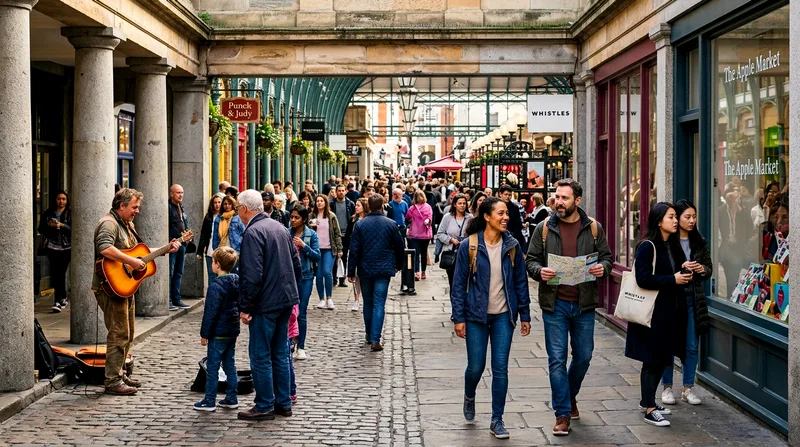
Is London worth visiting? An honest look at costs, highlights and downsides, plus how many days you need and who the city really suits.
10 min read · 21 Oct 2026
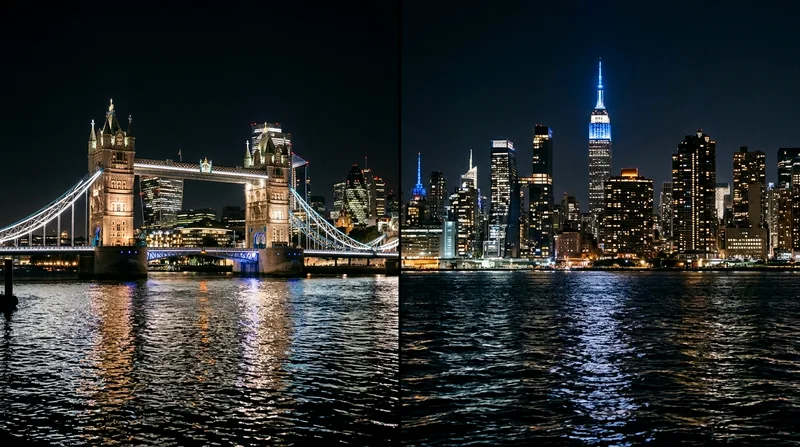
London vs New York for tourists: compare attraction costs, free museums, tours and transport to decide which city suits your travel style and budget.
11 min read · 21 Oct 2026

Compare the best London xmas markets tours, from festive lights bus rides to walking routes, plus how to book Winter Wonderland tickets and when to reserve.
9 min read · 21 Oct 2026

Plan London things to do in October with a 3-day itinerary: Halloween tours, half-term family ideas, indoor attractions and what to book ahead.
9 min read · 21 Oct 2026
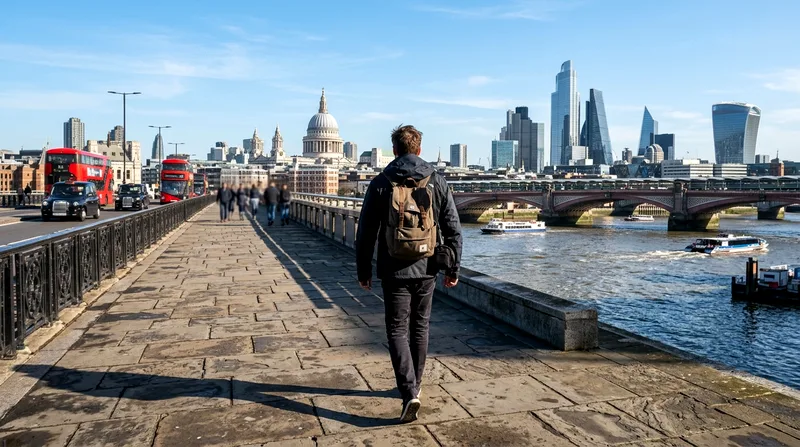
A relaxed 7-day London itinerary with headline sights, two day trips and quieter corners, plus where to stay and how to get around for an easy week.
11 min read · 21 Oct 2026
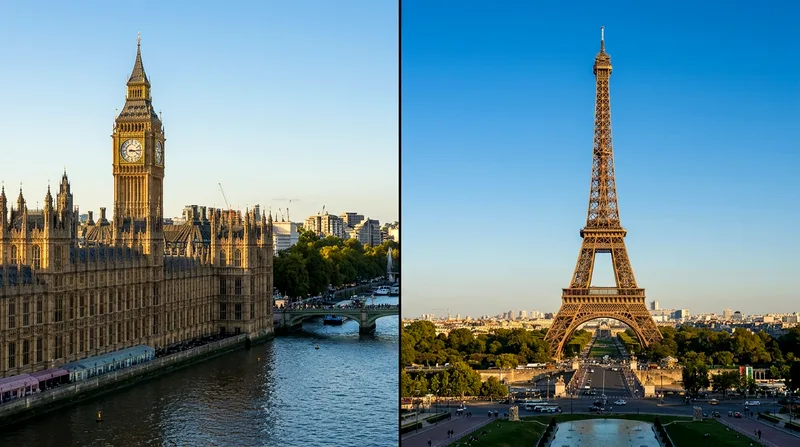
London vs Paris for a first European trip: compare costs, attraction passes, family-friendliness and ease of travel to decide which city to visit first.
10 min read · 21 Oct 2026
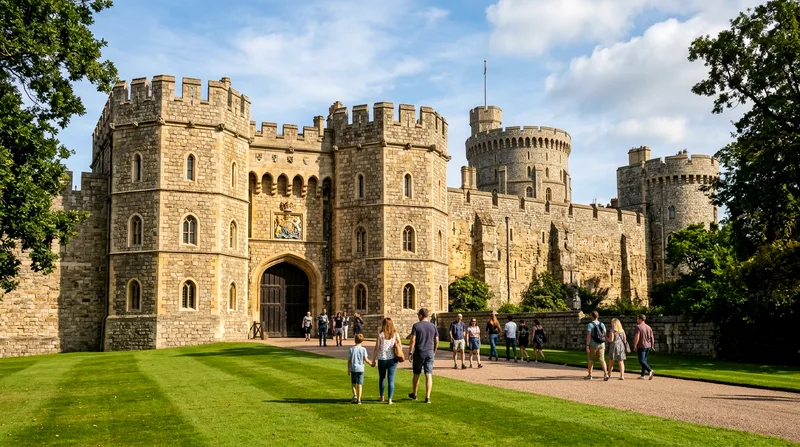
Plan 5 days in London with a day-by-day itinerary covering top sights, neighbourhoods, a Windsor Castle day trip, transport tips and where to base yourself.
12 min read · 21 Oct 2026
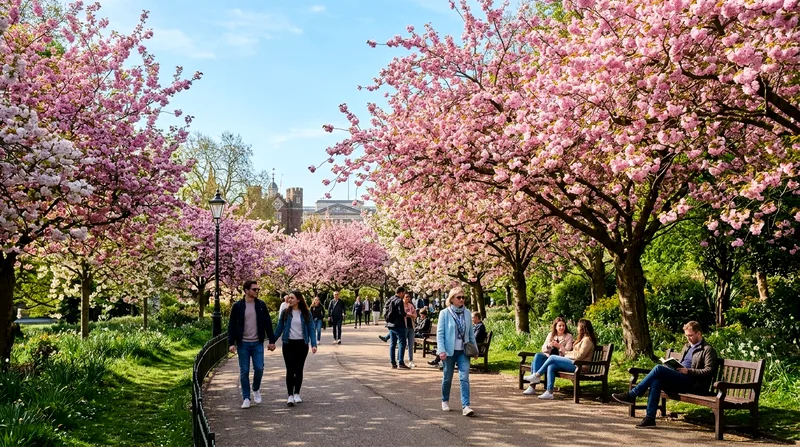
Wondering about the London best month to visit? Compare weather, crowds, events and prices month by month to pick the right time for your trip.
10 min read · 21 Oct 2026
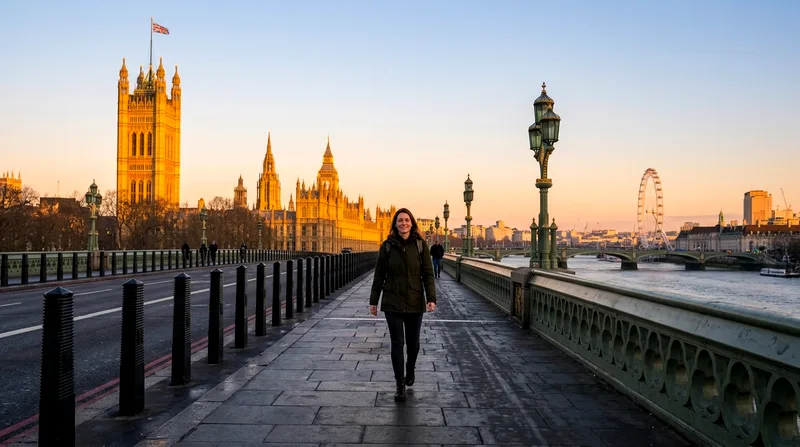
Plan one day in London with a realistic DIY route past Big Ben, the Tower and St Paul's, plus how it compares with a full-day guided tour for layovers.
9 min read · 21 Oct 2026
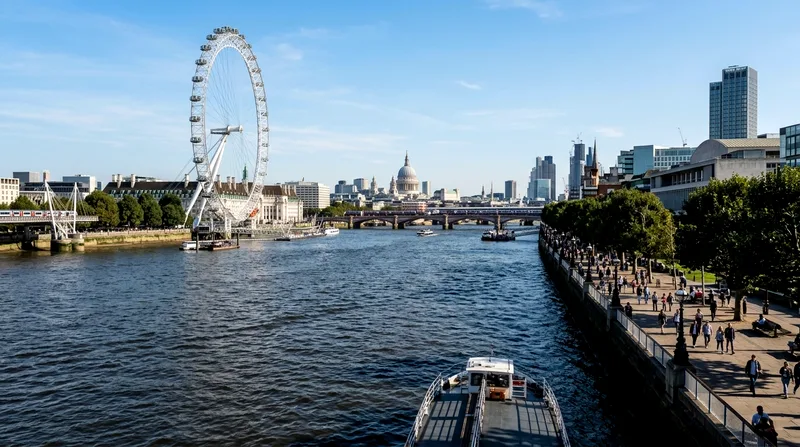
A practical London itinerary 3 days long, grouped by area to cut tube time, with pre-booking tips and where to stay for first-time visitors.
11 min read · 21 Oct 2026