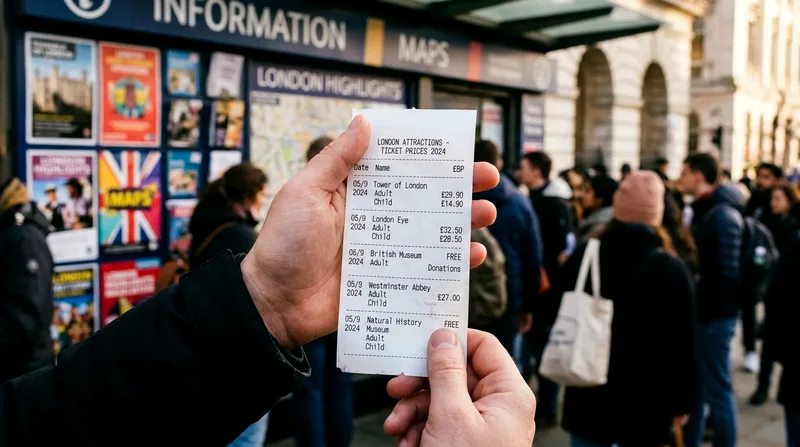
London Tickets Price Guide: What Every Major Sight Costs
See how London tickets price out across top attractions, how online and gate prices differ, and the smartest ways to book and save on every sight.
9 min read · 21 Oct 2026
Tickets & passes
Compare London attraction tickets and sightseeing passes, see which attractions need advance booking, and learn where to buy officially to skip the queue.
Buy the wrong London attraction tickets and you'll either overpay at the gate or stand in a queue that a five-minute booking would have avoided entirely. London's paid sights run on a mix of systems — some sell timed-entry slots that control crowd flow, others sell flexible day tickets you can use whenever, and a few sell fast-track add-ons that jump you past the regular line for a premium. Knowing which system applies to which attraction is the difference between a smooth morning and losing ninety minutes outside the Tower of London in a queue that wraps around the moat.
Most big-name sights — the Tower of London, Westminster Abbey, St Paul's Cathedral, Madame Tussauds, the London Eye — now sell tickets with a specified entry window, usually a half-hour or hour-long slot. You still need to show up within that window, but you're not fighting walk-up visitors for the same door. This matters more in peak months (June to August, and around Christmas) when walk-up queues at the Tower of London can run 45 minutes to over an hour, even for people who already hold a ticket but didn't book a slot.
Timed-entry means your ticket is valid only for entry during a set window, typically 30 to 60 minutes, after which you're inside for as long as you like. Fast-track is a different thing entirely — it's a separate, usually pricier ticket tier that gives you a dedicated entrance lane, bypassing the general queue altogether. The London Eye sells both standard and "fast track" capsules; the price gap is real and worth it only if you're visiting in a high season week or have a tight schedule. For Madame Tussauds and SEA LIFE London, skip-the-line tickets purchased in advance online are usually priced the same or close to standard tickets — the saving is time, not money. Don't assume fast-track always costs extra; sometimes it's simply what you get by booking online versus turning up unannounced.
Buckingham Palace is the clearest case: the State Rooms open only for a limited summer season (and some winter dates), capacity is fixed, and tickets for the busiest days sell out — book several weeks ahead if your trip falls in that window. The Tower of London, St Paul's Cathedral, and Westminster Abbey all benefit from advance timed tickets, especially on weekends and school holidays. Westminster Abbey closes to visitors on certain days for services — always check their official schedule before you plan a visit, since showing up on the wrong day with a ticket in hand is a wasted morning. The London Eye and Madame Tussauds take walk-ups, but at busy times the walk-up price is often higher than booking online, and slots can run out by early afternoon.
Read the fine print before you compare prices, because "ticket" means different things at different sights. A standard Tower of London ticket includes entry to the Crown Jewels, the White Tower, and the grounds, but the Yeoman Warder tours are free and included — you just need to catch the departure time posted near the entrance, they're not bookable separately. St Paul's Cathedral entry includes the crypt and (when open) access to the Whispering Gallery and the climb to the dome; audio guides are typically bundled in at no extra cost. That's standard practice across most major London sights now — audio guides come included rather than as a paid add-on, which wasn't always true a decade ago.
What's commonly excluded trips people up more. Transport to and from the attraction is never included unless you've bought a specific combo that says so. Special exhibitions — a temporary display at the Tower, for instance — are sometimes ticketed separately even if you hold a general admission ticket. And a lot of London's best sights are free anyway: the British Museum, National Gallery, Tate Modern, Tate Britain, the Natural History Museum and the Science Museum charge nothing for general admission. If your itinerary leans heavily on these, a paid pass covering mostly ticketed sights is a poor match for your trip.
Expect general admission, audio guide or app-based guide access, and sometimes a small discount at the attached gift shop or café — rarely more than 10%. Some tickets bundle in a photo package or a fast-track lane as a tiered option rather than a separate purchase. At SEA LIFE London, combo tickets with Madame Tussauds or the London Eye are common and usually save a modest amount versus buying each separately — but only if you'd have visited both anyway.
Tube or bus fares are always separate — factor in an Oyster card or contactless tap, since day-long Travelcards or pay-as-you-go capping handle this more cheaply than buying paper tickets. Restaurant or afternoon tea reservations inside attractions (there's one at the Tower, for example) need booking on top of general admission. And remember that some of London's most-visited landmarks — Trafalgar Square, the exterior of Buckingham Palace, Borough Market, the Changing of the Guard — cost nothing to see at all, so don't let a pass's attraction count distract you from the free sights already on your list.
A London sightseeing pass, like the London Pass, bundles entry to a long list of attractions — Tower of London, Westminster Abbey, Madame Tussauds and dozens more — into one upfront payment, valid for a set number of consecutive days or a set number of visits. The pitch is simple: visit enough sights and you save versus paying individually. The catch is equally simple: most travelers don't visit enough sights in the pass's validity window to clear that break-even point, and the pass locks you into paid attractions when a free museum might have suited the day better.
Bundled combos work differently — they're usually two or three specific attractions sold together by the same operator (London Eye plus Madame Tussauds plus SEA LIFE London is a common one), with a fixed, smaller discount and no time pressure to visit dozens of sights. For most travelers doing three to five paid attractions, a bundled combo or simply booking each ticket directly tends to beat a full sightseeing pass on both price and flexibility.
Single timed-entry tickets suit focused trips, while multi-attraction passes only pay off with a genuinely packed, multi-day sightseeing schedule.
London attraction tickets and passes compared by type, flexibility and best use
| Ticket type | Flexibility | Typical validity | Best for |
|---|---|---|---|
| Single timed-entry ticket | Low — fixed date and window | One visit | One or two worth seeing sights |
| Skip-the-line single ticket | Low — fixed date | One visit | Busy sights in peak season |
| Two-attraction combo | Medium | Days to weeks | Known pair of sights (e.g. Eye + Tussauds) |
| Multi-attraction pass (e.g. London Pass) | High within list | Consecutive days | 5+ paid sights, short trip |
| Buying everything separately | Highest | No fixed window | Slow travelers, few paid sights |
Validity periods and inclusions change between providers — confirm exact terms on the official site before paying.
Think of passes as a volume bet and combos as a targeted discount. A multi-attraction pass like the London Pass makes sense if you're genuinely planning five or more paid sights in a short window — say three or four days — and you're the type who'll actually use a 9am-to-6pm sightseeing schedule. A bundled combo suits travelers who know exactly which two or three big-ticket sights they want and nothing else; it won't tempt you into attractions you don't care about just to "get your money's worth," which is the trap passes create.
Since prices shift, use this method rather than trusting any quoted figure: list the attractions you'd pay for anyway, write down each one's current official adult admission price, add them up, then compare that total to the pass's price for the matching number of validity days. If your list's total is lower than the pass price, skip the pass — it's that simple. If it's close (within 10-15%), the pass still may not win once you account for the pressure to rush between sights to "use" it fully. Passes earn their keep when your sum comfortably exceeds the pass cost, not when it's a near tie.
Buy directly from the attraction's own website whenever that option exists — the Tower of London and other Historic Royal Palaces sites, Westminster Abbey, St Paul's Cathedral, and the London Eye all sell timed tickets through their own official pages, and this is the safest, usually cheapest route. Aggregator platforms such as Headout or Tiqets serve a real purpose too — they're useful when you want to compare several attractions' prices and time slots in one place, or when you want a combo ticket that the attraction itself doesn't sell directly. Just stick to recognized aggregators rather than unfamiliar sites that surface high in search results promising "official" tickets at a markup.
TripAdvisor is a reasonable place to check reviews and recent visitor experience before booking elsewhere, but booking tickets through it usually routes you to a third-party reseller anyway, so compare that price against the attraction's own site first.
The rule of thumb: if the attraction's own website sells the ticket type you want, buy there. Third-party resellers add value mainly through combos, multilingual support, or flexible cancellation — not usually through lower prices. Watch out for sites with URLs resembling the attraction's real name but not matching it exactly (a common scam pattern around Buckingham Palace and Tower of London searches); always check the web address matches the official royal, government, or attraction domain before entering card details.
Gate prices at major London attractions are routinely higher than advance online prices — sometimes by a noticeable margin — because operators want to push booking online to manage crowd flow. Add to that the real risk of simply being turned away at busy periods if you haven't booked. Watch for booking fees tacked on by some resellers at checkout, and for "insurance" or "flexible date" add-ons presented as near-mandatory during the payment flow — they're optional, read the checkbox carefully before you accept them.
There's no single right answer — it depends entirely on your itinerary's shape, not on how the pass is marketed. A London sightseeing pass worth buying is one where you've already planned to visit most of the attractions on its list anyway, and where your trip length matches the pass's validity window closely enough that you're not wasting paid days. Compare this to how a Paris Museum Pass or an Amsterdam city card works — the same break-even logic applies everywhere, and travelers who'd never buy an equivalent pass in Rome or Barcelona without running the numbers shouldn't do it blindly in London either.
First-time visitors doing the "greatest hits" circuit — Tower of London, Westminster Abbey, St Paul's, Madame Tussauds — in three or four packed days are the clearest case for a pass paying off. Families benefit similarly, since child pricing on passes often undercuts buying several children's tickets separately, though always check the age cutoffs, which vary by attraction (commonly 5-15, but confirm per sight). Repeat visitors to London rarely benefit — you've likely already seen the big paid sights, and a pass pushes you toward attractions you've outgrown rather than the free museums or neighborhood walks that suit a return trip better.
If you're on a tight budget, skip the pass and lean on London's genuinely excellent free offerings — the major national museums cost nothing, and a day spent at the British Museum and Tate Modern costs only your travel fare. Short-stay travelers — a single overnight before flying on to Edinburgh or Dublin — should also think twice: passes reward volume, and a one-day visit rarely clears enough attractions to beat buying one or two tickets directly.
Buckingham Palace State Rooms (seasonal opening, limited capacity) effectively require advance booking, especially for summer dates. The Tower of London, Westminster Abbey, and St Paul's Cathedral don't strictly require it but strongly reward it — walk-up queues in peak season regularly run 45 minutes or more. The London Eye and Madame Tussauds accept walk-ups but often sell out popular time slots by early afternoon on weekends and school holidays.
Only if you're visiting five or more paid attractions within the pass's validity window, typically a run of consecutive days. Add up official individual prices for everything you'd realistically visit and compare that total to the pass price for matching days — if your list total is lower, skip the pass. For one or two sights, it's not worth it.
Usually yes, for the London Eye and Madame Tussauds, but gate prices tend to run higher than advance online prices and slots can sell out. For Buckingham Palace and sometimes the Tower of London during peak months, gate availability isn't guaranteed at all — book ahead to avoid being turned away.
For Buckingham Palace during its open season, book several weeks ahead. For the Tower of London, Westminster Abbey, and St Paul's Cathedral, a few days to a week ahead is usually enough outside peak season, but book 2-3 weeks out for summer weekends or school holidays. The London Eye and Madame Tussauds can often be booked just a day or two ahead except in July and August.
Start with the attraction's own official website — it's typically the cheapest and most reliable source. Use a recognized aggregator like Headout only when comparing combos or when the attraction doesn't sell directly online. Avoid unfamiliar third-party sites ranking high in search results, and always check cancellation terms before paying, since policies vary widely between operators.
See how London tickets price out across top attractions, how online and gate prices differ, and the smartest ways to book and save on every sight.
9 min read · 21 Oct 2026

Compare London football stadium tours at Wembley, Emirates, Stamford Bridge and more. See access areas, who each tour suits and how to book right.
8 min read · 21 Oct 2026

Compare family tickets for London attractions, kids-go-free policies and multi-attraction passes to budget your trip and find the best value.
9 min read · 21 Oct 2026
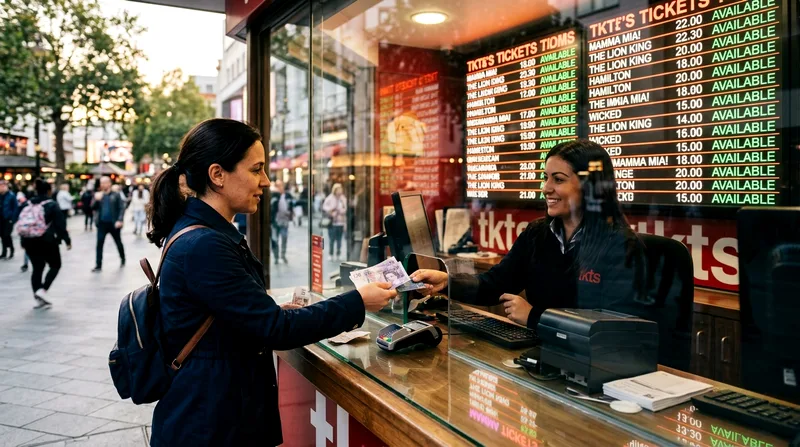
Find cheap West End tickets with day seats, digital lotteries and the TKTS booth. Learn where the money goes, how to save, and what not to skimp on.
10 min read · 21 Oct 2026
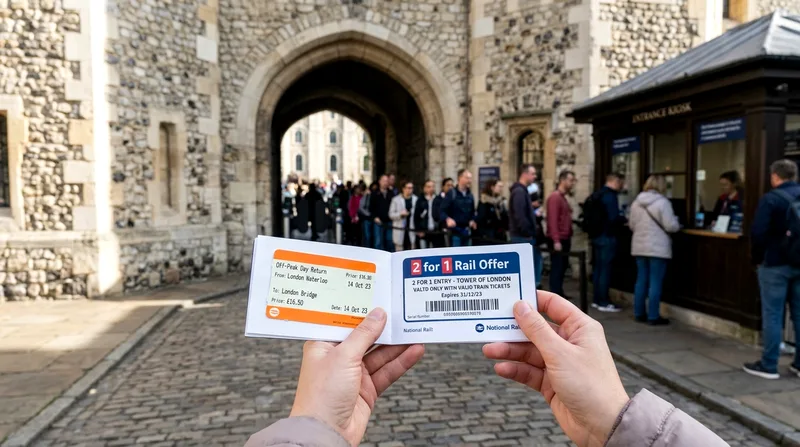
Learn how 2 for 1 London attractions offers work with rail tickets, what to show at the gate, which venues to prioritise and mistakes to avoid.
10 min read · 21 Oct 2026
How to book London theatre tickets safely. Compare official channels, pick the right seats, find last-minute deals and choose a West End show.
11 min read · 21 Oct 2026
Is a Merlin Annual Pass worth it for London? Compare pass options with day tickets for the London Eye, SEA LIFE, Madame Tussauds and The Dungeon.
9 min read · 21 Oct 2026
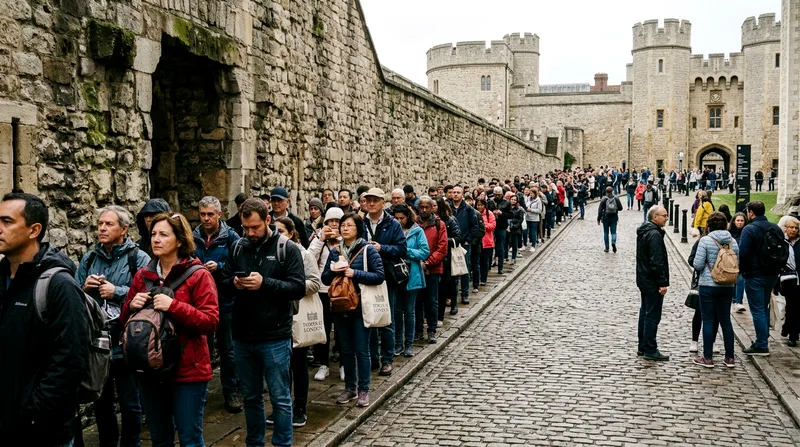
London skip the line tickets explained: which attractions have queues long enough to justify fast track, what it includes, where to book, who should skip it.
10 min read · 21 Oct 2026
Compare London attraction combo tickets, from Merlin bundles to the London Pass, and see which genuinely save money and which pair sights badly.
9 min read · 21 Oct 2026
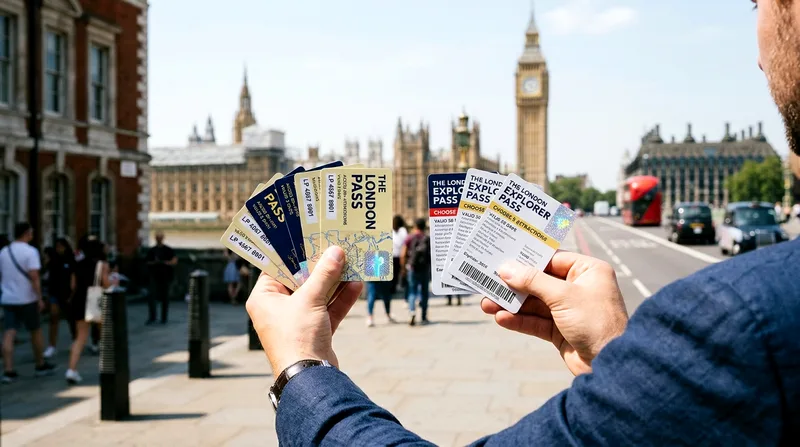
London Pass vs Explorer Pass compared: how each works, cost level, effort and who should choose which, so you can pick the right London attraction pass.
9 min read · 21 Oct 2026
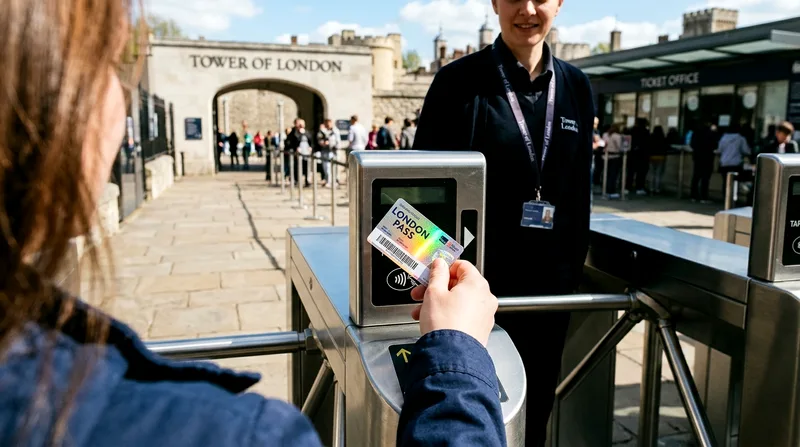
Is the London Pass worth it? Work out how many attractions per day you need to beat paying individually, plus when to skip the pass and save.
10 min read · 21 Oct 2026