Plan your visit with our Kew Gardens tickets guide: how to book, ways to save, glasshouses, the best seasons for blooms and other London gardens to combine.
Why Visit Kew Gardens
Kew Gardens sits on 320 acres beside the Thames in southwest London, and it's the kind of place that swallows a whole day without you noticing. The Royal Botanic Gardens, Kew, holds UNESCO World Heritage Site status, partly for its landscaped grounds and partly for the scientific collections inside — over 50,000 living plant species, which is more than almost any other garden on earth bothers to maintain.
What makes Kew different from a typical city park is the sheer range packed into one site. You get Victorian glasshouses, a treetop walkway suspended among oak canopies, a working herbarium, and royal history in the form of Kew Palace. Compare that to Hyde Park or Regent's Park, both pleasant for a stroll but neither designed around horticulture or research. Kew is closer in spirit to the Jardin des Plantes in Paris, though Kew is larger and arguably better maintained, with more glasshouse variety.
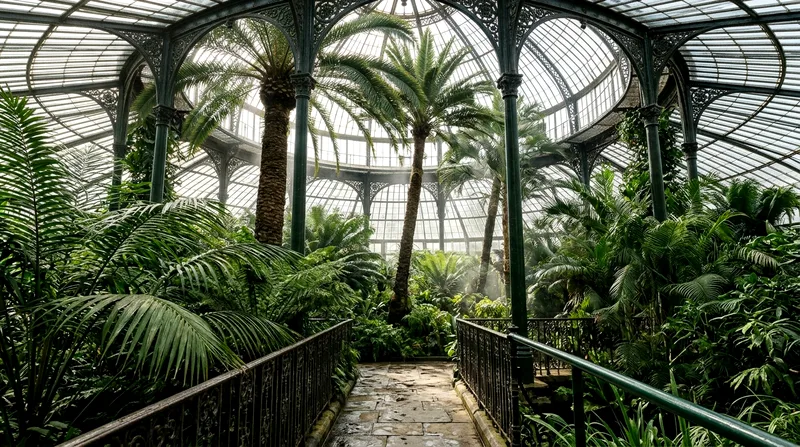
I'd argue the gardens are worth the trip even if you're not particularly "into plants." The Palm House alone — all curved iron and glass, dripping with humidity — is a striking enough space that garden indifference won't survive contact with it. What I wouldn't do is visit on a tight half-day schedule squeezed between other London sights; Kew punishes rushing, since the site is large and the best bits (woodland garden, lake, Temperate House) are spread out.
Glasshouses, treetop walkway and Kew Palace
Three things anchor a Kew visit. The Palm House and Temperate House are the headline glasshouses — the latter is the largest Victorian glasshouse in the world and reopened after a lengthy restoration, housing plants from five continents under one glass roof. The Treetop Walkway lifts you around 18 metres into the canopy on a steel walkway that sways slightly underfoot, which some children love and some adults quietly hate.
Kew Palace, the smallest of the former royal palaces, sits near the Thames end of the gardens and was once a retreat for George III's family. It's included with some ticket types seasonally but typically only open April to September, and it's a modest, low-ceilinged building rather than a grand state residence — manage expectations here, it's closer to a large townhouse than Hampton Court. Queen Charlotte's Cottage nearby is similarly small-scale, a thatched retreat used for royal picnics, open on a more limited schedule.
Kew Gardens Tickets and How to Book
Kew Gardens entry runs on a timed-ticket system, which means you choose a specific entry window when you book rather than just turning up whenever. Standard adult admission typically sits somewhere in the £15–£22 range depending on season (summer tends to cost more than winter), with reduced rates for children, students, and over-65s, and free entry for under-4s. These are the kind of figures that shift from one pricing update to the next, so treat any number here as a ballpark and check the official Kew website or a platform like GetYourGuide for the live price before you commit.
Booking online in advance is, practically speaking, the default now rather than an optional extra. On-the-day walk-up tickets exist but cost more than the same ticket bought online, and on busy spring and summer weekends, popular entry slots can sell out by late morning. If you're coming from outside London — a day trip from Oxford, or part of a longer UK-Europe itinerary that also takes in Edinburgh or Dublin — book the specific morning slot you want a few days ahead rather than leaving it to chance.
Standard garden tickets cover the glasshouses and treetop walkway, but Kew Palace, membership and seasonal events are priced and booked separately.
Kew Gardens tickets compared by type, typical cost and what's included
| Ticket type | Typical price range | Kew Palace included | Best for |
|---|---|---|---|
| Standard adult admission | £15–£22 | No (separate/seasonal) | First-time daytime visit |
| Child (4–15) | £5–£10 | No | Families |
| Concession (student/senior) | £13–£18 | No | Solo/senior travellers |
| Family ticket (2 adults + up to 3 children) | £35–£55 | No | Families, better per-head value |
| Annual membership | £70–£120 per adult | Often included | Repeat visitors, no timed slot needed |
| Christmas light trail | £20–£30 | Not applicable | Evening winter visit |
Prices are typical ranges and change by season and demand; always check current prices on the official Kew site or your booking platform before confirming.
Booking online in advance vs on the day
Booking ahead locks in your price and your entry window, and for most visitors that's the better route — especially in April, May, and June when bluebells and blossom draw heavy weekend crowds. The trade-off is flexibility: if weather turns bad on your chosen day, a pre-booked timed ticket is usually non-refundable or only exchangeable within limits, so check the cancellation terms at checkout. Buying on arrival works fine on quieter winter weekdays, but it's a gamble in peak season, and you'll likely pay a premium for the privilege of not planning ahead.
What a standard ticket includes
A standard garden ticket covers access to the grounds, the glasshouses (Palm House, Temperate House, and the smaller Princess of Wales Conservatory), the Treetop Walkway, and the Hive art installation. It does not automatically include Kew Palace, which — when open — usually needs a separate ticket or an upgraded combination ticket. Parking isn't included either; there's a pay-and-display car park, but it's often cheaper and less stressful to arrive by train or Tube.
Ways to Save on Entry
Kew isn't cheap for a family of four, and it's worth being honest about that before you book. A day out here for two adults and two kids, plus travel and lunch, can easily run past £80–£100 once you add food on-site (which is priced like most attraction catering — fine, not cheap). There are legitimate ways to bring that down.
Concessions, family options and membership
Children under 4 generally get in free, and there are reduced rates for ages 4–15, students with valid ID, and senior visitors over 65. Family tickets covering two adults and up to three children are usually cheaper per head than buying individual tickets separately — check this at checkout, since the saving isn't always obvious until you compare both routes. If you think you'll visit more than twice in a year, annual membership with Kew (which also covers sister site Wakehurst in Sussex) often pays for itself after two or three visits, and members skip the need to book a timed slot on most days.
Combination tickets and guided tour add-ons
Some operators, including GetYourGuide, sell combination tickets bundling Kew entry with a guided walking tour or with transport from central London. These suit first-time visitors who want context — a guide pointing out why the Temperate House took years longer to restore than planned, for instance, adds something a self-guided wander won't. For a second or third visit, though, I'd skip the guided add-on; you already know the layout, and the premium isn't worth paying twice.
Best Time to Visit Kew Gardens
There's no single "best" month at Kew — it depends entirely on what you want to see — but late April through early June is the strongest all-round window, when bluebells, blossom, and the Woodland Garden peak together. Summer brings fuller tree canopy and warm-weather events but also the thickest crowds and the highest ticket prices. Early autumn (September into October) is underrated: fewer visitors, cooler walking weather, and good colour starting on the deciduous trees.
Season-by-season blooms guide
Spring (March–May) means daffodils, magnolias, cherry blossom, and the bluebell woods — arguably Kew's single best photo opportunity, and worth timing a visit around if you can. Summer (June–August) brings the rose garden and herbaceous borders into full display, alongside long opening hours. Autumn (September–November) turns the Japanese maples and broader tree collection red and gold, with noticeably thinner crowds than spring. Winter (December–February) strips most outdoor colour back, but it's the season for the glasshouses, the orchid festival in the Princess of Wales Conservatory, and the Christmas light trail.
Rainy-day glasshouse plan
London rain doesn't care about your ticket, so have a wet-weather plan: the Palm House, Temperate House, and Princess of Wales Conservatory alone can fill two or three hours comfortably, and the Marianne North Gallery (a small building packed with 19th-century botanical paintings) is an easy indoor stop few visitors bother with. If it's genuinely pouring, prioritise the Princess of Wales Conservatory — ten climate zones under one roof, from desert to tropical rainforest — over an outdoor loop you'll regret.
Kew Gardens at Christmas and Seasonal Events
Kew Gardens at Christmas usually means a separately ticketed light trail through the grounds after dark — illuminated tunnels, lit-up glasshouses, and a mulled-wine-and-mince-pie stall or two along the route. This is genuinely one of the better Christmas light trails in London, up there with the one at Longleat outside the city, but it's not included in standard daytime garden admission and runs on its own timed-entry system with its own pricing.
Beyond Christmas, Kew runs an orchid festival each winter inside the Princess of Wales Conservatory, built around a different country's flora each year, and occasional summer events like outdoor concerts on the lawns near the lake. These all tend to need their own ticket, separate from general admission, and they sell out — the Christmas trail especially, since weekend evening slots in December go early.
Planning for ticketed winter and seasonal events
If the light trail is your main reason for visiting, book that specific ticket directly rather than assuming a daytime garden pass covers it — it doesn't, and turning up without one at the gate in December is a reliably bad experience in the cold and dark. Book several weeks ahead for weekend evenings in December; weekday slots release more availability and tend to be less frantic underfoot, which matters with small children on uneven path lighting.
Combine Kew with Other London Gardens
Kew rewards being paired with something else nearby rather than treated as an isolated trip, mostly because the journey out from central London takes 30–45 minutes each way and you may as well make a full day of it.
Nearby add-ons: Richmond Park and Syon Park
Richmond Park is a short bus or taxi ride from Kew and offers something the gardens don't — wide open deer-grazed grassland and genuinely wild red and fallow deer roaming freely, which is free to enter, unlike Kew. Syon Park, across the river, has its own large glasshouse (the Great Conservatory) and gardens landscaped by Capability Brown, plus Syon House itself; it's smaller and quieter than Kew, and a reasonable half-day alternative if Kew's crowds put you off on a given weekend. Neither replaces Kew, but either extends a day trip meaningfully.
Getting there by train, Tube or river
Kew Gardens has its own London Underground station on the District line, roughly 30 minutes from central London, and National Rail services also stop there from Waterloo. In summer, river boats run from Westminster Pier to Kew Pier — a slower option at around 90 minutes, but a pleasant one if you're not in a hurry and want river views along the way, similar in spirit to a canal cruise in Amsterdam, just on a bigger river with fewer bridges.
Frequently asked questions
Do I need to book Kew Gardens tickets in advance?
It's strongly recommended rather than strictly required. Kew operates timed entry, and online advance booking guarantees your slot at a lower price than walk-up admission. In peak spring and summer weekends, popular morning slots can sell out, so booking a few days to a week ahead is the safer route, especially if you're traveling with family on a fixed schedule.
What is included in a Kew Gardens ticket?
A standard ticket covers the grounds, the main glasshouses (Palm House, Temperate House, Princess of Wales Conservatory), the Treetop Walkway, and the Hive installation. It does not include Kew Palace or Queen Charlotte's Cottage, which are either seasonal add-ons or require a separate ticket — check the specific inclusions listed at checkout before assuming otherwise.
Is Kew Palace included in garden admission?
Not automatically, and Kew Palace is only open roughly April to September, closed the rest of the year. When it's open, access is usually bundled into certain ticket types or available as an add-on — it's a small royal residence, not a major palace visit, so don't build your whole day around it.
What is the best time to visit Kew Gardens?
Late April to early June gives the strongest combination of blossom, bluebells and comfortable weather, though it's also the busiest and priciest period. September and October offer a quieter, cooler alternative with good autumn colour. Winter suits glasshouse-focused visits and the Christmas light trail rather than outdoor borders.
Are there discounts or free entry options for Kew Gardens?
Children under 4 enter free, and there are reduced rates for children aged 4–15, students, and visitors over 65. Family tickets usually beat buying individual tickets separately for the same group. Annual membership removes the need for timed-entry booking and can be worthwhile if you expect to visit more than twice within a year.