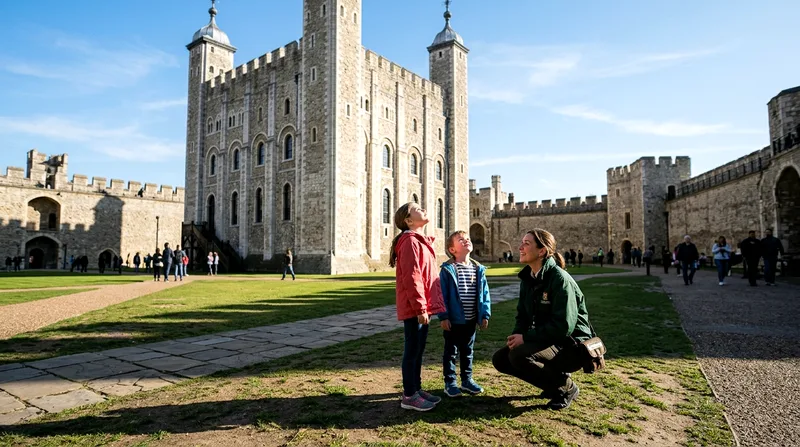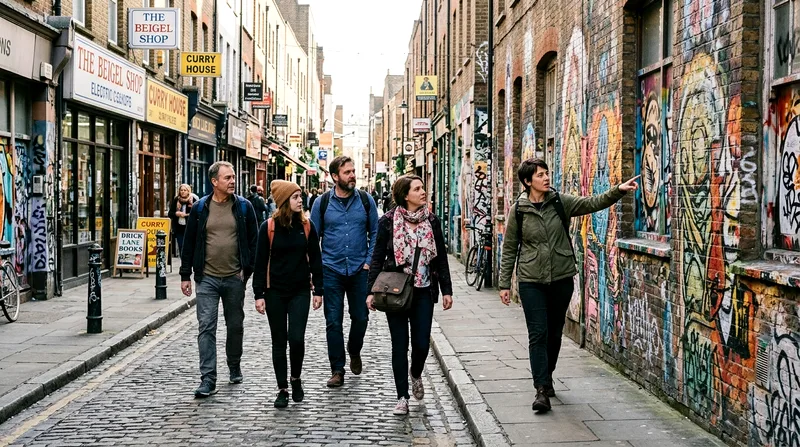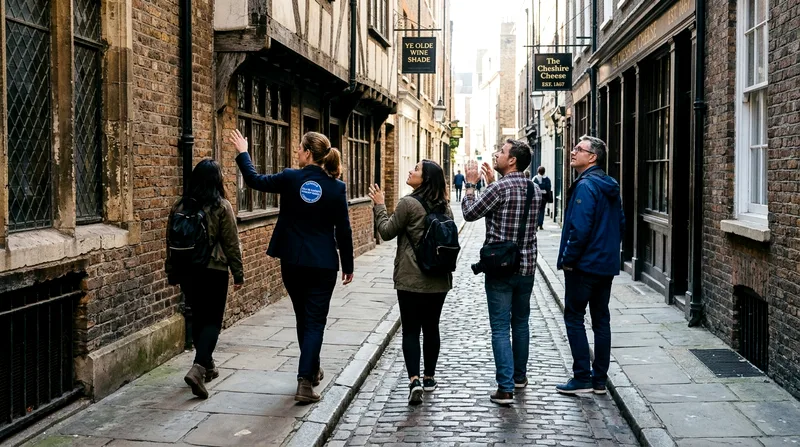
Compare a London private tour guide with a group tour on cost per person, flexibility and depth, and learn what Blue Badge accreditation means for quality.
Private Guide vs Group Tour at a Glance
You've got two days in London, a list of ten sights, and a decision to make before you book anything: hire a private guide, or join a group tour departing from outside St Paul's at 10am with twenty strangers. The choice shapes everything else about your trip — pace, cost, what you actually learn, and how tired you'll be by 4pm.
A London private tour guide works for you and whoever you're travelling with, full stop. You set the start time, the route, and how long you linger at the Churchill War Rooms versus how fast you walk past the Monument. A group tour, by contrast, runs on a published schedule with a fixed itinerary, usually capped somewhere between 15 and 30 participants, and a guide who's narrating to the back of the pack as much as the front.
Neither format is inherently better — they solve different problems. Group tours solve the problem of cost for one person wanting structure and company. Private guides solve the problem of depth, flexibility, and not wasting a single hour of a short visit. I'd avoid group walking tours that advertise more than 25 people; at that size you're mostly listening through a crackly earpiece radio and jostling for sightlines, which defeats the point of having a guide at all.
A private guide typically costs more per booking but less per person once a group of three or more splits the fee, while also offering far greater flexibility than a fixed-departure group tour.
London private tour guide vs group tour: cost, flexibility and depth compared
| Option | Typical Duration | Group Size | Pricing Model | Flexibility | Best For |
|---|---|---|---|---|---|
| Private Blue Badge guide | 3-8 hours | 1-10 (your group) | Per group, flat or hourly | High — custom route and pace | Families, couples, specialists |
| Private guide (non-Blue Badge) | 2-6 hours | 1-10 | Per group | Moderate-high | Niche themes, budget private option |
| Standard group walking tour | 2-3 hours | 15-30+ | Per person | Low — fixed route and time | Solo travellers, budget visitors |
| Small-group tour (paid, capped) | 2-4 hours | 6-12 | Per person | Moderate | Those wanting some personal attention |
| Hop-on hop-off bus tour | All day pass | Unlimited passengers | Per person | Low — fixed stops | First-timers wanting an overview |
Figures are typical ranges based on common London tour formats; actual prices and durations vary by operator and season, so check current listings before booking.
Quick Comparison Table
The table below sets out the core trade-offs. Use it as a first filter, then read the cost and flexibility sections for the detail that actually changes the decision.
Typical Tour Length and Group Size
Standard group walking tours in London — the Beatles tour, Jack the Ripper walks, free tip-based tours around Westminster — typically run two to three hours and take groups of 15 to 30 people, sometimes more in peak summer. Private tours are usually sold in half-day (around 3-4 hours) or full-day (6-8 hours) blocks, with groups capped at whatever you bring: a couple, a family of five, or a group of ten friends sharing a minibus guide. Some private guides, including several listed through GoWithGuide and GetYourGuide, offer flexible durations you can extend on the day if things are going well, something no fixed-departure group tour will ever allow.
Cost Per Person: How the Maths Works
Group tour pricing is straightforward: you pay a fixed per-person rate, often in the range of a mid-price London meal, and that's it regardless of group size on the day. A private guide's pricing works the opposite way — you pay a flat or hourly rate for the guide's time, and that cost gets divided among however many people you bring.
This is the single most misunderstood part of the private-versus-group decision. People assume private guides are a luxury reserved for honeymooners and expense accounts. For a solo traveller, that's often true — a half-day private guide can cost several times what a group tour seat costs. But for two people, the gap narrows sharply, and for a family of four or a group of six, a private guide frequently works out cheaper per head than booking the same number of seats on a quality small-group tour.
Per-Group Versus Per-Person Pricing
Think of it as two different pricing logics colliding. A group operator needs to fill 15 seats to make the economics work, so the per-person price stays low but fixed — you get no discount for travelling with others, and no say over timing. A private guide prices the booking itself, usually as a half-day or full-day rate, sometimes with a small per-extra-person supplement beyond four or five people. Platforms like GetYourGuide and GoWithGuide list both models side by side, which makes it easy to run the maths for your specific group size before committing.
When a Private Guide Becomes Good Value
As a rough rule, a private guide becomes competitive with group tour pricing once you're three people, and often becomes the cheaper option per person from four upward — particularly for full-day itineraries covering multiple sights, where a group tour would charge you separately for each stop. The other factor people forget: a private guide can include transport logistics, pre-booked timed entry tickets, and skip-the-line arrangements inside that one fee, saving you both money and queuing time at places like the Tower of London or Westminster Abbey.
Flexibility, Pace and Depth Compared
This is where private guides pull ahead regardless of group size. A fixed-route group tour can't slow down for the member who wants ten extra minutes at the Cabinet War Rooms, and it can't skip a stop nobody cares about to add one they do. A private guide can do both, on the spot, because the itinerary belongs to you.
Depth is the other differentiator. Group guides are trained to deliver a broadly appealing narrative that works for a crowd with mixed interests — a bit of history, a bit of trivia, some photo stops. A private guide, especially one with a declared specialism, will go as deep as you want on Tudor history, Victorian architecture, or London's immigrant food culture, and can adjust the whole day around a genuine enthusiasm rather than a generic script.
Custom Itineraries and Specialisms
Companies such as Totally Tailored Tours and Henry's Private Tours build their entire offer around bespoke routes — you tell them what you're into (art, true crime, architecture, a specific film or book connection) and they design around it. This matters for families with children who tire of long speeches and need stop-start pacing with playground or snack breaks built in, and it matters for senior travellers who need fewer steps, more benches, and realistic walking distances rather than a guide marching ahead at a fixed clip.
Crowds, Queues and Logistics
A private guide who knows London well will route around crowd peaks — visiting the British Museum's Egyptian galleries early, saving Borough Market for a weekday lunch instead of Saturday chaos. Group tours run on fixed timetables set months ahead, so they hit the exact same congestion every single departure, whether that's a cruise-ship crowd at the Tower or school groups flooding the National Gallery at 11am. That said, group tours do have one logistical edge: someone else handles the Oyster card top-ups, the queue management, and the "where do we meet after lunch" admin, which some travellers genuinely prefer not to think about.
What a Blue Badge Guide Means
Blue Badge is the UK's official tourist guide qualification, and it's the single clearest quality signal you'll find when hiring a guide in London. Anyone can call themselves a "tour guide" — Blue Badge status means someone has actually been tested on it.
The qualification is run through regional training bodies recognised by the Institute of Tourist Guiding, and it typically takes 18 months to two years of study covering British history, art, architecture and London-specific knowledge, followed by written exams and an assessed walking tour. It's a meaningfully higher bar than a weekend training course, and it's why Blue Badge guides can legally guide inside certain sites — Westminster Abbey and the Tower of London among them — where unaccredited guides may face restrictions.
What the Accreditation Involves
City of London Guides, a long-established body for guides specialising in the Square Mile, is one of several organisations whose members hold Blue Badge or equivalent City-specific accreditation. Training covers not just facts but delivery — how to manage a group on a busy pavement, how to adapt commentary for children versus specialists, and how to handle access logistics at major sites. It's worth knowing that Blue Badge guides can specialise regionally too; a guide badged for London isn't automatically qualified to guide in Edinburgh or Bath, so check the badge covers the city you're actually visiting.
How to Check a Guide's Credentials
Ask directly whether the guide holds Blue Badge accreditation and for which region — a legitimate guide will answer without hesitation. You can also check listings on TripAdvisor and booking platforms for mentions of Blue Badge status, cross-reference reviews that specifically praise depth of knowledge rather than just friendliness, and look for membership of a recognised guide association. If a platform listing is vague about qualifications and heavy on stock photography, treat that as a caution sign rather than a minor detail.
Who Should Choose Which Option
There's no universal right answer here — it depends on who you're travelling with, your budget split, and how much you actually want from the day beyond "seeing the landmarks."
Families, Couples and Small Groups
If there are two or more of you, lean toward a private guide, ideally Blue Badge-accredited for the depth guarantee. Families get a guide who'll adjust pacing for kids, skip the dense historical detail that bores an eight-year-old, and build in breaks. Couples get a day shaped entirely around their own interests rather than a group consensus. For a group of six friends splitting a full-day private rate, the per-person cost often lands close to, or below, what six seats on a reputable small-group tour would cost — and you get a day designed around you rather than a script written for strangers.
First-Timers, Solo Travellers and Budget Visitors
Solo travellers and anyone tightly budgeting should lean toward group tours, at least for an initial orientation. A group walking tour around the City or the Beatles' London gives a solid overview for a fraction of a private rate, and it's a reasonable way to meet other travellers — something a private tour, built around just you, won't offer. First-timers overwhelmed by choice can also benefit from a structured group itinerary that just makes decisions for them, which honestly removes a lot of the planning stress on a first visit to a city this size.
Verdict: Picking the Right London Tour
Run the numbers for your actual group before deciding — that's the honest takeaway here. A solo traveller or a tight-budget backpacker should book a group tour and treat the fixed schedule as a feature, not a flaw; it removes decision-making from a short trip. Everyone else — couples, families, groups of friends, anyone touring for a full day or wanting a particular specialism covered properly — should seriously weigh a private guide, and specifically look for Blue Badge accreditation as the quality signal that separates a genuinely informed walk from a generic script.
Compare listings across GetYourGuide, GoWithGuide and direct operator sites like Totally Tailored Tours or Henry's Private Tours before booking, checking reviews on TripAdvisor for mentions of credentials rather than just enthusiasm. And if London is one stop on a longer European trip, the same private-versus-group logic applies in Paris, Rome or Edinburgh — group tours for solo budget travel, a private guide once you're splitting the bill three or more ways. Compare current prices and guide availability before you book, since rates shift with season and demand.
Frequently asked questions
What is a Blue Badge guide and why does it matter?
Blue Badge is the UK's official tourist guide qualification, requiring roughly 18 months to two years of training in history, art and architecture plus assessed exams. It matters because Blue Badge guides can access sites like Westminster Abbey and the Tower of London with fewer restrictions, and the training guarantees a baseline depth of knowledge that unaccredited guides may not have.
How much does a private tour guide cost in London compared with a group tour?
Group tours charge a fixed per-person rate regardless of group size, while private guides typically charge a flat or hourly rate for the whole group. For solo travellers, group tours are usually cheaper; once you're three or more people, a private guide's per-person cost often matches or beats a comparable small-group tour.
Can I customize a private tour itinerary in London?
Yes — that's the main advantage of hiring privately. You can set the start time, choose specific sights, request a specialism like art or architecture, and adjust pace mid-tour for children or slower walkers. Group tours, by contrast, run a fixed published route with no changes allowed.
How long do private tours in London typically last?
Most private tours are sold in half-day blocks of around three to four hours or full-day blocks of six to eight hours. Many guides will extend the session on the day if the group wants more time, something fixed-departure group tours never offer.
Where can I book a private tour guide in London?
Platforms like GetYourGuide and GoWithGuide list vetted private guides with reviews and stated specialisms, while operators such as Totally Tailored Tours and Henry's Private Tours take direct bookings. Always check TripAdvisor reviews and confirm Blue Badge status directly before paying a deposit.