Planning a solo trip to London? Find confident solo activities, safe evening options, solo-friendly neighbourhoods and tours where meeting people is easy.
Easy Solo Activities for First-Timers
London doesn't make a spectacle of solo visitors, which is exactly why it's a good first city to try travelling alone. Nobody at the British Museum is wondering why you're there by yourself, and no waiter at a Borough Market stall will raise an eyebrow at a table for one. If you're nervous about your first solo trip, London lets you ease in — you can be anonymous in a crowd of 9 million or strike up a conversation in a pub queue, and both are completely normal here.
The honest trade-off is that London is expensive and spread out, so a loosely sequenced day works better than trying to see everything. Pick one area, build your day around it, and treat transport time as part of the experience rather than dead time — the top deck of a bus from Oxford Street to the City is a free, slow-paced way to see the city without planning anything.
Museums and Galleries
The National Gallery, British Museum, Tate Modern and Natural History Museum are all free to enter, which removes the awkwardness some solo travellers feel about "wasting" a paid ticket if they want to leave after an hour. Give yourself 90 minutes rather than a full day — museum fatigue hits harder when you're alone and have nobody to break the pace with. The British Museum's Great Court is a good spot to sit, check your phone, and plan the next move without feeling like you're loitering. Avoid trying to do the British Museum and Tate Modern in one day; both deserve unhurried time and rushing defeats the point of going alone.
Markets and Solo Dining
Borough Market, Maltby Street Market and Broadway Market are built for solo eating — most stalls serve food meant to be eaten standing up or perched on a shared bench, so there's no "table for one" moment to navigate. For a sit-down meal alone, ramen counters, tapas bars with counter seating, and food halls like Seven Dials Market in Covent Garden are far less awkward than a traditional restaurant with white tablecloths and a maître d' asking "just one?" That question still happens in London, and it can feel pointed even when it isn't meant that way — counter seating sidesteps it entirely.
Best Neighbourhoods to Explore Alone
Not every part of London suits a solo wander equally well. Central areas like Oxford Street are efficient for shopping but exhausting and impersonal when you're on your own — too much crowd, not enough character. The neighbourhoods that work best for solo travellers tend to be smaller in scale, walkable in under two hours, and interesting enough that you don't need company to enjoy them.
Hampstead suits quiet reflection while Brick Lane and Notting Hill suit solo travellers who want more buzz and easy solo dining.
London neighbourhoods for solo travellers compared by vibe, cost and best time to visit
| Neighbourhood | Best For | Typical Cost | Best Time to Visit |
|---|---|---|---|
| Hampstead & Primrose Hill | Quiet walks, skyline views | Free (park entry) | Daylight hours |
| Notting Hill | Market browsing, photos | Low-moderate | Saturday morning |
| Brick Lane | Solo dining, street art | Low | Evening, any day |
| Camden | Markets, live music | Low-moderate | Afternoon into evening |
| South Bank | Evening walks, theatre | Free to moderate | Early evening |
Costs are relative and vary by season and venue; check current prices for markets, tours and theatre tickets before you go.
Hampstead and Primrose Hill
Hampstead Heath is one of the few places in central London where you can walk for an hour and genuinely feel alone with your thoughts, which is sometimes exactly what a solo trip needs. Climb to Parliament Hill for a free view over the skyline, then walk down into Hampstead village for its bookshops and cafés. Primrose Hill, a 20-minute walk south, gives a similar skyline view with less climbing and a more sociable, picnic-blanket feel on weekends. Both are safe to walk during daylight; Hampstead Heath after dark is quiet to the point of being poorly lit, so save it for daytime.
Notting Hill and Brick Lane
Notting Hill's Portobello Road Market is busiest on Saturdays and genuinely fun to browse alone — nobody needs a second opinion on vintage vinyl. The surrounding streets of pastel townhouses are a pleasant, low-effort wander, though by mid-afternoon they fill with tour groups taking the same five photos, which can feel staged if you're after something quieter. Brick Lane, in the East End, has more edge: street art, vintage warehouses, and some of London's best curry houses and bagel shops, many open late. It's one of the easiest areas to eat alone without comment, since half the clientele are solo regulars grabbing a quick meal.
Safe Things to Do at Night Alone
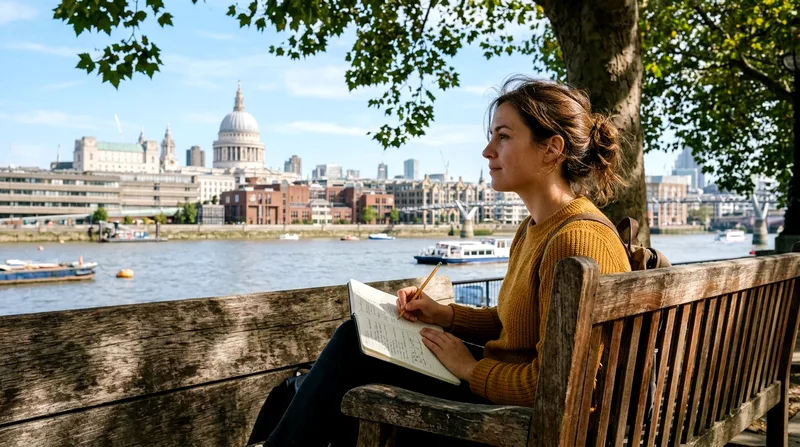
Evenings are where solo travellers tend to lose confidence, but London has more low-pressure night options than most capitals. You don't need to go to a bar alone if that's not your thing — the West End theatre district, riverside walks along the South Bank, and late-opening museums all give you something to do after dark without needing to make conversation. The South Bank between Westminster Bridge and Tower Bridge is well-lit, busy until late, and one of the safest stretches of the city to walk alone at night, with street performers and food stalls keeping it lively without feeling rowdy.
What I'd avoid: wandering unfamiliar residential side streets late at night just to "see more," and relying on minicabs flagged down on the street rather than booked through an app or a licensed black cab — unlicensed cars are a genuine safety issue in London, not just a tourist myth.
Theatre, Cinema and Live Music
West End theatre is arguably London's best solo night out — single seats are easy to book, nobody notices you're alone once the lights go down, and day-of returns or day seats can bring ticket costs down considerably for popular shows. Standalone cinemas like the Prince Charles near Leicester Square run cult and classic film nights that attract plenty of solo regulars. For live music, small venues in Camden and Shoreditch often have cheap entry on weeknights and a crowd there for the band, not to judge who came alone. Comedy clubs are a slightly riskier solo pick — some comedians single out audience members, so sit further back if that's not your idea of fun.
Solo Tours for Meeting People
If loneliness creeps in — and it can, even in a city this busy — a group tour is the fastest fix. You get structured conversation without the pressure of starting it yourself, and most small-group tours in London run for two to three hours, long enough to make a connection but short enough that it's not a big commitment if the group doesn't click.
Walking, Food and Small-Group Tours
Free walking tours of areas like the City of London or Westminster (tip-based, typically two to three hours) are a reliable way to meet other solo travellers, since a large share of attendees are backpackers and solo visitors by design. Food tours around Borough Market or Brick Lane tend to attract smaller groups of six to twelve, which makes conversation easier than a 30-person walking tour. For something more immersive, a half-day small-group tour to somewhere like the Tower of London or Westminster Abbey with a guide handling logistics takes the planning pressure off entirely. When comparing options, check current prices and group sizes before you book — smaller groups generally mean more conversation, larger groups mean more anonymity, and which one suits you depends on your mood that day.
Solo Day Trips from London
A solo trip to London doesn't have to stay within the M25. Day trips are easier alone than in a group — no debates about where to go, no splitting train tickets, no compromise on timing. The UK's train network from London makes several worthwhile towns reachable in under two hours, and solo day trips are a good way to break up a longer city stay without the cost of changing hotels.
Richmond, Oxford and Brighton
Richmond, a 20-minute train from Waterloo, pairs a riverside town centre with Richmond Park, home to free-roaming deer — an easy half-day that needs no advance planning. Oxford is about an hour from London by train or coach; wandering the colleges and the Bodleian Library area alone feels natural, since half the people on the streets are solo students anyway. Brighton, roughly an hour from Victoria or St Pancras, offers a beach, pier, and the Lanes shopping district — a good contrast to London's pace, though the seafront in winter is bracing and better suited to a brisk walk than a lounging afternoon. Bletchley Park, under an hour from Euston, is a quieter, more focused day trip for anyone interested in codebreaking history and works especially well solo since you can read every exhibit at your own pace without holding anyone up.
Practical Tips for Solo Travellers
Solo travel in London runs smoothly mostly because the infrastructure is built for it — you'll rarely need to ask for help, which is reassuring for introverts and slightly isolating for anyone craving more interaction. Loneliness is the more common complaint than safety, honestly. If a solo evening in your hotel room feels heavy, a cheap theatre seat or a food market beats scrolling your phone — motion and noise help more than solitude does.
Safety for Solo Women
London solo female travel is generally straightforward — the city is well-policed and well-lit in tourist-heavy zones, and public transport runs until around 1am on weekends on many lines, with night buses covering the rest. Standard precautions apply: keep valuables zipped away on the Tube, especially around Oxford Circus and Leicester Square where pickpocketing is a known issue, and avoid empty train carriages late at night — walk toward one with other passengers instead. Share your location with someone at home, and know that London's black cabs, hailed on the street or from a rank, are a licensed and reliable late-night option worth the extra cost over a bus if you're tired or it's very late.
Getting Around and Where to Stay
An Oyster card or contactless bank card is the simplest way to pay for the Tube, buses and the Overground — fares are capped daily, so you never overpay regardless of how many trips you take. For a first solo stay, South Kensington, Fitzrovia or Southwark offer a good balance of safety, walkability and proximity to attractions, usually better than staying far out in Zone 3 or 4 to save money, since the time and cost of commuting in eats into any savings. Avoid areas directly around major train stations like Kings Cross or Paddington late at night if you're unfamiliar with the city — they're not dangerous exactly, but they're busier and less pleasant to navigate alone after dark than a residential side street in Southwark.
Frequently asked questions
Is London safe for solo female travellers?
Yes, broadly — London is one of the more solo-friendly capitals in Europe for women, with reliable public transport, visible policing in tourist areas, and a culture where eating or sightseeing alone draws no attention. The main risks are pickpocketing in crowded Tube stations and late-night transport choices, not violent crime targeting solo travellers specifically. Stick to licensed black cabs or app-based rides after midnight rather than unmarked minicabs.
What is safe to do alone at night in London?
West End theatre, a walk along the South Bank between Westminster and Tower Bridge, late-opening museums, and cinema screenings at venues like the Prince Charles are all low-pressure, well-populated options. Stick to well-lit, busy areas and avoid quiet residential streets you don't know. Comedy clubs can single out solo audience members, so sit toward the back if you'd rather not be picked on.
How do I meet people while travelling solo in London?
Free walking tours, small-group food tours around Borough Market or Brick Lane, and hostel common rooms (even if you're not staying in a dorm, some run public events) are the most reliable routes. Small-group tours of six to twelve people tend to produce more conversation than large coach tours, so compare group sizes when booking.
What are the best free things to do in London alone?
The British Museum, National Gallery, Tate Modern and Natural History Museum are free to enter. Add Hampstead Heath, Primrose Hill, and a walk along the South Bank, and you've got several full days with no admission cost beyond transport.
Where should a solo traveller stay in London?
South Kensington, Fitzrovia and Southwark offer a strong balance of safety, walkability and proximity to attractions. Avoid saving money by booking far out in Zone 3 or 4 — the extra commuting time and late-night transport planning usually outweighs the lower room rate.