Which is the best London airport to fly into? Compare Heathrow, Gatwick, Stansted, Luton and London City on journey time and transfer cost.
London's Airports at a Glance
London has five commercial airports, and which one you land at changes your first two hours in the city more than almost any other travel decision you'll make. Heathrow and Gatwick handle the bulk of long-haul and full-service traffic. Stansted and Luton are the budget-carrier hubs, dominated by easyJet and Ryanair routes to Europe. London City, tucked into the Docklands, is small, fast and mostly used by business travellers and a handful of short-haul European routes.
The question "best London airport to fly into" doesn't have one answer — it depends on where you're flying from, what you're carrying, and how much your time is worth. A solo traveler with a backpack and no fixed schedule can shrug off a 55-minute coach ride from Stansted. A family of four with three suitcases and a toddler cannot, not without real cost in stress and money.
Heathrow is the UK's largest airport by passenger volume — over 80 million passengers a year pre-pandemic levels, now largely recovered — and it offers the widest spread of airlines and direct long-haul routes of any UK airport. Gatwick is the second largest, strong on both short-haul and long-haul leisure routes. Stansted and Luton are comparable to each other in size and purpose, while London City is a different animal entirely: tiny, convenient, and expensive to fly into relative to the others.
Distance and direction from the centre
Heathrow sits about 15 miles west of central London. Gatwick is further out, roughly 30 miles south. Stansted is the most distant of the mainstream options at around 40 miles northeast, and Luton is similar at about 35 miles north. London City is the outlier — just 6 miles east of the centre, inside the Docklands, which is why its journey time punches so far above its physical size advantage would suggest. Distance alone is a poor predictor of journey time, though: Heathrow is closer than Gatwick but not always faster to central hotels, depending on which line you catch and where you're staying.
Head-to-Head: Time, Cost and Effort
This is the part most flight-search engines don't show you. A fare comparison site will happily sell you a flight into Stansted that's £15 cheaper than the Heathrow equivalent, without mentioning that the Stansted Express alone can cost more than a third of that saving, before you've even factored in the extra 40 minutes on top of Heathrow's Elizabeth line or Heathrow Express.
London City is fastest into the centre by far, while Heathrow offers the best balance of speed, cost and flight choice.
Best London airport to fly into — journey time, transfer cost and effort compared
| Airport | Distance to centre | Fastest transfer time | Transfer cost level | Best for |
|---|---|---|---|---|
| Heathrow | ~15 miles west | 15-20 min (Heathrow Express) | Mid to high | Long-haul, first-timers, wide airline choice |
| Gatwick | ~30 miles south | ~30 min (Gatwick Express) | Mid to high | Leisure long-haul and short-haul mix |
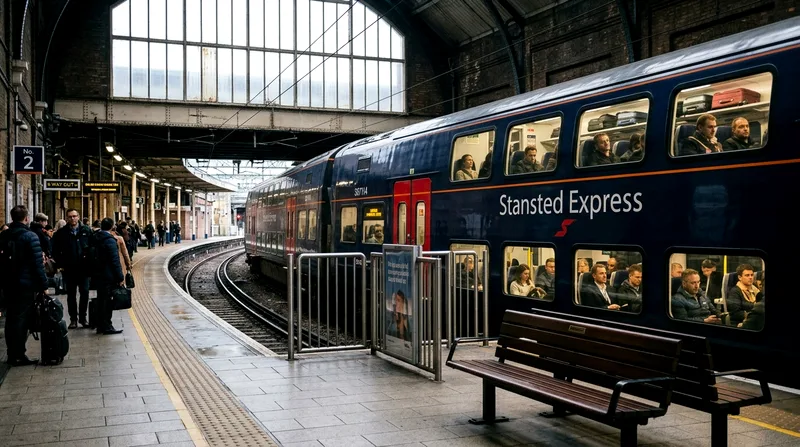
| Stansted | ~40 miles northeast | 45-50 min (Stansted Express) | Mid to high | Budget European flights |
| Luton | ~35 miles north | 40-50 min (rail to St Pancras) | Mid | Budget European flights, slightly cheaper transfer |
| London City | ~6 miles east | 20-25 min (DLR) | Low (standard transit fare) | Business trips, short breaks, speed |
Journey times are approximate and vary by terminal, time of day and destination station; always check current schedules and prices before booking.
Transfer options and journey time
From Heathrow, the Elizabeth line reaches central London (Paddington and onward through the West End and the City) in roughly 35-45 minutes depending on your terminal and destination station. The Heathrow Express is faster to Paddington alone — around 15-20 minutes — but costs more and only serves that one station. The London Underground's Piccadilly line is the budget option, taking roughly 50-60 minutes but costing a fraction of the price.
Gatwick Express gets you to Victoria in about 30 minutes, which is genuinely competitive with Heathrow — the catch is Gatwick's extra distance means this is close to the fastest option available, not one of several. Stansted Express to Liverpool Street takes around 45-50 minutes. Luton requires a shuttle or the new direct rail link to St Pancras via Luton Airport Parkway, totalling around 40-50 minutes door to platform. London City wins outright here: the DLR (Docklands Light Railway) gets you into the City or Canary Wharf in 20-25 minutes, often less.
Cost level of transfers and late-night arrivals
Premium rail links (Heathrow Express, Gatwick Express, Stansted Express) sit in a similar higher-cost bracket, while the Elizabeth line, the Tube, and standard rail into St Pancras from Luton are considerably cheaper for a near-identical destination. London City's DLR fare is cheap by comparison, using standard Oyster/contactless pricing rather than a premium airport fare — one of its few unambiguous advantages.
If you're arriving after midnight, this all changes. Heathrow has night buses and the Piccadilly line runs late but not 24 hours; Stansted and Luton have dedicated night coach services, which cost more than daytime trains and take longer. Always check current prices and last-departure times before booking a very late or very early flight — this is where an otherwise "cheap" airport choice turns expensive fast, because a taxi becomes the only remaining option.
Heathrow vs Gatwick
Heathrow vs Gatwick is the comparison most travellers actually need, since between them these two airports cover the overwhelming majority of long-haul arrivals into London. Heathrow has five terminals, more flight choice, and a slightly faster core transfer via the Elizabeth line or Heathrow Express. Gatwick has two terminals (North and South), a famously reliable Gatwick Express, and tends to be marginally less congested on the ground, though its extra distance mostly cancels that out in total journey time.
I'd lean Heathrow for most first-time visitors, purely because of airline choice and the Elizabeth line's reach across the city — it connects directly through Paddington, Bond Street, Tottenham Court Road and Liverpool Street, which means fewer changes for most hotel locations. Gatwick's single express line to Victoria is excellent if that's near your accommodation, but less flexible if you're staying in, say, Shoreditch or Camden.
Long-haul and US flight connections
Heathrow is the stronger choice for US and long-haul connections by a clear margin — it's a major hub for British Airways and a Star Alliance and Oneworld gateway with dozens of daily transatlantic departures. Gatwick has reduced its long-haul long-haul footprint over the past decade, though it still runs transatlantic and long-haul leisure routes with carriers like British Airways and various charter operators. If your itinerary includes a long-haul leg from North America, Asia or Australia, Heathrow will almost always give you more schedule options and better rebooking flexibility if something goes wrong.
Terminal ease and onward links
Heathrow's downside is its sheer size — Terminal 5 alone handles more passengers than some entire European airports, and getting from gate to train can take 15-20 minutes of walking and shuttle transfers. Gatwick's terminals are more compact and the signage is generally easier to follow under pressure, which matters if you're travelling with young children or connecting under time pressure. Neither airport is as simple as London City, but Gatwick edges Heathrow slightly on raw terminal navigation, even if Heathrow wins on where you end up afterwards.
Stansted, Luton and London City
These three serve different purposes, and lumping them together as "the other airports" undersells the real differences. Stansted and Luton compete directly for the same budget-carrier passenger; London City competes with nobody — it's a niche product for people who value time over price.
Budget airline airports: Stansted vs Luton
Stansted vs Luton is close, and neither is clearly better. Stansted is slightly further out but has the more polished, purpose-built Stansted Express rail link straight into Liverpool Street — useful if you're heading to the City or Shoreditch. Luton's airport terminal has had a mixed reputation for queues and crowding at peak times, though the newer rail link to Luton Airport Parkway and on to St Pancras has closed much of the speed gap with Stansted. If your hotel is near King's Cross or St Pancras, Luton's direct line edges it; if you're headed east into the City, Stansted wins. Avoid both, frankly, if you're arriving after 11pm with heavy luggage and no pre-booked transfer — night coach options exist but add 30-60 minutes and cost more than you'd expect.
Is London City Airport worth it?
London City Airport is worth it if your flight options line up and you value your time highly. It's genuinely tiny — one terminal, short queues, and a 20-25 minute DLR ride straight into the heart of the financial district or Canary Wharf. The catch is limited route choice: it serves mostly European business routes (Amsterdam, Zurich, Frankfurt, Dublin, Edinburgh among others) plus a small number of domestic links, and fares tend to run higher than the equivalent Stansted or Luton route. I wouldn't recommend it for leisure travellers chasing the cheapest fare, but for a short business trip or a couple's long weekend where speed matters more than saving £30, it's hard to beat.
Which Airport Suits Which Traveller
The right airport depends more on who you are and what you're carrying than on the three-digit fare difference flight search engines love to highlight.
First-timers, families and budget travellers
First-time visitors and families should generally prioritise Heathrow or Gatwick over the lower fares often available at Stansted or Luton. Both have more strong rail links, better accessibility for pushchairs and wheelchairs, and more staff on hand if something goes wrong. If you're travelling with children, factor in that both Stansted and Luton transfers typically involve navigating a shuttle bus or a longer walk between terminal and platform — manageable solo, harder with a double buggy and two carry-ons. Budget-conscious solo travelers without heavy luggage are the group best placed to make Stansted or Luton work, since the time cost matters less when you're not rushing to a dinner reservation or juggling a toddler's nap schedule.
Business travellers and short breaks
Business travellers and couples on a tight two- or three-night break should weight journey time more heavily than fare price, since losing 90 minutes each way on a short trip is proportionally a bigger loss than on a two-week holiday. London City is the standout here if your route is served, with Gatwick and Heathrow a reasonable second choice depending on the destination city — note that neither Amsterdam nor Dublin runs from London City to every UK regional hub, so check routes carefully. European travellers hopping over for a long weekend, similar to a Paris-to-London or Brussels-to-London trip, often find Luton or Stansted perfectly adequate precisely because the flight itself is short and the stakes of a slightly longer transfer are lower.
The Verdict
Heathrow is the best all-round London airport for most visitors — it has the widest flight choice, the strongest long-haul and US connections, and transfer options (the Elizabeth line, Heathrow Express, or the cheaper Piccadilly line) that reach most of central London without a change. It's not perfect: the terminals are large, security queues can run long at peak times, and the premium Heathrow Express fare feels steep for a 15-minute ride. But as a default choice, it beats Gatwick, Stansted, Luton and London City on balance of convenience.
Gatwick is the right call when your specific flight route or fare makes it meaningfully cheaper, and the Gatwick Express to Victoria keeps the transfer penalty small. Stansted and Luton only win when the flight saving clearly outweighs the extra 30-50 minutes and the added rail fare — don't choose them purely because the headline flight price is lower by £10 or £15. London City is a genuine specialist pick: brilliant for short European business trips and weekend breaks where speed into the centre matters more than route choice or fare.
Compare this to arriving in Paris, where Charles de Gaulle and Orly split traffic in a similar way, or Rome, where Fiumicino dominates and Ciampino plays Stansted's budget role — London's system is more fragmented, with five real options instead of two or three. That fragmentation is exactly why it pays to work out total journey cost and time before you book, not after.
Frequently asked questions
Which London airport is easiest to get into the city from?
London City Airport is the easiest and fastest, with the DLR reaching the City or Canary Wharf in 20-25 minutes on a standard transit fare. Heathrow comes next thanks to the Elizabeth line's direct reach across multiple central stations, even though it's physically further out than London City.
Is it better to fly into Heathrow or Gatwick?
Heathrow is generally better for long-haul and US routes and offers more airline choice overall. Gatwick is a reasonable alternative with its own fast express rail link to Victoria, and it's worth choosing when a specific flight route is notably cheaper or more convenient out of Gatwick.
Which airport is better, Stansted or Heathrow?
Heathrow is better for most travellers because of its wider route network and stronger transfer links into the city centre. Stansted only makes sense when you're flying a budget European route that isn't served from Heathrow and the fare saving covers the extra 30-40 minutes and higher express rail fare.
Which London airport is closest to the city centre?
London City Airport is the closest, roughly 6 miles from central London, compared with Heathrow's 15 miles and Gatwick, Stansted and Luton's 30-40 miles. Its proximity is the main reason the DLR transfer is so much shorter than from any other London airport.
Is London City Airport worth flying into?
It's worth it if your route is served and you value a fast, simple transfer over the lowest possible fare — expect higher ticket prices than the equivalent Stansted or Luton flight. It's less useful for budget leisure travel since its route network is smaller and skews toward European business destinations.