London how to get to Heathrow: compare Heathrow Express, Elizabeth line, Piccadilly line, coach and private transfer by time, cost and luggage.
Heathrow Transport Options at a Glance
Anyone searching for London how to get to Heathrow is usually juggling three things at once: how long they've got, how much they want to spend, and how many bags they're hauling. There are five realistic ways to do the journey — Heathrow Express, the Elizabeth line, the Piccadilly line, National Express coaches, and private or minicab transfers — and each one trades off those three factors differently. None of them is wrong, exactly, but a few of them are wrong for specific situations, and that's where most people get caught out.
The short version: if you're near Paddington and time is tight, Heathrow Express is built for you. If you're anywhere else in central London, the Elizabeth line usually makes more sense and costs noticeably less. The Piccadilly line is the budget option and the slowest by a fair margin. Coaches suit people travelling from outside central London with a bit more patience. Private transfers suit families, late-night arrivals, and anyone who'd rather not think about any of this at all.
Heathrow Express and Elizabeth Line
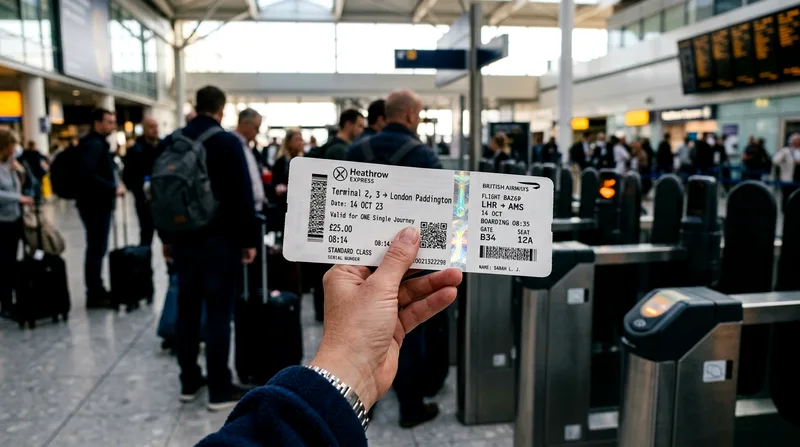
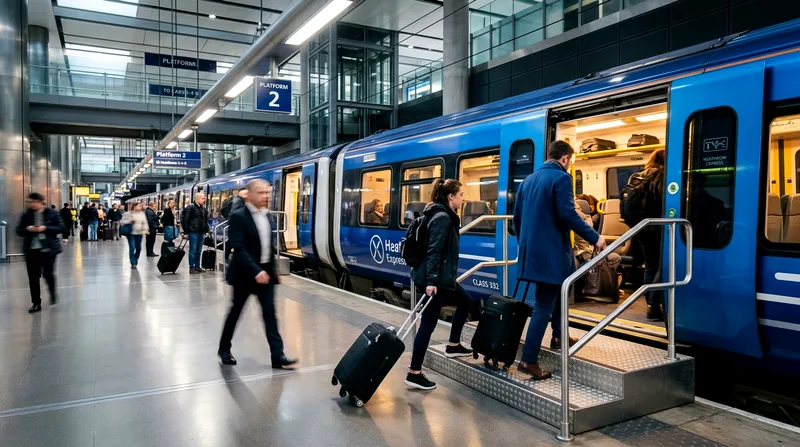
Heathrow Express runs nonstop from London Paddington Station to Heathrow Central (serving Terminals 2 and 3) in about 15 minutes, with a slightly longer run to Terminal 5. It's the fastest rail option by a clear margin and runs roughly every 15 minutes through the day. The trade-off is price — it sits at the premium end, and booking in advance versus buying on the day can make a real difference to the fare, so check current prices before you travel rather than assuming a fixed figure.
The Elizabeth line (Crossrail) also calls at Paddington, plus central stops including Bond Street Station, and continues out to Heathrow with stops at Terminals 2/3 and Terminal 5. Journey time from Paddington is close to Heathrow Express — somewhere in the 25–30 minute range depending on the terminal — but the fare sits at a mid-level price point, often roughly half of Heathrow Express for a similar trip. For travellers starting anywhere other than Paddington itself, the Elizabeth line is usually both cheaper and more convenient, since it threads through more of central London without requiring a change onto Heathrow Express first.
Piccadilly Line, Coach and Private Transfer
The Piccadilly line is the Underground option, running directly to Terminals 2, 3 and 5 as part of the regular Tube network, with Terminal 4 served by a short additional stop on certain trains. It's by far the cheapest rail route — a standard Tube/Oyster fare rather than a premium airport fare — but it's also the slowest, often taking 50–60 minutes or more from central zones, with multiple stops and no dedicated luggage space.
National Express and similar coach services run from Victoria Coach Station and a few other London pickup points direct to all Heathrow terminals. Journey times vary with traffic, typically 45 minutes to well over an hour, and fares sit in the budget-to-mid range. Coaches make sense if you're not near a Tube or rail line but can get to Victoria easily, or if you're travelling with a group where a flat per-vehicle style saving matters more than speed.
Private transfers and licensed minicabs offer door-to-door service from any London address, at a premium price that scales with distance and traffic — expect this to be the most expensive option on paper, though split between three or four people it can rival rail fares. The appeal isn't cost; it's not having to manage stairs, interchanges or timetables with children or heavy luggage in tow.
Head-to-Head: Time, Cost and Effort
Lay the options side by side and the pattern is pretty consistent: speed and price move together, almost exactly as you'd expect, while effort doesn't always follow the same curve. Heathrow Express is fast and expensive. The Piccadilly line is slow and cheap. The Elizabeth line sits in the middle and, for most central London starting points, offers the best ratio of time saved to money spent. Private transfer breaks the pattern entirely — it's not about speed, it's about removing effort altogether, at a cost.
The Elizabeth line offers the best balance of speed and cost for most central London travellers, while Heathrow Express wins on raw speed from Paddington and the Piccadilly line wins on price.
London how to get to Heathrow: time, cost and luggage compared
| Option | Journey time from central London | Cost level | Luggage space | Step-free access |
|---|---|---|---|---|
| Heathrow Express | approx. 15-25 min from Paddington | Premium | Good, dedicated racks | Yes |
| Elizabeth line | approx. 25-40 min from central stops | Mid | Good, some rack space | Yes, most stations |
| Piccadilly line | approx. 50-75 min from central zones | Budget | Limited, no racks | Limited, varies by station |
| Coach (Victoria) | approx. 45-75 min, traffic dependent | Budget to mid | Good, hold storage | Yes |
| Private transfer/minicab | approx. 40-70 min, traffic dependent | Premium | Excellent, door-to-door | Yes |
Typical figures based on published route information; actual times and fares vary by time of day, traffic and terminal, so check current schedules before booking.
Speed and Cost Level Ranked
Ranked by speed from Paddington or central London: Heathrow Express first, Elizabeth line a close second, private transfer third (subject to traffic), coach fourth, Piccadilly line last. Ranked by cost from cheapest to most expensive, the order almost reverses: Piccadilly line is cheapest, then coach, then Elizabeth line, then Heathrow Express, with private transfer typically the most expensive per person unless you're splitting it across a group. If you're watching the budget, the gap between Piccadilly line and Heathrow Express fares can be several times over, which matters more on a short-haul city break than a long-haul trip where the flight cost dwarfs the transfer.
Changes, Frequency and Early or Late Travel
Heathrow Express and the Elizabeth line both run frequently — roughly every 15 minutes off-peak — and need no changes if you're starting at Paddington. From elsewhere in London, you'll likely take a Tube or bus to reach a mainline or Elizabeth line station first, which adds time the headline journey figures don't show. The Piccadilly line runs more often but is a single slow service with many stops, so there's no change required, just patience.
Early and late flights are where things get awkward. The Tube doesn't run all night, and first Piccadilly line or Elizabeth line trains typically start around 5am, with last trains closing out well before midnight. Heathrow Express keeps broadly similar hours. If your flight lands after last-train time or departs before first-train time, coaches run a more limited overnight schedule, and a private transfer or minicab becomes the only realistic option — worth booking the night before rather than hoping to find one at 2am.
Luggage, Comfort and Accessibility Compared
Luggage is where theory and reality diverge from the comparison table above. Heathrow Express and the Elizabeth line both have genuine luggage racks and wide doors, so two large suitcases per person is manageable without blocking the aisle. The Piccadilly line has none of that — it's a standard Tube carriage, narrow doors, no racks, and at busy times you'll be standing with a case wedged between your knees. For a single backpack, fine. For a family with four suitcases, it's genuinely unpleasant, and I wouldn't recommend it for that scenario even though it's the cheapest option on paper.
Space for Large Bags and Step-Free Access
Step-free access matters more than most guides admit. Heathrow Express and the Elizabeth line are step-free throughout, from Paddington and Bond Street Station right through to the Heathrow platforms, which makes them the sensible choice for senior travellers, wheelchair users, or anyone with a pushchair. The Piccadilly line is patchier — some central London stations still rely on stairs or long escalator runs with no lift, so check the specific station before committing, particularly if you're connecting via Waterloo Station or another interchange rather than starting at a step-free hub.
Coaches handle luggage well, with under-vehicle holds similar to long-distance buses, and boarding is level from the platform. Private transfers are the obvious winner here: the driver handles the bags, there are no stairs, and child car seats can usually be arranged in advance. If step-free, zero-lifting travel is the priority and budget allows, skip public transport altogether.
Which Terminal Are You Flying From?
Heathrow's terminal layout changes which option makes sense, and this is the detail most comparison articles skip. Terminal 4 sits apart from the main cluster, so not every Piccadilly line train stops there directly — some require a brief change at Terminals 2/3. Getting this wrong means an extra 10–15 minutes you hadn't budgeted for, so always check your specific terminal before boarding, not after.
Terminals 2, 3 and 5 Routing by Option
Both Heathrow Express and the Elizabeth line serve Heathrow Terminal 2 and Heathrow Terminal 3 at one shared station, then continue to Heathrow Terminal 5 as a separate stop — so check your boarding pass before you board, since going to the wrong one means doubling back. The Piccadilly line calls at Terminals 2/3, then Terminal 5, with Terminal 4 looping separately on most services. Coaches and private transfers drop directly at your named terminal door, which is one less thing to think about and part of why they appeal to first-time flyers or anyone travelling with young children who don't want a last-minute dash between platforms.
Who Should Pick Which Option
There's a reasonable instinct to want one universal answer, but the honest truth is that the right choice changes with who's travelling and when. Matching the option to the traveller avoids both overpaying and under-planning.
Budget, Families, Business and Late-Night Travellers
Budget travellers and solo backpackers: take the Piccadilly line if you're carrying one bag and have time to spare — it's part of the standard Tube fare system, so an Oyster card or contactless tap works the same as any other journey. Families with children and multiple suitcases: the Elizabeth line is the sweet spot, or a private transfer if there are four or more of you splitting the cost. Business travellers on a tight schedule from Paddington: Heathrow Express remains the fastest door-to-platform option, worth the premium when a meeting or a tight connection is on the line. Couples and European travellers connecting from Eurostar at St Pancras: the Elizabeth line is usually one change away and avoids a second premium fare on top of the Eurostar ticket. Senior travellers or anyone needing step-free guarantees: stick to the Elizabeth line, Heathrow Express, or a private transfer, and avoid Piccadilly line stations with no lift. Late-night or pre-dawn flights: book a private transfer or check coach timetables in advance, since rail options largely stop overnight.
Our Verdict
For most people asking London how to get to Heathrow, the Elizabeth line is the best all-round pick: mid-level cost, good luggage space, step-free throughout, and direct from Bond Street Station or Paddington without the Heathrow Express premium. If you're starting right at Paddington and minutes genuinely matter — a tight connection, a business trip — pay the extra for Heathrow Express. If cost is the only concern and you're carrying light luggage, the Piccadilly line gets you there for a fraction of the price, just budget an extra 20–30 minutes and brace for stairs at some stations. Families, senior travellers prioritising comfort, or anyone flying at an antisocial hour should look at a private transfer rather than forcing the issue with public transport.
For context, this is a far simpler decision than the equivalent trip in cities like Paris, where the RER B to Charles de Gaulle has a reputation for delays, or Rome, where getting into the centre from Fiumicino often means choosing between an expensive dedicated train and a much slower regional one. London's options are more numerous, which is exactly why it pays to compare them properly before you book, rather than defaulting to whichever name you've heard of. Check live times and fares directly with Transport for London, Heathrow Express and National Express before you travel, since schedules shift and advance-purchase rail fares can undercut walk-up prices substantially.
While you're planning the airport leg, it's worth sorting the rest of your London transport at the same time — a Visitor Oyster card or contactless setup covers the Tube and Elizabeth line fares into town, and most city travel passes and attraction tickets are bookable alongside your transfer.
Frequently asked questions
What is the fastest way to get to Heathrow from central London?
Heathrow Express from London Paddington Station is the fastest, taking roughly 15 minutes to Terminals 2/3 nonstop. The Elizabeth line is only slightly slower from the same station, typically 20–25 minutes, at a noticeably lower fare — a strong second choice unless every minute counts.
Does the Elizabeth line go to Heathrow?
Yes. The Elizabeth line runs from central London, including Paddington and Bond Street Station, through to Heathrow Terminals 2/3 and Terminal 5, with through-trains continuing east across London toward Canary Wharf and beyond — useful if you're staying outside the West End.
What is the cheapest way to get to Heathrow?
The Piccadilly line is the cheapest rail option, charged at a standard Tube fare rather than a premium airport fare. It's also the slowest, often 50–75 minutes from central zones, and has no dedicated luggage space, so it suits light packers more than families with suitcases.
Which transport option is best for luggage?
A private transfer is best for heavy luggage since the driver loads and unloads everything door-to-door. Among public options, Heathrow Express and the Elizabeth line both have proper luggage racks and wide doors; the Piccadilly line has neither and gets uncomfortable with more than one large case.
How do I get to different Heathrow terminals?
Heathrow Express and the Elizabeth line share one stop for Terminals 2/3, then continue separately to Terminal 5. The Piccadilly line serves Terminals 2/3 and 5 directly, with Terminal 4 reached via a short additional stop on most trains. Always confirm your terminal on your boarding pass before boarding, since going to the wrong one means backtracking.