Thinking of a Bath and Stonehenge day trip from London? See how the day really runs, how long you get at each stop, and which tour style suits you.
Is Bath and Stonehenge in One Day Realistic?
Yes, but go in with the right expectations. A Bath and Stonehenge day trip from London typically runs 10 to 12 hours door to door, and a good chunk of that is spent on the road, not at either site. London to Stonehenge is roughly a two-hour drive depending on traffic around the M3 and M4; Stonehenge to Bath adds another hour or so. Add a pickup loop around central London, a lunch stop, and the return leg, and you can see why operators build these as full-day — not half-day — itineraries.
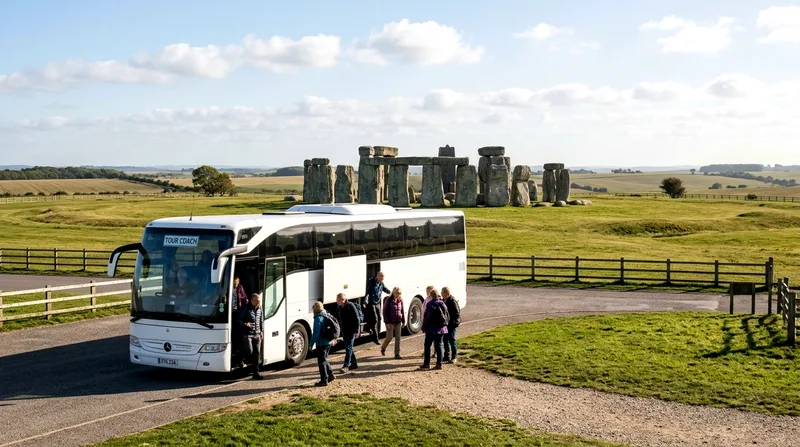
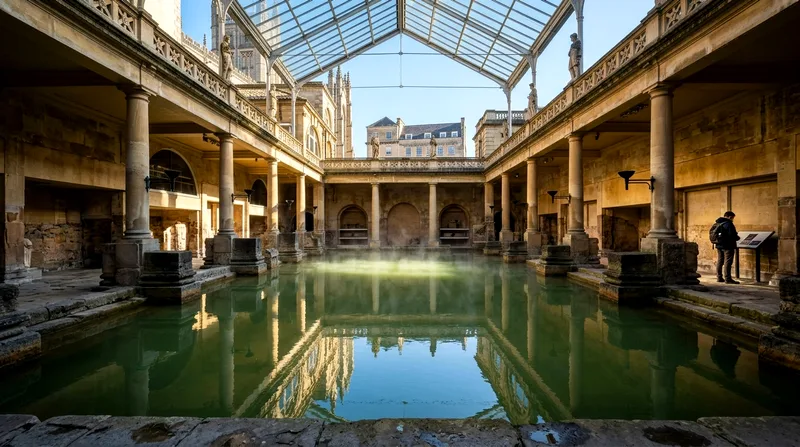
The trade-off is straightforward: you get two UNESCO World Heritage sites in a single outing, which is genuinely efficient if your London time is limited. But you're not getting a leisurely day in either place. Stonehenge visits on combo tours usually run 60–90 minutes, including the shuttle bus from the visitor centre to the stones. Bath gets more time, often 2.5 to 3 hours, but that has to cover the Roman Baths, lunch, and any wandering around the Georgian streets.
I'd rather see someone spend a full day in Bath alone and skip Stonehenge, or vice versa, than rush both and remember neither clearly. But if this is a one-shot trip to England and you won't be back, the combo is a reasonable compromise — just don't expect to linger.
A realistic hour-by-hour itinerary
A typical coach tour departs central London around 8:00–8:30am, often from a hub near Victoria or a hotel pickup loop that can add 30–45 minutes before you're properly on the motorway. You'll likely reach Stonehenge by 10:30–11:00am, spend 60–90 minutes there, then drive on to Bath, arriving early-to-mid afternoon, around 1:00–1:30pm. You get roughly three hours in Bath — enough for the Roman Baths (allow 60–90 minutes inside) plus lunch and a walk past the Royal Crescent and Bath Abbey. Departure back to London is usually 4:30–5:00pm, with arrival back in the city by 7:00–7:30pm, later if traffic on the M4 is bad on a Friday or bank holiday.
Some tours run the reverse order — Bath first, Stonehenge on the way back, timed for sunset in summer. That version is worth asking about specifically, since golden-hour light at Stonehenge is better photographically than the midday glare you get on the standard route.
How much free time you really get in Bath
Strip out the Roman Baths visit and lunch, and you're left with maybe 45 minutes to an hour of genuinely free time in Bath. That's enough to walk from the Baths up to the Royal Crescent and back, or to duck into Bath Abbey next door, but not both at a comfortable pace. Shopping, the Jane Austen Centre, or a proper sit-down meal are off the table unless you skip something else. If Bath's Georgian architecture and museums are the real draw for you, this tour format will frustrate you — a standalone Bath day trip, or an overnight stay, gives you the three or four extra hours you'd actually want.
Who Each Type of Tour Suits
The combined day trip suits people who want maximum sightseeing per day of holiday, not people chasing depth. If you're visiting London for four or five days and want one day outside the city that covers two famous sites, this is efficient. If you've got a week or more in the UK, you're better off splitting them — Stonehenge as a half-day add-on to a Cotswolds or Salisbury trip, Bath as its own full day or overnight.
First-timers, families and history fans
First-time visitors to England who may never return often prefer ticking off both sites over optimising either one — that's a legitimate choice, not a mistake. Families with children aged roughly 8 and up generally manage the day fine, since most of it is seated coach travel with two proper stops; younger kids tend to flag by the Bath leg. History fans get real value from Stonehenge even in a short visit, because the stones themselves don't need hours to appreciate — audio guides included on most tours cover the Neolithic and Bronze Age context in about 20–30 minutes, which fits the allotted time. Couples and solo travellers looking for an easy, no-planning day out also do well here, since everything — transport, entry tickets, guiding — is bundled.
Travellers who should split the trip or skip it
Senior travellers who find long coach days tiring, or anyone with mobility limitations, should know that Stonehenge involves a flat but fairly long walk around the stone circle (roughly 1.5km), and Bath's streets are hilly and cobbled in places. If sitting on a coach for five-plus hours round trip sounds unpleasant, it will be. Architecture and museum lovers who want to actually explore Bath — the Fashion Museum, the Assembly Rooms, independent shops — should book Bath on its own, ideally with a train ticket and a free afternoon. Anyone traveling with toddlers should probably skip this particular combo; the long sitting stretches and two "quick stop" sites don't hold young attention well.
Tour Types Compared: Group, Small-Group, Private
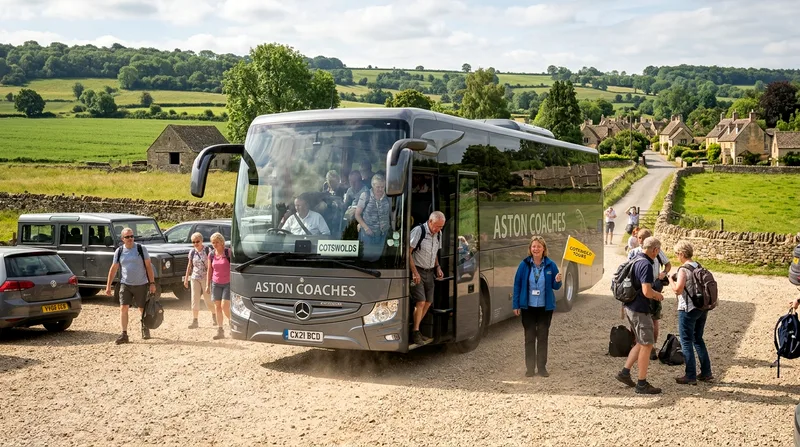
Three broad categories of Bath and Stonehenge tour exist, and the differences matter more than most listings let on. Large coach tours (30–50 seats) are the cheapest and most widely available — you'll find plenty on Viator and similar platforms, with reviews on TripAdvisor giving a decent read on reliability. They run fixed departure and return times, usually with a multilingual guide handling logistics rather than deep commentary. Small-group tours (8–16 people, often minibus) cost more but move faster through stops, with less time lost to headcounts and bathroom breaks, and guides tend to give more personal commentary. Private tours — a dedicated car or minivan with just your party — cost the most by a clear margin but let you set the order, linger longer at one site, and sometimes add a Cotswolds village detour on the way back.
Private tours give the most time and flexibility, large coach tours give the lowest cost, and small-group tours sit in between.
Bath and Stonehenge tour types compared: group size, pacing and cost
| Tour Type | Typical Group Size | Time Flexibility | Pace | Relative Cost |
|---|---|---|---|---|
| Large coach tour | 30–50 people | Fixed schedule | Rushed at each stop | Lowest |
| Small-group tour | 8–16 people | Some flexibility | Moderate | Mid-range |
| Private car/driver | 1–8 people (your party) | Fully flexible | Relaxed | Highest |
| Self-guided by train (Bath only) | Solo/family | Fully flexible | Relaxed | Low-to-mid |
Figures are typical ranges based on common tour formats; check the specific listing's group size and schedule before booking.
Comparison table: pacing, flexibility, group size, cost level
See the table below for a side-by-side view. None of these figures are fixed — always check the specific tour's listed inclusions and current reviews before booking, since pacing varies by operator even within the same category.
Tour vs doing it independently by train
A Bath Stonehenge day trip by train is possible but awkward. Trains from London Paddington to Bath Spa take about 1.5 hours and run frequently, so Bath alone by train is easy and genuinely pleasant — you could have a full relaxed day there. The problem is Stonehenge: it has no train station, sitting about 10 miles from Salisbury, which means a taxi, a limited seasonal bus service, or a hire car from Salisbury station. Doing both by public transport in one day is technically possible but tight and more stressful than it's worth, with connections that don't always line up. For Stonehenge specifically, a tour or a private driver beats public transport on convenience alone. If you're set on independence, consider doing Bath by train on one day and a separate half-day Stonehenge tour (often combined with Salisbury Cathedral) on another.
What to Look for When Booking
Not all listings calling themselves a "Bath and Stonehenge tour" include the same things, and the gaps catch people out. Read the inclusions line by line rather than trusting the headline description.
Inclusions: Roman Baths entry, Stonehenge entry, guide, pickup
Check specifically whether Roman Baths tickets and Stonehenge entry are included in the price or sold as an add-on — some budget listings include transport and a guide but leave you to buy entry tickets on arrival, which adds queuing time you don't have. Roman Baths entry includes a self-paced audio guide as standard, which works well given the tour's time constraints. Confirm whether Stonehenge access means the inner stone circle (rare, usually a separate early-morning or evening "Special Access" experience booked well in advance) or the standard outer path — the vast majority of day tours offer the latter. Also check pickup: London-based hotel pickups are common, but some tours start from a central coach stop only, and a few even route via Heathrow Terminal 5 to collect travelers arriving or connecting that day — useful if you're flying in, worth avoiding if you're already in central London and don't want the detour.
Group size, departure point and cancellation terms
Group size affects your actual experience more than almost anything else on this list — a 50-person coach means slower boarding, longer bathroom-break waits, and a guide who can't give individual attention. Look for the stated maximum group size in the listing, not just "small group" marketing language. Check the exact departure point and what time you need to arrive there, since a 7:45am meeting point on the other side of London from your hotel effectively adds an hour to your day. Finally, check cancellation terms — many day tours allow free cancellation up to 24 hours ahead, which matters given how weather-dependent this particular day trip is.
When to Book and Best Season
Timing affects both availability and how enjoyable the day actually feels, more than most people assume when they book.
Booking lead times for peak and off-peak periods
In peak season — roughly June through September, plus school holidays and the days around Christmas and Easter — popular departures can sell out a week or more ahead, especially smaller-group and private options with limited capacity. Booking two to three weeks out is sensible for summer weekends. In off-peak months (November to February, excluding holiday weeks), you can often book just a few days ahead, and prices tend to soften slightly. Early morning "Special Access" Stonehenge experiences, where you get inside the stone circle before or after public hours, need far more lead time — often a month or more — because spaces are capped and limited to small groups.
Weather, crowds and daylight
Stonehenge is an outdoor site with no real shelter, so winter visits mean cold, wind, and sometimes rain with nowhere to retreat — dress for it. Summer brings the longest daylight, useful for the Bath-then-Stonehenge-sunset routing, but also the thickest crowds at both sites and worse motorway traffic on the way out of London on Friday afternoons. Spring and early autumn (April–May, September–October) tend to offer the best balance: decent weather, shorter queues, and daylight long enough to comfortably fit the full itinerary without feeling rushed at the end.
Frequently asked questions
Is one day enough for both Bath and Stonehenge?
It's enough to see both, not enough to explore either fully. Expect around 60–90 minutes at Stonehenge and 2.5–3 hours in Bath including the Roman Baths and lunch. If you want unhurried time in either place, visit it separately instead.
How much free time do you get in Bath on a combined tour?
After the Roman Baths visit and lunch, you're usually left with roughly 45 minutes to an hour of unstructured time — enough for a walk to the Royal Crescent or a look at Bath Abbey, not both comfortably.
Can you do Bath and Stonehenge by train in one day?
Bath alone by train from London Paddington (about 1.5 hours each way) is easy. Stonehenge has no station and sits 10 miles from Salisbury, so reaching it by public transport in the same day is possible but tight and often involves a taxi — a tour or private driver is more practical.
How many hours do you need at Stonehenge?
Most visitors are satisfied with 60–90 minutes, covering the shuttle bus, the walk around the stone circle, and the visitor centre exhibits. History enthusiasts might want closer to two hours if the tour schedule allows it.
Is a private tour worth it for Bath and Stonehenge?
If budget allows, yes — a private Bath and Stonehenge tour lets you set your own pace, skip coach boarding delays, and extend time at whichever site matters more to you. It costs noticeably more than a coach tour, so it's best justified for small groups, families, or travelers with mobility needs.