London Bridge vs Tower Bridge: compare views, time, cost level and crowds, see what's bookable at each, and decide which to visit first.
London Bridge and Tower Bridge at a Glance
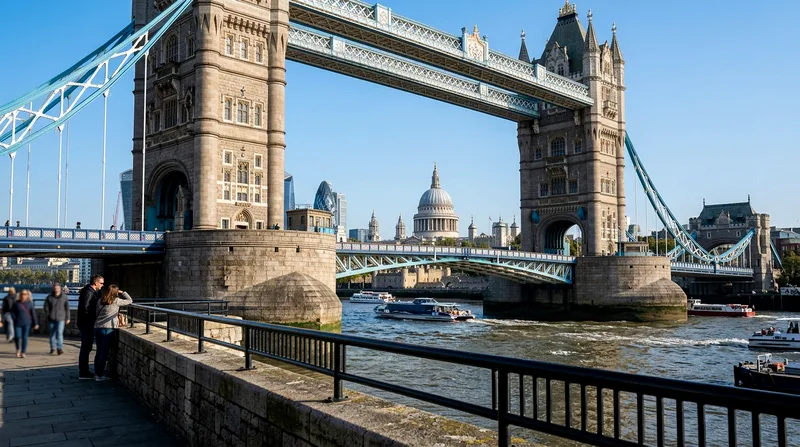
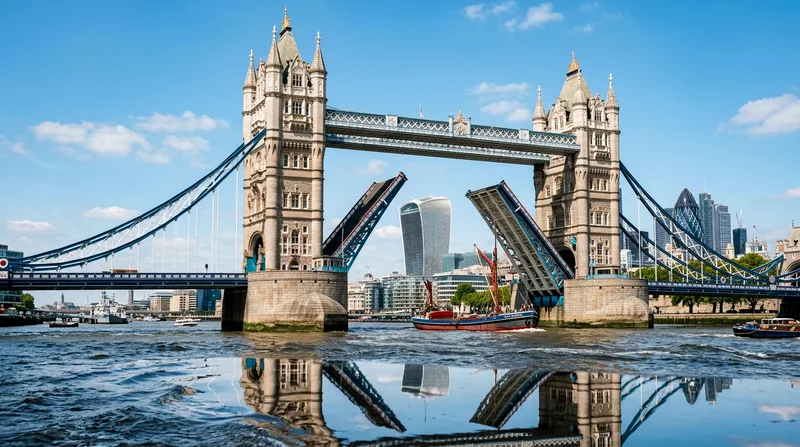
Ask a visitor to picture London Bridge and nine times out of ten they'll describe two Gothic towers, blue suspension chains, and a bascule deck that splits open for ships. That's Tower Bridge. London Bridge, the one that actually carries the name, is a plain concrete structure a few hundred metres upstream, built in 1973, with no towers, no drama, and no entrance fee because there's nothing to buy a ticket for.
This mix-up isn't new and it isn't stupid — it's just wrong, repeatedly, in postcards, phone cases, and more than a few travel blogs. Sorting it out before you plan your day matters, because the two bridges serve completely different purposes for a visitor. One is a free, five-minute walk with a Roman backstory. The other is a paid attraction with glass floors, an exhibition, and a view worth queuing for.
Why people confuse the two
The confusion has a long history of its own. The current London Bridge replaced earlier versions dating back to Roman Britain, when the first crossing here connected the City of London to Southwark around AD 50. Over centuries it was rebuilt several times — a medieval version famously carried shops and houses, and a 19th-century stone bridge once stood on the site before being sold and shipped to Lake Havasu City, Arizona, in 1968, where it still stands today as a genuine, if odd, tourist draw. Tower Bridge, by contrast, opened in 1894, specifically designed to look imposing and Victorian-Gothic so it wouldn't clash with the nearby Tower of London. It was built to impress; London Bridge was built to function.
Quick comparison snapshot
If you only remember one distinction, make it this: London Bridge is a crossing, Tower Bridge is a destination. You walk over London Bridge to get somewhere else — Borough Market, The Shard, the City. You walk to Tower Bridge because it's the plan for the afternoon, whether that's photographing it from the south bank or paying to go inside. Neither approach is wrong, but conflating the two means you might skip the one that actually matches what you came to London for.
What You Can See and Book at Each
The practical difference comes down to what's actually bookable. London Bridge itself has no ticketed experience on the bridge — it's open pavement, used by thousands of commuters daily, with no admission and no opening hours to check. Tower Bridge has a dedicated visitor attraction, the Tower Bridge Exhibition, built into the towers and walkways, and that one does need a ticket, a rough timing, and ideally pre-booking in peak summer.
London Bridge: crossing, views and London Bridge Experience
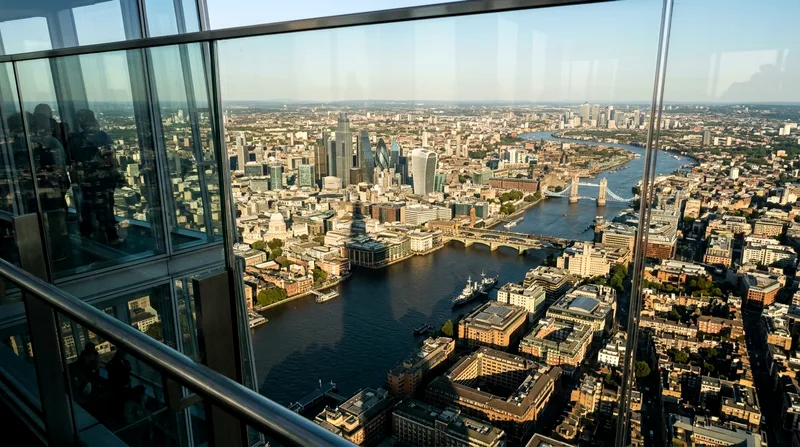
Walking across London Bridge costs nothing and takes under ten minutes at a relaxed pace. The view north looks toward the City's skyline and the Monument to the Great Fire; south, you land near Borough Market and The Shard, which is worth combining into the same outing since it's a two-minute walk from the bridge's south end. One point of confusion worth flagging: the "London Bridge Experience" that older travel content sometimes references was a horror-themed attraction near London Bridge station that closed permanently some years ago — it's not currently operating, so don't plan a visit around it. Check what's running near London Bridge station before you go, since the area has shifted toward food halls and market stalls rather than paid attractions.
Tower Bridge: walkways, engine rooms and exhibition
Tower Bridge's exhibition gets you into the high-level walkways between the two towers, including glass floor panels suspended over the road and river below — not for anyone with a real fear of heights — plus access to the Victorian engine rooms that used to power the bascules. Budget around 60 to 90 minutes inside, and expect an entry fee in the mid-teens to low-twenties in pounds per adult, with family and concession pricing usually available; always check current prices before booking since these do shift. It's the one bridge of the two genuinely worth planning around rather than stumbling into.
Head-to-Head: Time, Cost, Effort, Views, Crowds
Laid side by side, the two bridges don't really compete — they complement. London Bridge wins on speed and price every time; Tower Bridge wins on spectacle and things to actually do once you're there.
Tower Bridge is the paid landmark worth booking ahead for, while London Bridge is the free, quick crossing best used as a photo spot or shortcut.
London Bridge vs Tower Bridge comparison: time, cost, views and crowds
| Bridge | Time Needed | Cost Level | Effort | Best For |
|---|---|---|---|---|
| London Bridge | 5-10 min | Free | Minimal, flat walk | Quick crossing, photos of Tower Bridge, linking Borough Market and The Shard |
| Tower Bridge | 60-90 min | Paid, mid-range ticket | Moderate, stairs or lift to walkways | Iconic photos, glass floor, engine rooms exhibition |
Typical figures based on standard visits; ticket prices and access details change, so check official sources before you travel.
Time needed and cost level
Crossing London Bridge takes five to ten minutes and costs nothing, making it an easy add-on to a Borough Market visit or a Shard trip rather than a standalone outing. Tower Bridge needs more planning: factor in 60 to 90 minutes for the exhibition itself, plus walking time from the nearest Tube stations (Tower Hill or London Bridge, both roughly 10 minutes on foot), and a ticket price that puts it in the same bracket as mid-range London attractions rather than a free stop.
Views, photo spots and crowd levels
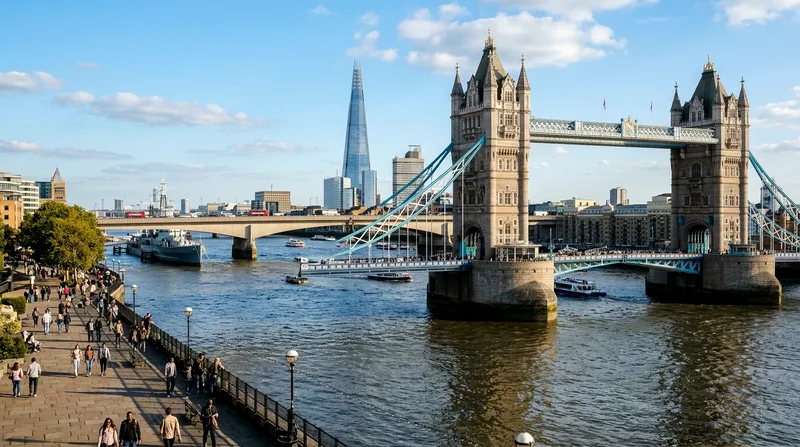
For photographs, Tower Bridge wins outright — it's simply the more photogenic structure, and the best shot isn't from on the bridge at all but from the riverside path near City Hall or from London Bridge itself looking east, which frames Tower Bridge and the Thames together with The Shard behind you. Crowds at Tower Bridge build steadily from mid-morning and stay heavy through the afternoon, especially outside the towers where tour groups gather; London Bridge, being a through-route rather than a destination, never really gets "crowded" in the tourist sense, though rush hour foot traffic from commuters is its own kind of chaos around 8–9am and 5–6pm.
Who Should Pick Which Bridge
Neither bridge is objectively "better" — it depends what you're optimizing for on a given day. If your time in London is genuinely tight, this choice matters more than it seems.
First-timers, families and history fans
First-time visitors and families should prioritize Tower Bridge. It gives children something physical to engage with — glass floors, machinery, a sense of "doing" something rather than just looking — and it pairs naturally with a Tower of London visit next door, which easily fills half a day together. History fans have a slightly different call to make: London Bridge's Roman origins and its odd Arizona afterlife make it the more interesting story on paper, even though the physical structure is the less interesting one to look at. If you like the stories behind places more than the places themselves, don't skip London Bridge just because it looks unremarkable.
Photographers and budget-minded visitors
Photographers should actually visit both, but spend the money at neither if budget is a concern — the best Tower Bridge photos are taken from outside it, for free, from the London Bridge walkway or the south bank near Potters Fields Park. Budget-minded travelers and backpackers should treat Tower Bridge's exhibition as optional rather than essential; London has free viewpoints (Sky Garden, the south bank itself) that deliver a comparable skyline payoff without the ticket price. I'd skip the Tower Bridge exhibition only if you're genuinely counting every pound, because it is one of the better-value paid attractions in central London compared to, say, some West End ticketed experiences.
Combining Both Bridges in One Walk
The good news is you don't have to choose — the two bridges sit close enough together that combining them into one riverside walk is the obvious move for most visitors, and it's far more efficient than treating them as separate outings on different days.
Riverside route between Southwark and the Tower
Start at London Bridge station, cross the bridge itself, then drop down to the south bank and walk east along the Thames path through Southwark, passing Borough Market (worth 30 minutes if you haven't been) and the base of The Shard. From there it's roughly a 20-minute riverside walk to Tower Bridge, passing City Hall and giving you that classic photo angle along the way. The full route — London Bridge to Tower Bridge, with a market stop — comfortably fits into two to three hours, less if you skip the market, and it's flat, well-signed, and pushchair-friendly the entire way. This is also the natural lead-in to a Tower of London ticket if you're building a fuller City/Southwark day, since the Tower sits right at the north end of Tower Bridge.
Verdict: Which Bridge to Visit
If you can only manage one, go to Tower Bridge — it's the landmark, it has an actual attraction inside it, and it photographs the way people expect "London Bridge" to photograph, irony intended. If you've got an extra ten minutes and you're already in the area, walk across London Bridge too; it costs nothing, and standing on it gives you one of the better free views of Tower Bridge and the City skyline in one frame.
Compared with how other European cities handle their signature bridges — Paris's Pont Alexandre III or Amsterdam's countless small crossings — London's setup is unusual in having one free, forgettable bridge named after the city and one paid, ornate bridge that everyone actually means when they say the name. It's a quirk worth knowing before you book anything, and it's also why most itineraries that mention "London Bridge" as a sight are really pointing you toward Tower Bridge without realizing it. Most travelers end up doing both anyway, almost by accident, simply by walking the river between Southwark and the Tower of London.
Frequently asked questions
What is the difference between Tower Bridge and London Bridge?
Tower Bridge is the ornate Victorian bascule bridge with two towers, opened in 1894, built near the Tower of London and featuring a paid exhibition with glass-floor walkways. London Bridge is a plain concrete crossing a short distance upstream, rebuilt in 1973, free to walk across, with no towers, no ticket, and much older Roman-era origins on the same site.
Is it free to walk across London Bridge?
Yes, completely free, at any time, with no gates or barriers — it's a normal public road and pavement used daily by pedestrians, cyclists and traffic between the City of London and Southwark. There's no equivalent free "walkway attraction" like Tower Bridge offers; you simply cross it.
Where is the original London Bridge now?
A 19th-century stone version of London Bridge was sold in 1968 and shipped piece by piece to Lake Havasu City, Arizona, where it was reassembled and still stands today as a functioning bridge and local tourist attraction. The current 1973 concrete bridge replaced it on the original London site.
What are the best views from London Bridge?
Standing on London Bridge looking east gives you a clear view of Tower Bridge and the Thames, often with The Shard visible behind you if you turn around — one of the better free photo angles in that part of London. Looking north shows the City skyline and the Monument.
Is London Bridge or Tower Bridge better to visit?
For most visitors, Tower Bridge is the better use of time and money since it offers an actual attraction — walkways, glass floors, an exhibition — while London Bridge is just a crossing. That said, London Bridge is worth the free five-minute walk for the photo and the Roman history, especially if you're already heading toward Borough Market or the Tower of London.