London Eye vs The Shard compared on height, views, cost level, queues and photo spots, plus free alternatives, so you can pick the best London viewpoint.
London Eye vs The Shard at a Glance
London Eye vs The Shard is one of those arguments every first-time visitor to London has, usually while standing on Westminster Bridge trying to decide where to spend their afternoon. Both sit near the River Thames, both charge a premium for a view, and both get photographed to exhaustion — but they're not really competing for the same experience.
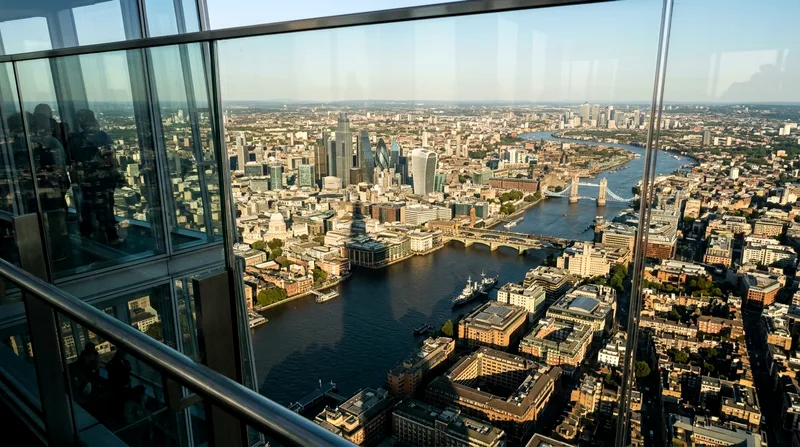
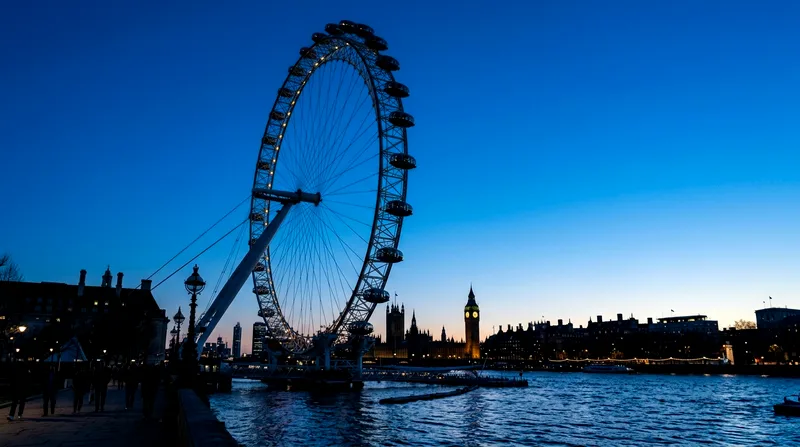
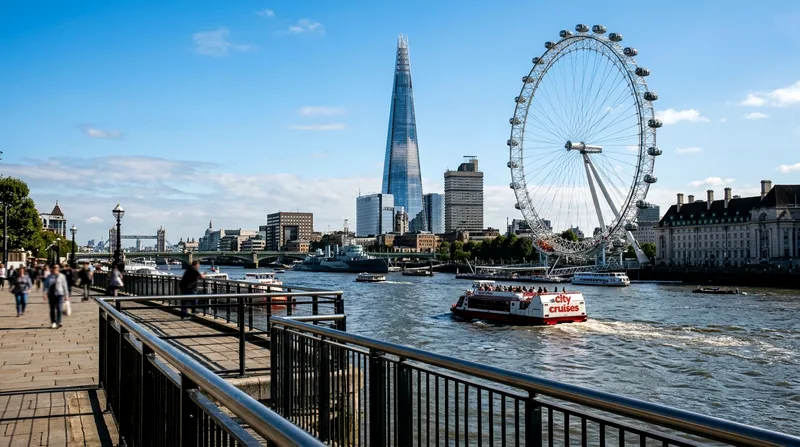
The London Eye is a 135-metre Ferris wheel on the South Bank, opened in 2000, that takes roughly 30 minutes to complete one slow rotation in a glass capsule. The Shard is a 310-metre skyscraper near London Bridge station, and its viewing attraction — The View from The Shard — puts you on open-air and glass-enclosed decks on floors 68 to 72. One moves, one doesn't. One is outdoors-adjacent and breezy at the top, the other is sealed in a capsule that never opens.
If you're the type who wants a view with a drink in hand and no fixed time limit, The Shard's upper deck bar nudges you that way. If you want constant movement and a view that unfolds gradually over half an hour, the Eye does that better than any static deck can. I'd avoid treating this as a "which is objectively superior" question — it's closer to choosing between a cable car and a mountain summit.
The London Eye offers a slow 30-minute rotating ride with Westminster views, while The Shard offers a static, much higher deck with a 360-degree panorama that includes the Eye itself.
London Eye vs The Shard compared on height, format, views and cost level
| Attraction | Height | Format | View Highlights | Cost Level | Typical Duration |
|---|---|---|---|---|---|
| London Eye | approx. 135m | Rotating glass capsule | Westminster, Thames, The Shard in frame | Mid-range | approx. 30 min fixed |
| The Shard (View from The Shard) | approx. 310m | Static indoor + partial open-air deck | Tower Bridge, Thames, full skyline | Pricier | 45–90 min, self-paced |
| Sky Garden | approx. 155m | Static indoor garden deck | City skyline, Thames, Tower Bridge | Free (timed ticket) | 45–60 min, self-paced |
| Primrose Hill (free alternative) | approx. 78m (hill) | Outdoor open park | Skyline silhouette, sunset | Free | Unlimited |
Figures are approximate and widely published; always confirm current opening hours and ticket requirements before you go.
Rotating capsule vs static observation deck
The Eye's capsules are sealed glass pods holding up to 25 people, moving at about 0.9 km/h — slow enough that you barely notice motion, which is exactly the point. You're inside for the full 30-minute rotation whether you like it or not; there's no getting off early.
The Shard works differently. You take a high-speed lift to floor 68, walk the enclosed deck, then climb an open staircase to the partially uncovered level on floor 72, and you can stay as long as you want within opening hours. That flexibility is the single biggest practical difference: the Eye is a fixed-duration ride, The Shard is a browse-at-your-own-pace deck. For claustrophobic travelers, The Shard's open-air section is a genuine advantage; for anyone nervous about heights on an exposed platform, the Eye's fully enclosed capsule feels safer.
Head-to-Head: Height, Views and Photos
Height is the easiest part of this comparison to settle, and the number gap is bigger than most people expect. This directly answers the "Shard vs London Eye height" question that trips people up before they book.
Height and 360-degree panorama
The Shard's public viewing floors sit roughly 244 metres up (the building itself reaches about 310m with its spire), compared with the London Eye's highest capsule point at around 135 metres. That's nearly double the altitude, and it shows in the panorama — on a clear day from The Shard you can pick out the Thames estuary, the North Downs, and aircraft on approach to City Airport. The Eye's view is lower and tighter, which isn't a flaw — it means landmarks like Big Ben, the Houses of Parliament, and the London Eye's own South Bank surroundings feel close and legible rather than distant and flattened.
Here's the detail most guides skip: the Eye's view includes The Shard prominently on the skyline, a genuine landmark to photograph. The Shard's view cannot include The Shard. If having the "other" icon in your shot matters to you, that's a point in the Eye's favor. Weather also hits the two differently — low cloud regularly swallows The Shard's upper floors (ticket desks will warn you if visibility is poor), while the Eye's lower altitude means it's usable in slightly murkier conditions, though heavy fog still ruins both.
Photo angles and glass reflections
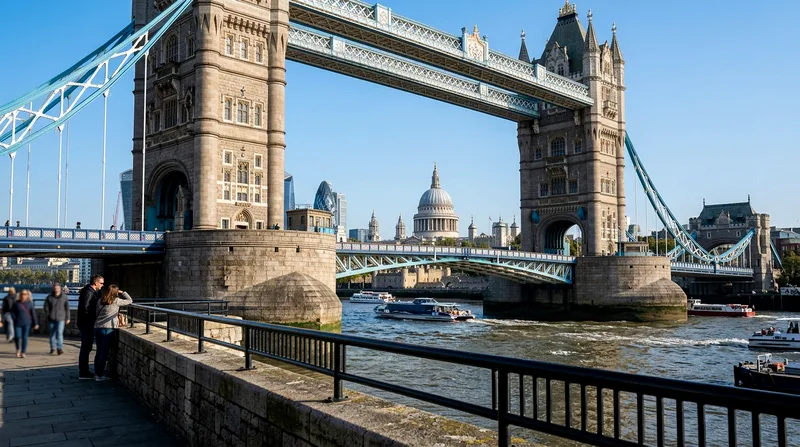
Both attractions fight glass reflections, but differently. The Eye's capsules have curved glass and interior lighting that bounces back at night, making evening photography fiddly — bring a phone case or lens cloth and shoot through the glass at an angle, not straight on. The Shard's enclosed floor 68-69 has the same issue, but the open-air floor 72 solves it entirely: no glass, just railings, which is the better photo spot if you're serious about sharp shots of Tower Bridge or the City skyline.
For sunset specifically, The Shard's open deck is hard to beat — you get unobstructed golden-hour light across the whole horizon. The Eye at sunset is lovely but softer, filtered through glass and often queued at the most popular slot. Neither is cheap enough to visit twice for "better light," so check sunset times before booking a slot if photography is your main reason for going.
Cost Level, Queues and Time Needed
Neither attraction is a budget activity, and pretending otherwise would be dishonest. Both sit in the upper tier of London's paid sightseeing, well above a bus tour or museum entry, though exact pricing shifts with season and time slot, so always check current figures when booking.
Relative cost and value
As a general rule, The Shard runs pricier than the London Eye, particularly for the combined "View from The Shard" ticket that includes both viewing floors. The Eye sits in the mid-range bracket for London attractions — comparable to a West End matinee ticket rather than a theatre premiere. Both offer "fast-track" or flexible-time upgrades at extra cost, and both get noticeably cheaper per person if you buy combination tickets bundling other attractions like Madame Tussauds or a Thames river cruise.
Value is subjective. If you measure it by minutes of experience per pound, the Eye's fixed 30 minutes feels more structured; The Shard's open-ended visit can stretch to 90 minutes if you linger at the bar on floor 72, which changes the math in its favor for slow travelers.
Queues, duration and best time to visit
Both attractions run airport-style security, and both get genuinely busy at peak times — weekends, school holidays, and the last two hours before sunset. Pre-booking a timed slot online cuts the worst of it for both; walk-up queues at the Eye in summer can run 45 minutes or more without a pre-booked ticket.
The Eye's queue issue is compounded by capsule loading — you wait for your group's capsule, then commit to the full 30-minute rotation with no early exit. The Shard has no such lock-in: once you're up, you leave when you want, which matters if you're traveling with small children who lose patience fast. My honest advice: book the first slot of the day or the last slot before closing for either attraction — midday slots attract the longest queues and the flattest light for photos.
Who Should Pick Which
There's no universal winner here, which is why this whole comparison exists instead of a simple recommendation. The right pick depends heavily on who's traveling and why.
Families, couples and first-timers
Families with younger children generally do better with the London Eye — the fixed 30-minute duration is predictable, there's no open-air edge to worry about, and the slow rotation holds a child's attention without overwhelming them. Couples looking for a sunset or evening moment tend to prefer The Shard, especially with the option to extend the visit with a drink at the bar on floor 72 — it feels more like an occasion, less like a ride.
First-time visitors to London on a tight schedule should lean toward the Eye: it's on the South Bank, walkable from Westminster, Big Ben, and the Southbank Centre, so it slots neatly into a half-day itinerary that might also include a river cruise. The Shard requires a slightly different detour near London Bridge station, which is still central but adds a bit more walking if you're based around Westminster.
Photographers and accessibility needs
Serious photographers should pick The Shard for the open-air floor 72 alone — no glass, better angles on Tower Bridge, and genuine altitude for layered skyline shots. The Eye works better for wide establishing shots of Westminster with foreground river detail, so don't write it off entirely if your subject is Parliament rather than the City skyline.
For accessibility, both attractions are wheelchair accessible with step-free routes and lifts, but the Eye's capsules allow wheelchair users to remain in their chair throughout the full rotation, while The Shard's open-air deck has some uneven flooring sections worth asking staff about in advance. Travelers with sensory sensitivities to enclosed, slow-moving spaces may find the Eye's sealed capsule harder going than The Shard's larger, more open floors.
Free Alternatives to Consider
If you balk at paying premium prices for either attraction — and plenty of seasoned London travelers do — there are legitimate free viewpoints worth knowing about before you commit your budget to the Eye or The Shard.
Sky Garden and other free viewpoints
Sky Garden, on top of 20 Fenchurch Street (the "Walkie-Talkie" building), is the most direct free alternative to The Shard — it's roughly 155 metres up, offers an indoor garden terrace with Thames and City views, and costs nothing beyond booking a timed entry slot in advance, which you do need to arrange online ahead of your visit since walk-ups aren't guaranteed. It won't match The Shard's altitude, but it beats paying a premium fee for a comparable indoor skyline view.
Beyond Sky Garden, Primrose Hill and Greenwich Park both offer free outdoor panoramas — Primrose Hill gives you a classic skyline silhouette good for sunset, while Greenwich Park's hill by the Royal Observatory frames Canary Wharf and the Thames bend nicely. None of these rotate or go as high as The Shard, but for travelers comparing "sky garden alternative" options or hunting free viewpoints in London on a family budget, they're worth building into an itinerary before paying for either headline attraction.
Verdict: Which View Is Better
If you're choosing one and one only: pick the London Eye for a first visit to London with children, a tight South Bank itinerary, or if you want Westminster and The Shard both in your photos. Pick The Shard if you want real altitude, an open-air deck for photography, or a slower, bar-included evening experience without a fixed time limit.
For couples on a longer trip, consider doing both on different days — the Eye in daylight for Westminster views, The Shard at dusk for the skyline and Tower Bridge. That's a more expensive route than other European city-break comparisons; Paris's Eiffel Tower, Rome's dome climbs, or Edinburgh's Arthur's Seat all offer free or cheaper high-vantage alternatives that London's two headline attractions don't quite match on value. Budget travelers following an Amsterdam or Dublin-style "free city views" approach should default to Sky Garden or Primrose Hill instead.
Whichever you choose, book a timed slot in advance and check current prices and opening hours on the official sites before you travel — both attractions adjust hours seasonally and close the open-air sections in high wind.
Frequently asked questions
Which has the best view: The Shard or London Eye?
It depends on what you want. The Shard wins on raw height and panorama — you can see further and the open-air deck gives unobstructed photos. The London Eye wins on context and recognisability, since you get Westminster, Big Ben, and The Shard itself all in frame during a relaxed 30-minute rotation.
How much higher is The Shard than the London Eye?
The Shard's public viewing floors sit at roughly 244 metres, with the building topping out near 310 metres including its spire. The London Eye's highest point is about 135 metres. That puts The Shard's viewing deck nearly double the height of the Eye's top capsule position.
Is The Shard worth the price?
If you value altitude, an open-air deck, and a self-paced visit with a bar option, yes — it delivers a genuinely different view than anything else in London. If you're mainly after a classic Westminster photo or traveling with young kids who won't sit still for a long browse, the London Eye or free alternatives like Sky Garden offer better value for that specific goal.
Can you visit both in one day?
Yes, geographically it's easy — the Eye on the South Bank near Westminster Bridge and The Shard near London Bridge station are about a 20-25 minute walk or a few minutes by river boat apart. The challenge is cost and queue time; book both as timed slots in advance and aim for Eye in daylight, Shard near sunset, to get contrasting views without wasted waiting.
Are there free viewing alternatives to The Shard and London Eye?
Sky Garden is the closest free equivalent, offering indoor skyline views near The Shard's height bracket, but you must book a timed entry slot online in advance since there's no walk-up guarantee. Primrose Hill and Greenwich Park also give solid free outdoor panoramas, especially at sunset, though neither matches the altitude of the paid attractions.