Compare London tours for seniors, from seated bus and river cruises to private car tours. See what suits your pace and what to check before you book.
Which London Tour Suits You Best
London rewards walkers — but it punishes them too, with cobbled stretches near the Tower of London, long corridors inside Westminster Abbey, and Underground stations where the nearest lift might be a ten-minute walk from the platform you actually need. For seniors, the question isn't "which sights" but "how much walking, and how much standing in queues." Get that right first and the rest of the planning gets much easier.
The honest answer is that no single tour type suits everyone. A fit 68-year-old who tires after two hours wants something different from an 84-year-old using a rollator who needs guaranteed step-free boarding. Group bus tours are excellent value and sociable, but you sit where you're told and move on someone else's schedule. Private cars cost more but adjust to you — stopping for a rest, skipping a sight that looks like a 20-minute queue, finishing early if the afternoon gets tiring.
My own bias: for most seniors visiting London for the first time, an open-top bus tour combined with one river cruise covers 80% of the big-name sights with minimal walking, and costs far less than a private itinerary. Save the private car budget for a day trip, where the convenience matters more.
Limited mobility and wheelchair users
If you use a wheelchair or walk with a frame, prioritise tours that explicitly state step-free boarding rather than ones that merely say "accessible" — that word gets used loosely. River cruises on the Thames are generally strong here: many piers have ramped or level boarding assisted by crew, though tide levels can occasionally change the gangway angle, so ask. Open-top buses vary by vehicle; some older fleets still require climbing two or three steps to board, with no lift to the upper deck at all. A private car or accessible minivan tour removes this guesswork entirely, since the vehicle and route are chosen around you rather than a fixed timetable. Always confirm wheelchair storage space and ramp availability directly with whoever you book through — don't assume from the marketing photos.
Active seniors who tire quickly
Plenty of seniors can walk comfortably but don't want to do it for six hours straight. For this group, half-day tours beat full-day ones nearly every time — you see less, but you see it while still enjoying it, rather than gritting your teeth through the last stop. Look for itineraries that build in a seated break, such as a tea stop or a lunch pause, rather than ones that pack five locations into four hours with no pause. Coach tours to Windsor or Bath often do this well, since the driving time itself functions as rest. A short, well-paced day beats a long, exhausting one — if a tour description brags about fitting in eight sights, treat that as a warning, not a selling point.
Low-Walking Tour Types Compared
Not all "sightseeing tours" involve the same amount of walking, and the labels operators use aren't standardised. Below is how the main formats typically compare for seniors prioritising comfort over ground covered.
River cruises and private cars offer the least walking, while coach day trips suit those who can manage short bursts on foot.
London tours for seniors compared by walking level and pace
| Tour Type | Walking Level | Step-Free Suitability | Pace | Best For |
|---|---|---|---|---|
| Open-top bus | Low (upper deck has stairs) | Partial — ground floor only | Fixed loop, hop-on/off | First-time overview sightseeing |
| River cruise | Very low | Good, crew-assisted boarding | Fixed sailing times | Wheelchair users, relaxed viewing |
| Coach day trip | Moderate (walking at stops) | Varies by coach | Scheduled stops, set return | Windsor, Bath, Cotswolds |
| Black cab tour | Very low | Good, door-to-door | Flexible within booking | Couples, small groups wanting flexibility |
| Private car tour | Very low | Excellent, vehicle chosen for need | Fully flexible | Mobility aid users, custom pacing |
Step-free access and vehicle types vary between operators; always confirm boarding method and toilet access when booking.
Open-top buses and river cruises
Open-top hop-on hop-off buses are the default low-walking option, and for good reason — you stay seated, see Westminster Abbey, Big Ben and the Tower of London from a raised vantage point, and can hop off only where you actually want to walk. The catch is the staircase to the upper deck, which has no lift; if stairs are a problem, sit downstairs, where seating is enclosed but the view is worse. River cruises along the Thames solve the stairs issue — you board once, sit for the whole journey, and get a genuinely different view of the city, including the Tower and Westminster from the water. The trade-off is that cruises cover fewer named sights and run on fixed timetables, so check the last return sailing if you're doing a one-way trip.
Coach tours and black cab tours
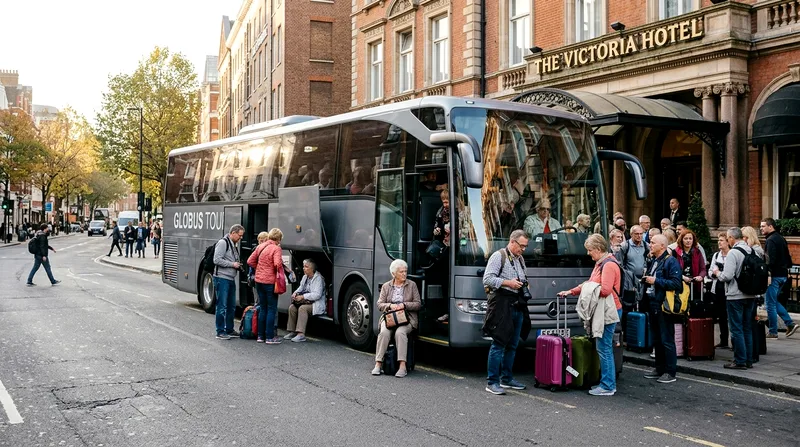
Full-size coach tours suit seniors heading further out — to Windsor Castle or Bath — because the seats are more comfortable than a minibus and there's usually an onboard toilet, which matters on anything over two hours. The downside is group size: 40-plus passengers means slower boarding and less flexibility on timing. Black cab tours of London are a smaller-scale, underused option — a licensed cab seats up to five, the driver often doubles as guide, and you get door-to-door movement around central London without ever needing to find parking or walk between sights. They cost more per person than a coach seat but less than a dedicated private guide, making them a reasonable middle ground for a couple or small family group.
Private vs Group Tours for Seniors
This is the real fork in the road, more than bus-versus-boat. Private tours cost noticeably more per person — often two to four times a group seat, depending on group size and route — but they buy you control over pace, stops and toilet breaks. Group tours cost less, run more frequently, and put you around other travellers, which some seniors genuinely enjoy and others find exhausting by the third stop. Neither is objectively better; it depends on your budget and how much you value flexibility over savings.
Door-to-door pickup and flexible pacing
A private London tour, whether by car, minivan or black cab, typically includes hotel pickup and drop-off — genuinely useful if walking to a meeting point feels like a chore before the tour has even started. The real advantage shows up mid-tour: if you need to sit down for twenty minutes, skip a sight entirely, or linger over lunch near Covent Garden, a private guide adjusts without consulting anyone else. The downside beyond cost is that smaller vehicles sometimes have less luggage space and no onboard toilet, so ask about comfort stops on anything over three hours.
Group tour value and social benefits
Group coach and bus tours remain the better value option by a wide margin, and for seniors travelling solo, they offer company without commitment — you chat if you want to, and nobody minds if you don't. The compromise is pace: the group moves at the group's average speed, which can mean rushing for some and waiting for others. Check group size where it's listed; a 16-seat minibus tour behaves very differently from a 50-seat coach, with the smaller group generally offering quicker boarding and a more personal guide relationship.
Easy Day Trips from London
Day trips are where format matters most, because you're committing six to ten hours, not two. The comparisons travellers usually make are against doing it independently by train — Oxford and Bath are both reachable solo in under 90 minutes by direct rail from London — but a tour removes the need to navigate stations, platforms and taxi ranks at the other end, which is often the real barrier for seniors, not the destination itself.
Windsor, Oxford and Bath
Windsor Castle sits about 40 minutes from central London and suits seniors well precisely because the castle itself has lifts to most state apartments, plus plenty of benches in the grounds — check the official accessibility notes before booking, since some areas of the castle interior remain stairs-only. Oxford, roughly 90 minutes out, works best as a guided walking tour at a gentle pace rather than self-navigated, since the historic colleges have uneven stone paths. Bath, about two and a half hours from London by coach, rewards a half-day visit to the Roman Baths and a slow walk along the Georgian crescents — full-day Bath trips often tack on Stonehenge, which doubles the walking and the bus time, so weigh that combination carefully if stamina is a concern.
Stonehenge and the Cotswolds
Stonehenge itself requires minimal walking — a paved path circles the stones at a set distance, and a shuttle bus runs from the visitor centre, so it's genuinely one of the more accessible historic sites in England. The Cotswolds are the opposite case: the appeal is wandering village streets and uneven lanes in places like Bourton-on-the-Water or Bibury, so if walking is limited, pick a Cotswolds tour that emphasises coach viewing with short optional stops rather than one promising a walking tour of multiple villages in a day. Combined Stonehenge-and-Cotswolds tours tend to run long — eight hours or more — which is fine for active seniors but a stretch for anyone needing frequent rest.
What to Check Before Booking
Marketing copy calls almost everything "senior-friendly" or "accessible." Treat those words as a starting point for questions, not a guarantee. The operators worth booking will answer specific accessibility questions directly and promptly before you pay — if they're vague or slow to respond, that's a signal about what the tour day itself will be like.
Step-free access, seating and toilet stops
Ask three things directly: is boarding step-free or are there stairs, is the seating reserved or first-come, and how often are toilet stops scheduled. For river cruises, ask about the pier — some Thames piers use floating pontoons that shift with tide, which can create a slope even when there's no formal "step." For coaches, ask if there's an onboard toilet or whether stops are every 60-90 minutes; that detail rarely appears in the tour summary but matters more than almost anything else on a long day.
Group size, duration and cancellation terms
Smaller group sizes generally mean faster boarding, more flexible stops, and more guide attention — useful if you or a travelling companion need a little extra time. Check the stated duration against how much of it is actual sightseeing versus driving; an "eight-hour" Cotswolds tour might include three hours of coach travel each way. Finally, read the cancellation policy before booking, not after — weather, health, or a simply tiring previous day can all be reasons to reschedule, and flexible or free cancellation up to 24-48 hours before departure is common among better-reviewed tours on sites like TripAdvisor, though it's not universal.
When to Book and Best Seasons
Booking timing for seniors is less about securing a seat — most London tours have decent availability even a few days out — and more about choosing a date where weather and crowds won't undermine the comfort you've planned for. Outdoor-heavy tours like open-top buses or Stonehenge are miserable in driving rain and bitter wind, which narrows the sensible window considerably.
Weather and crowd levels for comfort
Late spring (May, early June) and early autumn (September) tend to offer the best balance in London — milder temperatures, shorter queues than the July-August peak, and a lower chance of the kind of heavy rain that turns an open-top bus ride into an ordeal. Summer brings warmth but also the thickest crowds at the Tower of London and Westminster Abbey, which means longer waits even with a guided tour's priority access. Winter day trips to Bath or the Cotswolds can be atmospheric but also mean shorter daylight hours, so a tour advertised as full-day may effectively end in near-darkness by 4:30pm. If you have flexibility, booking for a weekday rather than a weekend also thins the crowds noticeably at every major London sight.
Frequently asked questions
What are the best low-walking tours in London for seniors?
River cruises require the least walking since you board once and stay seated throughout, taking in the Tower of London and Westminster from the water. Open-top bus tours come a close second, provided you're comfortable sitting on the lower deck, since the upper deck typically only has stair access.
Are there private tours in London for seniors with mobility issues?
Yes — private car and accessible minivan tours exist specifically for this, with vehicles chosen around wheelchair or mobility-aid storage and routes that avoid excessive walking between stops. Always confirm wheelchair-accessible vehicle availability and ramp type directly with the provider before booking, since fleet accessibility varies.
How long do half-day and full-day tours for seniors last?
Half-day tours typically run three to four hours, covering a handful of central sights with one or two stops, which suits travellers who tire after a couple of hours. Full-day tours run six to ten hours, often including day trips to Windsor, Bath or the Cotswolds — check how much of that time is actual sightseeing versus coach travel.
Are there discounts for seniors on London tours?
Some attractions and tour operators offer a senior rate, typically a modest reduction compared to the standard adult price, though this isn't universal and age thresholds vary. It's not advertised consistently, so ask directly when booking or check the pricing page rather than assuming it's included.
What day trips from London suit elderly travellers?
Windsor Castle and Stonehenge both involve relatively little walking — Windsor has lifts in parts of the castle, and Stonehenge has a paved path with shuttle access. Bath works well as a half-day visit; the Cotswolds suit active seniors more than those using mobility aids, given the uneven village streets.