Compare Thames RIB experience routes, durations and age limits. Find the right London speed boat tour for thrill-seekers, families and groups.
Who Thames RIB Rides Suit
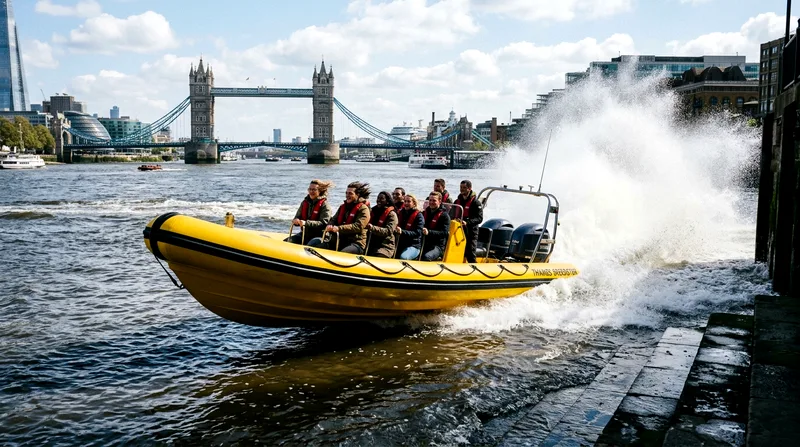
Skimming past Tower Bridge at speed, spray hitting your face, the London Eye and the Houses of Parliament blurring by on the bank — a Thames RIB experience is one of the few London activities that's genuinely a ride first and a sightseeing trip second. These rigid inflatable boats are built for speed, not comfort, and that distinction should shape who books one.
The appeal is obvious for anyone who finds standard river cruises too sedate. A typical RIB tour runs 30 to 75 minutes, far shorter than the two-to-three-hour Thames dinner cruises or hop-on-hop-off boat passes you'll find departing the same piers. That brevity is part of the pitch: it's an add-on activity, not a half-day commitment, which makes it easy to slot alongside a Tower of London visit or an afternoon at Borough Market.
It won't suit everyone. If you're travelling with a toddler, visiting during late pregnancy, or have a bad back, skip it — the bouncing over wake and the sharp turns are precisely what makes it exciting for others and uncomfortable or risky for you. Compare that with a gentler option like a standard Thames river cruise between Westminster and Greenwich, which covers more distance at a fraction of the speed and lets you actually hold a coffee without spilling it.
Adrenaline-seekers and groups of friends
Stag and hen groups, birthday parties and friends looking for something louder than a pub crawl are the core audience here. Most operators run shared group departures where you join other passengers on a scheduled sailing, and private charters are usually available for groups roughly 8-12 people and up, at a premium over the standard per-person rate. If your group wants music, overtaking turns and a genuine rush, this beats a sedate river cruise or a walking tour every time. The trade-off: shared sailings mean you're on a fixed schedule and can't dictate the route or pace, so check whether the operator allows requests for extra speed bursts or "donuts" before assuming it's included.
Families with older children
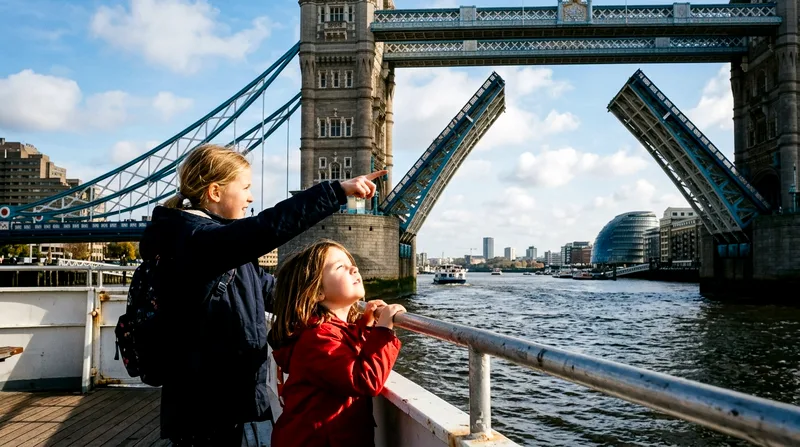
Most Thames RIB operators set a minimum age, commonly around 5 to 8 years old, with younger children (often under 2 or 3) barred entirely for safety reasons — always confirm the exact threshold before booking, since it varies by company and by route. For families with kids above that age, it's a genuinely good outing: shorter than most museum visits, visually exciting, and over before anyone gets bored. Teenagers in particular tend to rate it higher than a formal cruise. The catch is sizing — life jackets need to fit properly, and some operators set a minimum height rather than just an age, so a tall seven-year-old may qualify where a smaller nine-year-old doesn't.
Thames RIB Tour Types Compared
Not all Thames RIB experience routes cover the same ground, and the differences matter more than they first appear. Broadly, operators split into two route families: short central London loops focused on landmark density, and longer eastbound runs that trade some landmark frequency for scale and speed.
Departure piers are fairly consistent across operators — Tower Pier, Westminster Pier and Embankment Pier are the three you'll see most often, all within easy reach of Underground stations and central hotels. Picking a route often comes down to which pier is closest to where you're already staying, since the boats themselves are broadly similar in build and seating.
Central landmark loops are shorter and photo-focused, while eastbound routes toward the Thames Barrier trade some landmark density for speed and distance.
Thames RIB experience route types compared by duration, age limits and best use
| Route type | Typical duration | Typical minimum age | Best for |
|---|---|---|---|
| Central landmark loop (Tower/Westminster Pier) | 30-50 min | Approx. 5-8 yrs | First-time visitors, short time windows, photos |
| Extended route to Canary Wharf/O2 | 50-70 min | Approx. 5-8 yrs | Repeat visitors, more open-water speed |
| Full route to Thames Barrier | 60-75 min | Approx. 8 yrs+ (varies) | Enthusiasts wanting maximum distance |
| Private charter (any route) | Flexible, by arrangement | Set by operator | Groups, parties, custom timing |
| Standard river cruise (comparison) | 60-180 min | None/infant-friendly | Relaxed sightseeing, families with young kids |
Durations and age limits are typical ranges only and vary by operator — confirm exact figures and live availability when booking.
Central London landmark routes
These are the shorter, most popular RIB tours, typically 30 to 50 minutes, departing from Tower Pier or Westminster Pier and looping past Tower Bridge, HMS Belfast, the London Eye and the Houses of Parliament before turning back. This is the route to book if you have limited time or you're travelling with first-time visitors to London who want the postcard landmarks packed into the shortest possible window. The downside is repetition — because it's a there-and-back loop on a narrow stretch of river, you'll pass some landmarks twice, and the scenery doesn't change much once you've done the Tower Bridge run.
Longer routes towards Canary Wharf and the Thames Barrier
Longer sailings, often 60 to 75 minutes, push further east past Canary Wharf, The O2 Arena and as far as the Thames Barrier, London's flood defence structure near Woolwich. These suit repeat visitors or anyone who's already done the central landmarks on foot and wants open water and higher sustained speed — the river widens east of Tower Bridge, giving boats more room to open up. Expect a noticeably bumpier ride and more spray than the central loop. It's less photogenic in the classic sense (Canary Wharf's glass towers don't have the same instant recognition as Big Ben), so if landmark photos are your priority, the shorter central route still wins.
RIB vs Traditional River Cruise
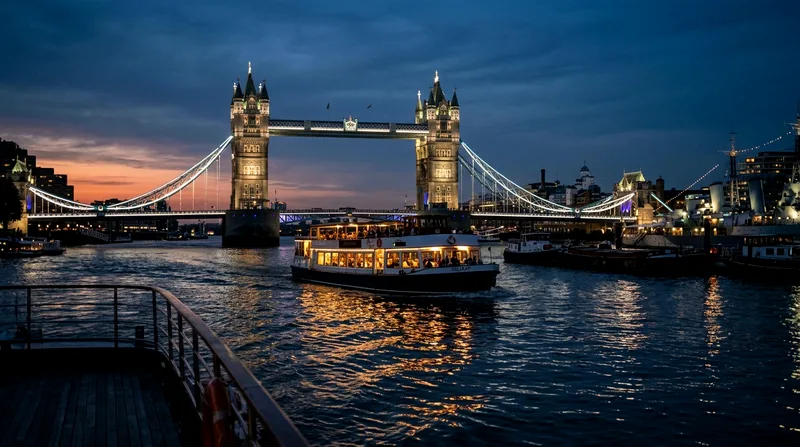
The comparison that trips people up most is RIB versus standard Thames cruise, because both depart from the same piers and both promise "see London from the river" — but they deliver completely different experiences. A RIB is open-air, fast, and built for a handful of sharp turns and speed bursts; a traditional cruise boat is enclosed or semi-enclosed, slow, and built for commentary, drinks service and longer sightseeing.
If you've done a Seine dinner cruise in Paris or a canal boat trip in Amsterdam, recalibrate your expectations — those are closer to the standard Thames cruise than to a RIB. A RIB ride is closer in spirit to a jet boat tour you might find in a harbour city, minus any pretence of fine dining. There's no onboard bar, no toilet, and in most cases no seated meal service — you're there for the speed and the view, nothing else.
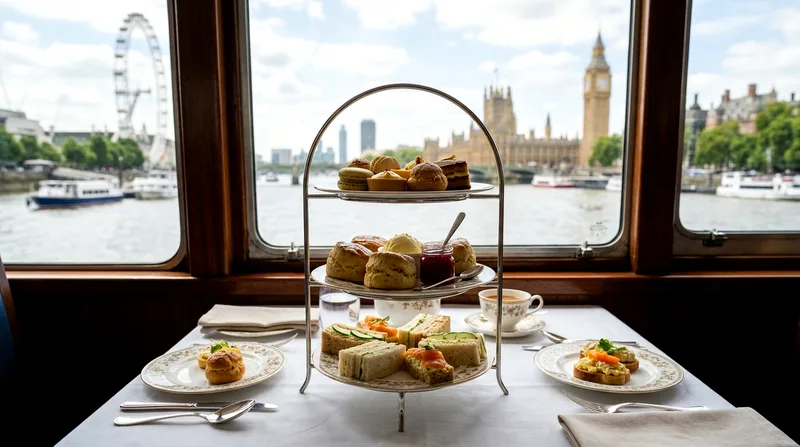
Where the RIB wins: it's shorter, cheaper per minute of genuine excitement, and better suited to groups who want energy rather than narration. Where the cruise wins: comfort, accessibility, duration flexibility and suitability for very young children, older travellers with mobility concerns, or anyone who just wants to sit, relax and watch London go by with a coffee in hand. For senior travellers specifically, I'd steer most towards the cruise unless you're confident about your back and balance — the RIB's turns and bumps are genuinely physical.
What to Check Before Booking
Before you commit to a Thames RIB experience, a handful of practical checks will save you a wasted booking or an uncomfortable ride.
Age limits, health and accessibility
Confirm the minimum age and any height or weight requirements directly with the operator — these aren't standardised across London, and they change by route and boat type. Pregnant travellers are generally advised against booking, and most operators list back, neck or heart conditions as reasons to avoid the ride; take that seriously, since the bouncing over wake is more forceful than it looks in promotional photos. Wheelchair users and anyone with limited mobility should check boarding arrangements directly, as piers like Tower Pier and Westminster Pier involve steps or pontoons that aren't always step-free, and boarding a RIB itself typically requires climbing down into a low, moving seat.
Group size, inclusions and cancellation terms
Most shared sailings cap group size somewhere between 10 and 12 passengers per boat; private charters usually require a minimum headcount or a flat charter rate instead of per-person pricing. Life jackets and waterproof outer layers are typically included in the ticket price, but check — some budget listings charge extra for waterproofs or don't guarantee a spare size for larger passengers. Cancellation policies matter more here than for most London activities, because RIB tours are among the first river trips cancelled in bad weather; look for operators offering a free rebooking or refund if your sailing is cancelled for safety reasons, and always compare current prices and cancellation terms before you book.
When to Book and What to Wear
Thames RIB tours run year-round, but the experience changes a lot with the season. Summer (June to August) gives you the longest daylight window and the warmest spray, which matters more than you'd think when you're travelling at speed on open water. Spring and autumn sailings are quieter and easier to book last-minute, but expect genuinely cold wind chill even on a mild day — the boat's speed turns a 15°C afternoon into something that feels much colder. Winter departures exist but are more weather-dependent and more frequently affected by high winds or strong tidal flow, so build flexibility into your plans if you're booking in December or January.
Which Thames RIB Experience to Book
If you're short on time and want the classic London skyline — Tower Bridge, the London Eye, Parliament — book a central landmark loop from Tower Pier or Westminster Pier; it's the shortest, most reliable option and the easiest to pair with a Tower of London or Borough Market visit beforehand. If you want more speed and open water, and you've already seen the central landmarks on a previous trip, the extended route toward Canary Wharf and the Thames Barrier is the better pick. Groups and parties should look at private charters for flexibility on timing and music, while families with children under about 5, older travellers with mobility or health concerns, and anyone wanting a relaxed narrated trip should choose a standard river cruise instead. Whichever you pick, check current prices, age policies and cancellation terms directly with the operator before booking — these details shift more often than the routes themselves.
Frequently asked questions
How long is a Thames RIB speedboat tour?
Most Thames RIB experience tours run between 30 and 75 minutes, depending on the route. Central landmark loops from Tower Pier or Westminster Pier are usually the shortest, at 30-50 minutes, while extended routes toward Canary Wharf or the Thames Barrier run 60-75 minutes. Private charters can be adjusted in length by arrangement.
What age can children go on a Thames RIB experience?
Minimum ages typically sit between 5 and 8 years old, though this varies by operator and sometimes by route, with some setting a minimum height rather than an age. Children under about 2-3 are generally not permitted on any route due to life jacket fit and safety requirements. Always confirm the exact age and height policy with the operator before booking, especially for extended routes.
Where do Thames RIB boats depart from?
The most common departure points are Tower Pier, Westminster Pier and Embankment Pier, all in central London and close to Underground stations. Which pier you use usually depends on the specific route and operator rather than personal choice, so check the departure point listed on your booking confirmation rather than assuming.
What landmarks do you see on a Thames speedboat tour?
Central routes typically pass Tower Bridge, HMS Belfast, the London Eye and the Houses of Parliament. Longer routes extend east past Canary Wharf and The O2 Arena, with the furthest tours reaching the Thames Barrier near Woolwich. Exactly which landmarks you see depends on whether you book a central loop or an extended eastbound route.
What makes a Thames RIB different from other boat tours?
A RIB (rigid inflatable boat) is open-air, lightweight and built for speed, with sharp turns and bursts of acceleration that standard river cruise boats can't match. Traditional Thames cruises are slower, often enclosed, and focus on commentary and comfort rather than thrills — there's no bar, toilet or seated service on a RIB, and you should expect to get wet from spray.