Compare immersive experiences in London, from interactive theatre and themed dining to digital shows, and learn how to pick and book the right one.
Which Immersive Experience Suits You?
London has more immersive experiences than almost any other European city, which is exactly why choosing one feels harder than it should. Paris leans on spectacle (think grand illusion shows), and Berlin has a strong escape-room scene, but London mixes immersive theatre, themed dining and digital art installations into a single, sprawling category that's easy to misjudge. Book based on the venue's reputation alone and you risk ending up at something closer to a themed restaurant than genuine interactive theatre.
The honest starting point is your appetite for participation. Some productions want you silent and seated, watching action unfold around you — Punchdrunk-style walkabout theatre, for instance, often forbids talking entirely. Others, like Mamma Mia! The Party, actively pull you into the scene, hand you props, and expect you to dance. If you'd rather not be addressed directly by a performer, say so when booking; most venues will seat you accordingly rather than force the issue.
Budget also shapes the decision more than people expect. Digital exhibitions such as the Paradox Museum London or MOCO Museum sit at the lower end, closer to a standard museum ticket, while a full dinner-and-show format like Peaky Blinders Underworld or an escape-room night runs considerably higher once drinks and add-ons are factored in. None of these are cheap nights out by London standards, so decide what you're actually paying for — atmosphere, a meal, or genuine theatrical craft — before comparing prices.
Solo travellers and couples
Solo travelers do better with gamified or digital formats than full-cast immersive theatre, where solo attendance can feel conspicuous during group scenes. The Paradox Museum London and similar optical-illusion exhibitions work well alone — you move at your own pace, and nobody expects you to perform. Couples, meanwhile, are the target market for most dinner-and-show nights; Mamma Mia! The Party was built around tables of friends and couples singing along, and it reads as a date-night product rather than pure theatre. If you want atmosphere without pressure, a seated immersive dining format beats a walkabout show where you might get split from your partner by the plot.
Groups and special occasions
Groups of six or more get the best value from escape rooms, Crystal Maze Live Experience-style challenge formats, and party-oriented dining shows — the energy of these formats depends on a crowd. Birthdays, hen and stag parties, and work socials suit Monopoly Lifesized or an escape-room night better than a quiet, atmospheric theatre piece, where a loud group can actually disrupt other guests. Check the venue's group minimums and private-hire options; several London operators offer buyouts for parties above a certain headcount, which is worth asking about directly rather than assuming it's included in a standard booking.
Immersive Theatre, Dining and Shows Compared
Laying the main categories side by side makes the trade-offs clearer than any individual description can. Duration, interaction level and typical audience differ enough between formats that picking the wrong one for your mood can sink an otherwise good evening out.
Dinner-and-show formats run longest and demand the most participation, while digital art exhibitions are shortest and best for low-pressure solo visits.
Immersive experiences in London compared by format, duration and interaction level
| Format | Typical duration | Interaction level | Best for | Alcohol/food included |
|---|---|---|---|---|
| Walkabout immersive theatre | 90-150 min | High (move through scenes) | Couples, theatre fans | Rarely |
| Dinner-and-show (e.g. Mamma Mia! The Party style) | 2.5-3.5 hrs | High (singing, dancing) | Groups, celebrations | Yes, usually |
| Themed escape rooms | 60-90 min | High (puzzle-solving) | Groups, friends | No |
| Digital/art installations (e.g. Paradox Museum, MOCO) | 45-90 min | Low to moderate | Solo travelers, families | No |
| Underworld-style themed attractions (e.g. Peaky Blinders Underworld) | 90-120 min | Moderate | Couples, small groups | Often, cocktails included |
| Gamified challenge shows (e.g. Crystal Maze Live) | 2-2.5 hrs | High (physical challenges) | Groups, team events | Sometimes |
Durations and inclusions vary by venue and ticket tier, so confirm specifics on the official booking page before you buy.
Comparison table: format, duration, interaction level
Use this as a quick filter before you start reading individual reviews or checking live availability.
Immersive Theatre and Interactive Shows
This category covers the widest range of quality in London's immersive scene, from genuinely inventive productions to shows trading on the word "immersive" without delivering much beyond a themed room. The strongest examples build an entire world — multiple rooms, running storylines, actors who stay in character for hours — and reward repeat visits because you can't see everything in one go. Weaker examples amount to a single set and a short script stretched to fill a time slot. Reviews on Feverup or Visit London's listings tend to flag this quickly; read a handful before booking rather than trusting the production photos alone.
Age ratings matter more here than in standard theatre. Several of London's immersive productions carry 18+ or 16+ age guidance due to strobe lighting, loud noise, adult themes, or close physical proximity to performers. If you're traveling with teenagers, check the specific age policy rather than assuming "interactive" means family-friendly — it often doesn't.
Walkabout vs seated immersive formats
Walkabout shows let you follow whichever character or storyline interests you, moving between rooms as the narrative unfolds — this format demands more physical stamina (expect to stand and walk for most of the run time) and suits visitors who like exploring over sitting still. Seated immersive formats, by contrast, bring the action to you; Mamma Mia! The Party uses this structure, with performers moving among tables. Seated formats are the better choice for anyone with mobility concerns, but ask the venue directly about step-free access and seating arrangements, since basement and converted-warehouse venues (common across London's immersive theatre scene) don't always have lifts.
Digital and gamified experiences
Digital and gamified shows swap live actors for projection, light installations, and app-based interaction. These tend to be shorter, more affordable, and easier to slot into a single afternoon alongside other London sightseeing — pairing one with a nearby gallery or a river cruise is realistic in a way a three-hour dinner show isn't. The trade-off is depth: you're unlikely to remember a digital light installation years later the way you might a well-acted immersive theatre piece. Treat these as a solid afternoon filler rather than the centerpiece of your London trip.
Themed Dining and Interactive Experiences
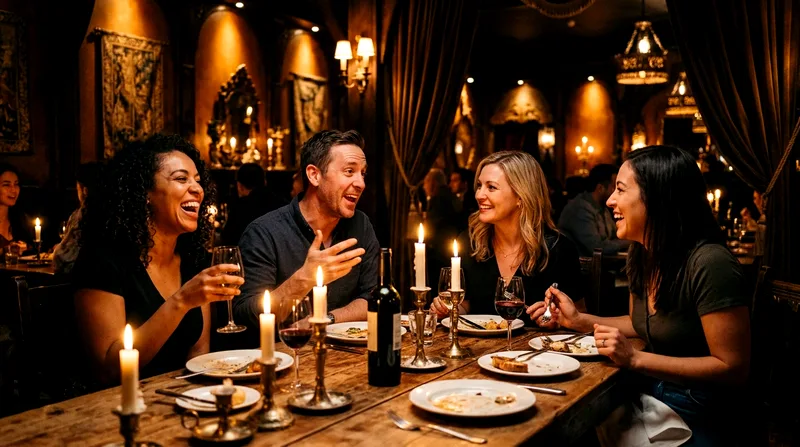
Immersive dining in London generally means one of two things: a themed restaurant with light interactive touches, or a full dinner-and-show production where the meal is secondary to the performance. Knowing which you're booking matters, because the two are priced and structured very differently. A themed restaurant might add a puzzle element or costumed staff without ever asking you to participate in a storyline; a true dinner-and-show format, by contrast, builds the entire evening — courses, music, performer interactions — around a script you're inside of.
Peaky Blinders Underworld is a useful example of the hybrid middle ground: part themed bar, part walkthrough attraction, with cocktails and food available but no obligation to follow a narrative if you'd rather just soak up the setting. That flexibility makes it a reasonable choice for mixed groups where not everyone wants full participation.
Dinner-and-show formats
Expect a fixed seating time, a set or limited menu (rarely full à la carte), and a running time of roughly three hours once you include arrival and any pre-show mingling. These formats work best for celebrations — birthdays, hen parties, anniversaries — because the structure does the entertaining for you; nobody needs to plan conversation topics when there's a cast directing the energy of the room. The downside is cost and rigidity: you're locked into a seating time, a set menu often with limited options for dietary restrictions, and a format that doesn't suit a quiet, low-key dinner. If you have specific allergies, confirm the kitchen can accommodate them when you book, not on arrival.
Escape rooms and puzzle games
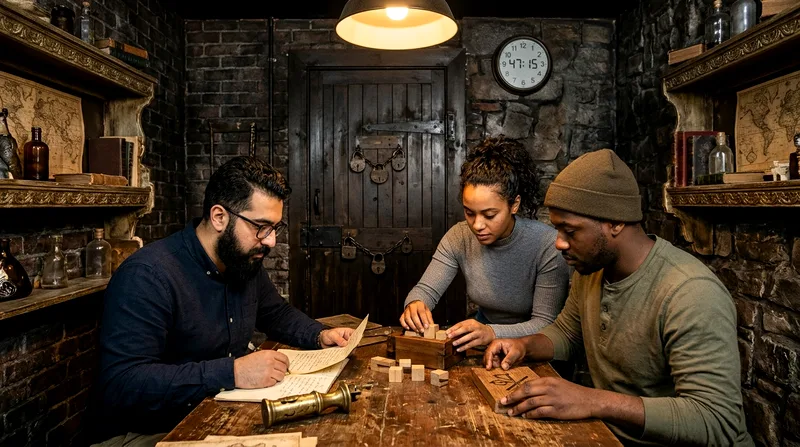
London's escape-room scene is dense and competitive, with rooms ranging from straightforward lock-and-key puzzles to elaborate sets with actors, like House of Dreamers' more theatrical offerings. Most rooms run 60-90 minutes and work best with groups of three to six — fewer than that and you may struggle with time-pressured puzzles; more, and some people end up standing around with nothing to do. Compare this to Amsterdam or Brussels, both of which have strong escape-room cultures too, but London's venues more often fold narrative and set design into the puzzle itself rather than treating the room as a pure logic test. Check the difficulty rating before booking — "expert" rooms genuinely stump most groups, and a low success rate isn't a flaw, it's the point.
What to Check Before Booking
Immersive experiences get oversold more often than standard attractions, partly because "immersive" has become a marketing word rather than a precise format description. Before paying, work out exactly what's included, how the venue handles groups and cancellations, and whether the experience fits your physical comfort level.
Inclusions, group size and cancellation
Read the fine print on what's actually included — a "dinner and show" ticket sometimes means one drink and a starter, not a full meal, with extras charged separately. Group size caps vary widely: some immersive theatre limits audiences to under fifty for intimacy, while large dinner-and-show venues can seat several hundred per sitting, which changes how personal the experience feels. Cancellation policies differ sharply by operator too — some allow date changes up to 24 hours out, others treat the booking as final sale once purchased. Always check the cancellation terms on the official booking page or through aggregators like Feverup or Golden Tours before paying, since these experiences are rarely refundable once reviewed in detail.
Accessibility, dress code and age limits
Many of London's immersive venues occupy converted warehouses, basements or historic buildings that predate modern access standards — step-free access, accessible toilets and hearing-loop systems aren't guaranteed, so contact the venue directly rather than relying on a generic listing. Dress codes are usually relaxed, though some dinner-and-show formats suggest "smart casual" or era-appropriate dress for photo opportunities. Age limits deserve particular attention: several productions are strictly 18+ due to content or proximity to performers, while others, including most digital exhibitions and some escape rooms, are genuinely family-friendly. Don't assume either way — check the specific age policy for the exact show, not the general category.
When to Book Immersive Experiences
Immersive experiences in London sell differently from standard attraction tickets. Popular dinner-and-show formats and well-reviewed escape rooms can sell out specific time slots weeks ahead, especially around weekends, while digital exhibitions with higher daily capacity are more forgiving of late bookings.
Peak seasons and weekend demand
Friday and Saturday evening slots for dinner-and-show formats and escape rooms are the first to sell out, often two to three weeks in advance during December and around major UK holiday weekends. If your trip to London coincides with these periods — the same stretch Paris and Amsterdam see surges for their own Christmas markets and events — book your immersive experience before you finalize restaurant reservations, not after, since the better-known shows have far less flexibility than a dinner table.
Booking windows and last-minute options
Weekday matinee or early-evening slots stay available much closer to the date, sometimes with options still open two or three days out. If you're planning spontaneously, digital exhibitions like MOCO Museum or Paradox Museum London are your best bet for same-week or even same-day booking. For anything involving a live cast — theatre, dinner shows, gamified challenges — treat a two-to-four-week booking window as the safer default, and always compare current prices and availability across a couple of booking platforms before confirming, since the same show sometimes carries different inclusions depending on where you book it.
Frequently asked questions
What is the difference between immersive theatre and interactive dining?
Immersive theatre is built around a scripted story that unfolds around or with the audience, with food, if offered, as a secondary element. Interactive dining flips that priority — the meal is the main event, with performance, puzzles or character interaction layered on top. If the story matters more to you than the food, choose theatre-first formats; if you want a full evening out with entertainment included, go for dinner-and-show.
Which is the best immersive experience in London?
There's no single best option — it depends on group size and appetite for participation. Couples wanting atmosphere often prefer intimate walkabout theatre; groups celebrating an occasion do better with dinner-and-show formats like Mamma Mia! The Party or a themed attraction such as Peaky Blinders Underworld. Read recent reviews for the specific show rather than relying on category reputation alone, since quality varies a lot within each type.
Are immersive experiences worth it?
For the right audience, yes — they deliver a memory that standard sightseeing or a seated show often doesn't. They're not cheap relative to a cinema ticket or a standard meal out, though, so they suit travelers prioritizing one or two standout nights over several lower-cost activities. Skip them if you're uncomfortable with any audience participation, since even "optional" interaction can feel pressured in smaller venues.
What types of immersive experiences are available in London?
The main categories are walkabout immersive theatre, seated dinner-and-show productions, themed attractions blending bars with walkthrough sets, escape rooms and puzzle games, and digital or gamified art exhibitions. Each differs in duration, cost and how much participation is expected, so match the category to your group before narrowing down specific shows.
Are there immersive experiences in London suitable for families?
Yes, though you need to check age ratings carefully, since many theatre and dinner-and-show formats are 18+. Digital exhibitions like the Paradox Museum London and certain escape rooms are generally family-friendly and often list recommended minimum ages clearly on the booking page — check that age guidance before buying tickets for children.