Compare Heathrow Express ticket types, see how advance fares and group tickets cut costs, and learn where to book officially before you travel to London.
What Are Heathrow Express Tickets?
Heathrow Express tickets cover a dedicated non-stop rail service between Heathrow Airport and London Paddington, run independently of the wider Transport for London network. If you've just landed and want to be in central London with minimum fuss, this is the fastest fixed option available — and the ticket you buy determines not just the price, but how much flexibility you get around departure times, luggage, and refunds.
The appeal is simple: speed. No other public transport link covers the airport-to-central-London journey as quickly. But that speed comes at a premium compared to the Elizabeth line or the Piccadilly line Tube, and the ticket structure rewards planning. Buy on the day at the station and you'll pay the highest walk-up fare; book a week ahead online and the price can drop substantially. That gap is the whole story of this guide.
Heathrow to London Paddington route basics
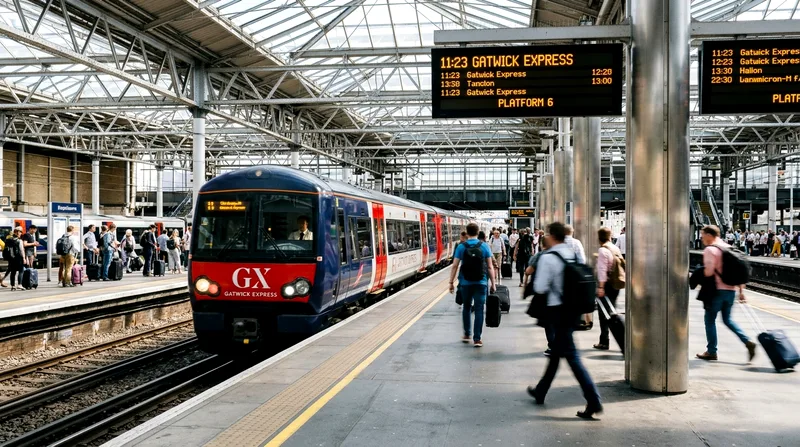
The service runs directly between Heathrow (with stops at Terminals 2&3 and Terminal 5) and London Paddington, with a journey time of around 15-21 minutes depending on which terminal you start from. Trains run frequently throughout the day — roughly every 15 minutes during operating hours — though you should always confirm first and last train times on the official Heathrow Express site before relying on it for an early departure or late arrival, since schedules aren't fixed indefinitely and can shift around maintenance work.
Paddington itself connects to the Bakerloo, Circle, District, Hammersmith & City lines and National Rail services, so onward travel is straightforward once you arrive. If your final destination is the City, Canary Wharf, or east London, though, factor in a second leg — Heathrow Express only gets you to one station.
What Your Ticket Includes and Excludes
A standard Heathrow Express ticket covers one journey (or two, if you buy a return) between Heathrow and Paddington on the train itself — nothing more. It doesn't include onward Tube or bus travel, doesn't double as an Oyster card top-up, and doesn't cover travel on the Elizabeth line, even though that service also stops at Heathrow and partly overlaps the route. Keep your ticket (paper or digital) until you're clear of the barriers at both ends; station staff do check.
Luggage allowance is generous by rail standards — there's no strict limit on bags for Standard Class, which suits families and anyone arriving with a full set of holiday cases. That's a real point in its favor over coaches, which sometimes cap bag numbers per passenger.
Luggage, accessibility and onward travel
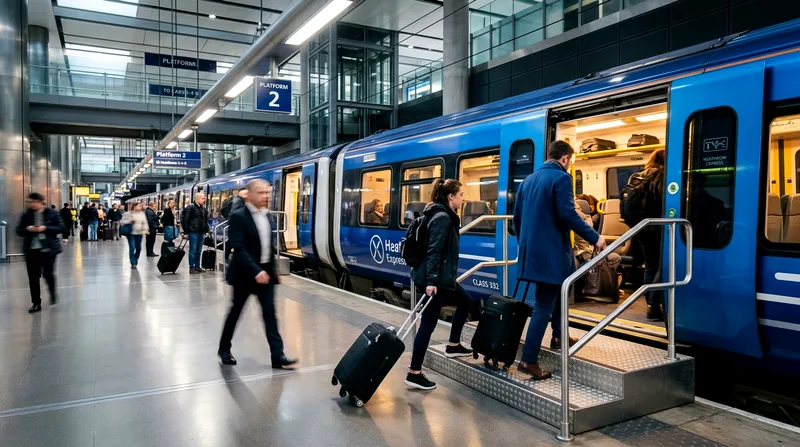
Stations and trains are step-free, with lifts at both Heathrow terminals and Paddington, which matters if you're traveling with a wheelchair, a pushchair, or simply don't want to haul suitcases up stairs after a long flight. Staff are generally on hand at peak times to assist, though I'd still recommend arriving with a buffer if you need help, rather than assuming someone will be free the instant you need them.
One thing to plan around: there's no direct link from Heathrow Express into London's Underground zones for fare purposes, so if your trip continues beyond Paddington, you'll need a separate Oyster, contactless tap, or Travelcard for the rest of the journey. Budget that into your overall cost comparison — it's easy to forget when you're only looking at the headline Heathrow Express price.
Heathrow Express Ticket Options Compared
There are three main fare structures to understand: Single, Return, and Saver Single, plus a choice between Standard Class and Business First. The Saver Single is specifically the advance-purchase option — bought online ahead of travel, it's consistently the cheapest way to ride one-way, and considerably less than buying a Single at the station on the day.
Returns make sense only if you know your travel dates on both legs; they're not always cheaper than two Saver Singles booked separately in advance, so it's worth comparing both before assuming the return is the better deal. That's a trap a lot of travelers fall into, assuming "return" automatically means "discount" — with Heathrow Express, that isn't guaranteed.
Saver Singles booked in advance are consistently the cheapest way to ride Heathrow Express, while walk-up Singles and Business First cost the most.
Heathrow Express ticket types compared by cost, flexibility and best use
| Ticket Type | Relative Cost | Flexibility | Best For |
|---|---|---|---|
| Walk-up Single | Highest | Travel any train same day | Last-minute, no planning |
| Saver Single (advance) | Lowest | Often tied to time window | Budget-conscious solo/couple travel |
| Standard Return | Mid-range | Fixed or flexible dates | Simple round-trip planning |
| Business First Single | High | Similar to Standard flexibility | Extra luggage space, comfort |
| Group Ticket | Lower per person | Varies by booking type | Families, small groups |
Relative cost tiers only — confirm exact current fares on the official Heathrow Express site before booking.
Single, return and Saver Single fares
Walk-up Singles bought at the station or on board carry the highest price — convenient if you've just landed with no plan, but the most expensive way to travel this route. Saver Singles, bought online in advance, are tied to a specific train or a flexible time window depending on the fare rules at the time of booking, and typically cost noticeably less. Returns bundle both legs under one purchase, useful for simplicity but not automatically the cheapest combination — run the numbers against two advance singles before you commit. Always check current prices on the official Heathrow Express website, since fare tiers and exact amounts shift periodically.
Standard vs Business First
Business First adds wider leather seats, more luggage space per passenger, complimentary newspapers, and a quieter carriage — but the journey time is identical to Standard Class, because it's the same train. For a ride under 25 minutes, I'd say Business First is hard to justify unless you specifically want the extra space for bulky luggage, golf clubs, or just prefer not to sit near other passengers after a long-haul flight. Families and solo travelers on a budget should stick with Standard; the speed benefit of Heathrow Express is already baked into every ticket class.
How Advance and Group Fares Save Money
This is where Heathrow Express stops looking like an indulgence and starts looking like a reasonable choice. Book a Saver Single a week or more ahead and the price drop versus a walk-up fare is substantial enough to change the calculation for most travelers — easily enough to make the speed premium feel justified rather than wasteful. The catch is that advance fares usually come with some restriction, often a specific train or a defined time window, so they suit travelers who already know their flight landing time or departure slot with reasonable confidence.
Peak and off-peak pricing also plays into this, though the exact definition of peak hours can shift, so check the live fare calendar rather than assuming early morning or evening automatically costs more.
Advance fares vs walk-up fares
The simplest rule: the earlier you book, the less you pay, almost without exception. Walk-up fares exist for convenience, not value — they're aimed at travelers who land with no ticket and need to leave immediately. If your flight time is confirmed and you're not worried about delays pushing you onto a later train, booking a Saver Single in advance through the official app or website is the single easiest way to cut your cost on this route.
Group tickets and Railcard considerations
Heathrow Express offers group ticket options for parties traveling together, which can bring the per-person cost down meaningfully compared to buying individual fares — useful for families or small groups landing together. Railcards, including discounts sometimes available to BritRail pass holders or standard National Rail Railcards, may apply depending on current terms, so check eligibility on the official site rather than assuming your card works automatically; Heathrow Express sits outside the standard National Rail fare system in some respects, which trips up travelers used to Railcard discounts elsewhere in the UK.
Where and How to Book Officially
Buy directly through the official Heathrow Express website or app for the most reliable fare information and to avoid third-party booking markups that add fees without adding value. Tickets are also sold at station machines and ticket offices at both Heathrow and Paddington, but as covered above, those walk-up prices are the most expensive tier — booking ahead online is where the savings actually live.
Avoid buying Heathrow Express tickets through unofficial resale sites or generic "London transport pass" bundles that claim to include it; these sometimes carry inflated prices or unclear validity terms. If a deal looks too good, it's worth double-checking against the official fare before paying.
Online, app and station purchase
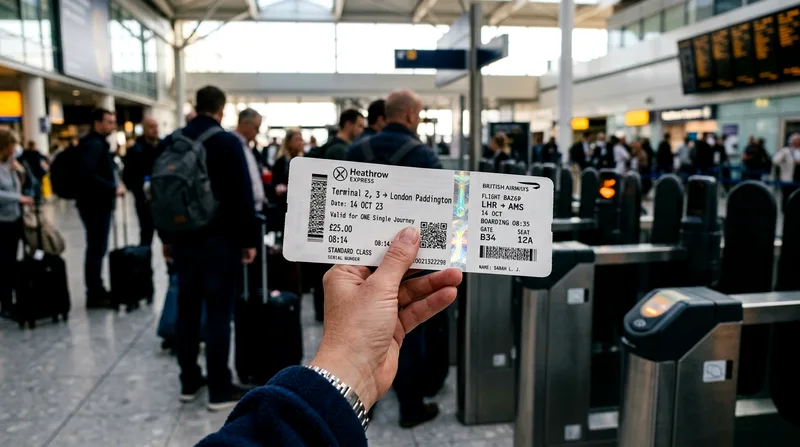
The website and app let you select your exact date and, for advance fares, your train window, paying by card and receiving a digital ticket (usually a QR code or barcode) you scan at the gate. Station kiosks and ticket windows work well as a backup if you've landed without a plan, but expect to pay the walk-up rate. If you're also planning other London transport — river boats, Tube day passes, or attraction tickets — it's worth checking whether any combined passes on the wider London transport network offer better value for your full itinerary, separate from Heathrow Express itself.
Flexibility, validity and refunds
Refund and exchange rules vary by fare type — advance Saver Singles are typically more restrictive than flexible Standard fares, and Business First sometimes carries more generous change policies. Always read the fare conditions shown at checkout before paying, since "non-refundable" and "flexible" tickets can look similar in price at certain times of year but behave very differently if your flight is delayed or your plans change.
Are Heathrow Express Tickets Worth It?
Worth it depends entirely on what you're optimizing for. If your priority is minimizing time between landing and reaching central London — say, a tight connection to another train, a business meeting, or simply exhaustion after a long-haul flight — Heathrow Express is the fastest fixed option and an advance fare makes that speed affordable. If your priority is minimizing cost and you have time to spare, it's not the best choice on the board.
I wouldn't recommend Business First for most travelers; the time saved is zero, and the comfort gain is marginal for a sub-25-minute ride. I also wouldn't recommend buying a walk-up Single if you had any ability to plan ahead — it's the one ticket type on this list that rarely makes sense to pay for by choice.
Best choice by traveller type
Business travelers and those with tight onward connections should book an advance Saver Single and treat the time savings as the main purchase. Families with lots of luggage benefit from the generous baggage allowance and step-free access, and should look at group tickets rather than buying singles separately. Solo backpackers and travelers on a tight budget, meanwhile, are usually better served by the Elizabeth line or the Piccadilly line — the money saved can cover a meal or two in London.
Versus Elizabeth line, Tube, coach and taxi
The Elizabeth line also connects Heathrow to central London, stopping at more stations including Paddington, and costs considerably less than Heathrow Express — the trade-off is a longer journey time, roughly double in many cases, and more stops along the way. The Piccadilly line Tube is the cheapest option of all but the slowest, often taking close to an hour into central London. National Express coaches run to Victoria for a budget price but face traffic delays the rail options avoid entirely. A black cab or rideshare offers door-to-door convenience but at a cost that usually exceeds even Business First, especially in traffic. None of this is unique to London — travelers comparing airport transfers in Paris (RER B versus taxi), Rome (Leonardo Express versus bus), or Dublin (Aircoach versus taxi) face a similar speed-versus-cost trade-off, and Heathrow Express sits firmly on the "fast but priced accordingly" end of that spectrum.
Frequently asked questions
How much does a Heathrow Express ticket cost?
Prices vary by fare type: walk-up Singles cost the most, advance Saver Singles considerably less, and Business First sits above Standard Class. Because fares shift periodically, check the official Heathrow Express website for the current published price before you travel rather than relying on older figures you might find elsewhere.
Can I save money by booking Heathrow Express in advance?
Yes — advance Saver Singles, bought online ahead of your travel date, are consistently cheaper than buying a Single at the station on the day. The trade-off is reduced flexibility, since advance fares are often tied to a specific train or time window rather than any departure that day.
What is the difference between peak and off-peak tickets?
Peak tickets generally apply during busier commuting hours and cost more, while off-peak fares apply outside those windows. The exact hours that count as peak can change, so check the live fare details when booking rather than assuming a fixed schedule.
Are Heathrow Express tickets tied to specific train times?
It depends on the fare. Walk-up and fully flexible tickets let you board any train that day, while advance Saver Singles are often restricted to a particular train or a defined time window. Always check the fare conditions at checkout before paying.
Is Heathrow Express cheaper than other transport options?
No — it's typically the most expensive rail option into central London from Heathrow, even with an advance fare. The Elizabeth line and the Piccadilly line Tube both cost less but take longer, so the decision comes down to whether you're paying for time or saving money.