London: how to get to Gatwick Airport by Gatwick Express, Southern, Thameslink, coach or taxi — journey times, cost levels and the best pick for you.
Ways to Reach Gatwick at a Glance
If you're searching for how to get to Gatwick Airport from London, you've got five realistic options: Gatwick Express, Southern Railway, Thameslink, National Express coaches, or a taxi/private transfer. Each trades speed against cost level and convenience, and the "right" choice depends heavily on where in London you're starting and how much luggage you're hauling.
The trains all use the same station at Gatwick, located directly beneath the airport's South Terminal, with a free monorail or short walk connecting to North Terminal. That's a real advantage over airports like Paris CDG, where terminal-to-train logistics can be more confusing, or Rome Fiumicino, where the Leonardo Express is your only rail option and costs more for less flexibility.
My honest take: most travellers overthink this decision. Unless you're departing from Victoria during peak hours with a flight to catch in under 40 minutes, the cost difference between Gatwick Express and Southern rarely justifies itself. Save that money for the airport lounge or a coffee at St Pancras instead.
Trains are the fastest and most predictable way from London to Gatwick, while coaches and taxis trade time for lower cost or more convenience.
London to Gatwick Airport transport options compared
| Option | Journey Time | Cost Level | Frequency | Best For |
|---|---|---|---|---|
| Gatwick Express | approx. 30 min | High | Every 15 min | Fast, direct, no stops |
| Southern Railway | approx. 30-45 min | Medium | Frequent, several per hour | Budget-conscious, similar speed to Express |
| Thameslink | approx. 35-55 min | Low-Medium | Frequent, several per hour | Travellers near King's Cross/Blackfriars |
| National Express coach | approx. 60-90 min | Low | Every 30-60 min | Tight budgets, flexible timing |
| Taxi/private transfer | approx. 45-75 min | High | On demand | Groups, heavy luggage, late flights |
Typical figures only; actual times vary with traffic, engineering works and time of day — check National Rail or TfL before you travel.
Quick comparison table of all modes
Before you book anything, it helps to see all five options side by side — journey time, typical cost level, and what kind of traveller each suits. The detailed table further down this page covers that in full. As a rough mental model: trains run 30–50 minutes from central London, coaches take 60–90 minutes depending on traffic, and taxis fall somewhere in between on time but cost considerably more.
Central London departure points
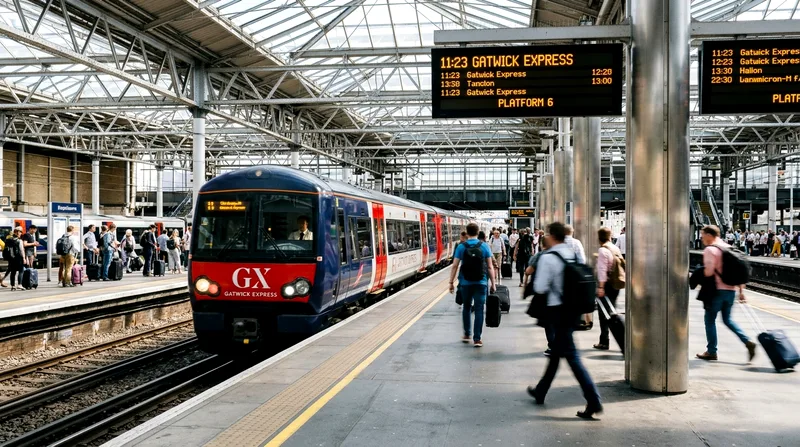
London Victoria Station is the main hub for both Gatwick Express and Southern services, and it's the one most visitors picture when they think of "London Victoria to Gatwick." Thameslink runs a different route, calling at Blackfriars, Farringdon, and King's Cross St Pancras before heading south — handy if you're staying near Euston, King's Cross, or the City rather than Victoria. If your hotel is near King's Cross Station, Thameslink can actually save you a Tube transfer compared with trekking to Victoria first.
Gatwick Express vs Southern vs Thameslink
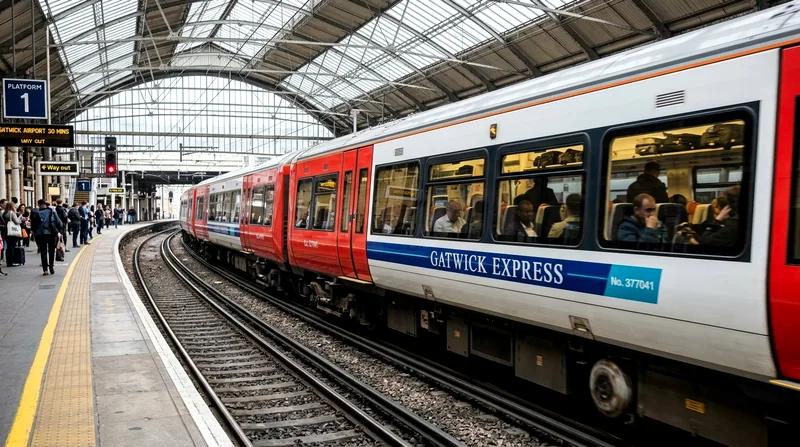
This is the comparison most people actually need: Gatwick Express vs Thameslink vs Southern, all running on broadly the same rail corridor into Gatwick but with different stops, pricing and comfort levels. Gatwick Express is non-stop from Victoria, which is its entire selling point — no intermediate stations, no risk of a slower stopping service delaying you. Southern trains from Victoria serve the same route but make a few stops along the way, usually adding only 10–15 minutes.
Thameslink is the odd one out geographically — it doesn't start at Victoria at all, running instead through central London via Blackfriars, Farringdon and King's Cross St Pancras, then south through Clapham Junction and East Croydon-adjacent stations before Gatwick. It's typically the cheapest of the three and often overlooked by visitors who default to Victoria out of habit.
I'd avoid assuming Gatwick Express is automatically "the" airport train — that's marketing, not logic. Southern gets you there almost as fast for less money, and unless your connection is genuinely tight, the saving is worth the extra ten minutes. Where Gatwick Express does win is predictability: no stops means no variables.
Journey times and frequency
Gatwick Express runs about every 15 minutes during the day and takes roughly 30 minutes end to end — one of the most frequent airport rail links in Europe, rivaling the RER B to Paris CDG for regularity. Southern services run at similar frequency with journey times closer to 30–45 minutes. Thameslink trains are frequent too, several per hour, but the longer route through central London pushes total journey time to 35–55 minutes depending on your boarding station. None of these services run through the night, so late arrivals need to factor in last-train times or default to a coach or taxi.
Comfort, seating and luggage space
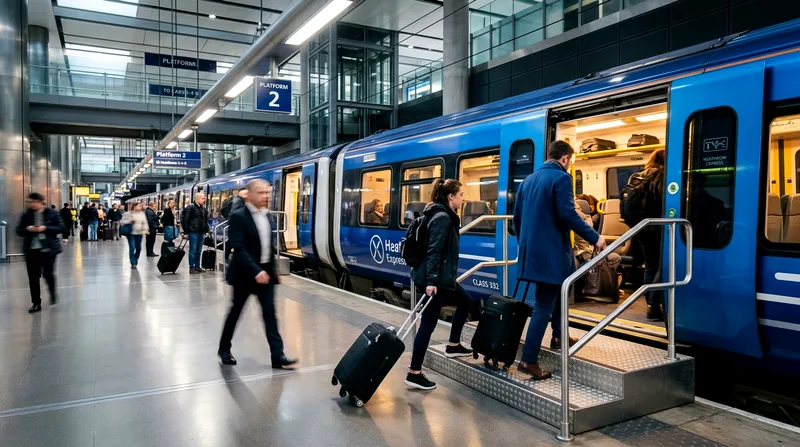
Gatwick Express carriages are built with airport travel in mind — dedicated luggage racks near the doors and a layout that assumes most passengers are hauling suitcases. Southern and Thameslink trains are standard commuter stock, shared with everyday rail passengers, which means less luggage space and a higher chance of standing room only during rush hour. If you're travelling with two large suitcases and it's 8am on a weekday, that's a genuine point in favour of paying more for Gatwick Express, or at least avoiding peak commuter windows on the cheaper services.
Coaches, Taxis and Private Transfers
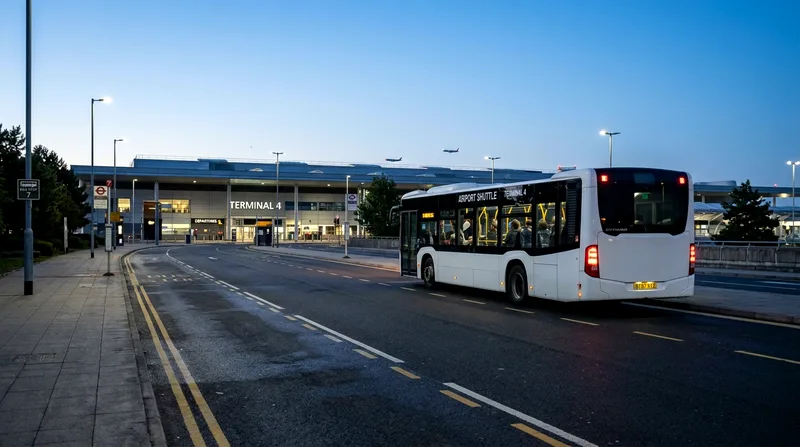
National Express runs coach services from several London locations, including Victoria Coach Station, direct to Gatwick. It's the cheapest option on this list by a clear margin, and for travellers on a tight budget — or those who booked a budget flight and don't want transport costs to erode the savings — it's a reasonable trade. The catch is traffic. London's roads, particularly around the M23 approach, can turn a 70-minute journey into two hours during bad congestion or an accident, something that simply doesn't happen to the same degree on rail.
Taxis and private transfers sit at the other end of the spectrum: expensive, but door-to-door, which matters enormously if you're travelling with young children, mobility equipment, or more bags than you can comfortably wheel through a station. A black cab or minicab from central London to Gatwick typically costs several times more than a train fare, and like coaches, you're exposed to traffic. Pre-booked private transfers remove the uncertainty of hailing a cab but need booking in advance, usually at least 24 hours.
My view: coaches make sense for the budget traveller with time to spare and light luggage, not for anyone catching an early flight where delay risk matters. Taxis make sense for families and larger groups where splitting the taxi cost across four people brings the per-head price close to train fares anyway.
Coach routes and traffic risk
National Express coaches depart from Victoria Coach Station (a short walk from the rail station of the same name) with some additional pickup points elsewhere in London. Journey time is typically quoted around 60–90 minutes, but that's a traffic-dependent estimate, not a guarantee. If you're using a coach for an outbound flight, build in generous buffer time — I wouldn't cut it closer than a three-hour cushion before your check-in deadline, more during school holidays or major events in London that add to road congestion.
When a taxi or transfer makes sense
A taxi or transfer is worth the extra cost in three situations: you're travelling very early or very late when trains are infrequent or not running, you have mobility needs that make station transfers difficult, or you're a group of three or more where the per-person cost converges with rail fares anyway. Outside those scenarios, paying several times the train fare for a journey that takes roughly the same time, or longer in heavy traffic, is hard to justify on value alone.
Head-to-Head: Time, Cost, Effort and Luggage
Line all five options up and a pattern emerges fast: the fastest options cost the most, the cheapest option carries the most risk, and the "sensible middle" — Southern or Thameslink — wins for most ordinary trips. This mirrors the Heathrow Express versus Elizabeth Line trade-off at London's other major airport, the logic transfers to other European cities too: Rome's Leonardo Express and Dublin's Aircoach follow the same premium-versus-budget split.
Effort is the factor people underrate. Trains require you to navigate a London station, find the right platform, and manage your own luggage onto the train — not hard, but not nothing if you've just landed after a long-haul flight and you're jet-lagged. A taxi removes that effort entirely in exchange for cost. Coaches sit in between: easier boarding than a train in some ways, but you're trusting the driver and the M23 to get you there on schedule.
Cost level ranking from cheapest to priciest
From cheapest to priciest, roughly: National Express coach, Thameslink, Southern, Gatwick Express, then taxi or private transfer at the top. The jump between Thameslink and Gatwick Express is usually modest in absolute terms but can feel more significant for a family of four buying multiple tickets. If you're the kind of traveller who checks prices on Citymapper or National Rail before every trip, you'll notice fares also shift with time of day and advance booking — booking a Gatwick Express ticket in advance online is often cheaper than buying at the station gate.
Which Option Suits Which Traveller
There's no single correct answer to how to get to Gatwick Airport from London — it depends on who you are and where you're staying. A solo backpacker staying near King's Cross has a completely different optimal route than a family of five staying near Hyde Park with two toddlers and six suitcases.
By starting point in London
If you're near Victoria, Pimlico or Chelsea, Gatwick Express or Southern from Victoria is the obvious choice — no need to cross town first. If you're near King's Cross, Euston, Islington or the City, Thameslink from King's Cross St Pancras or Blackfriars saves you a Tube journey down to Victoria and is often the cheaper option besides. Staying near Earl's Court or west London generally means a Tube or Elizabeth Line connection into central London first, at which point Victoria becomes the natural interchange. Compare this to Paris, where the RER B serves CDG from multiple central stops too — Londoners just have more station choice.
Families, groups and step-free access
Families with young children or heavy luggage should weigh the taxi/transfer option more seriously than the headline price suggests, because the hassle of navigating stairs, barriers and platform gaps with a double buggy is real. Gatwick Express and the main stations have step-free access, but always confirm current step-free routes on the National Rail or TfL website before travelling, since engineering works can temporarily close lifts. Groups of three or more should run the maths on a taxi split per person — it's often closer to the train fare than you'd expect, especially against Gatwick Express pricing.
Frequently asked questions
What is the difference between Gatwick Express and Thameslink?
Gatwick Express runs non-stop from London Victoria to Gatwick in about 30 minutes and costs more. Thameslink runs a longer route through central London — via Blackfriars, Farringdon and King's Cross St Pancras — making several stops, taking roughly 35–55 minutes depending on boarding point, but typically costing less.
What is the cheapest way to get from London to Gatwick?
A National Express coach from Victoria Coach Station is usually the cheapest option, followed closely by Thameslink. Coaches carry more traffic risk, so only choose this route if you have a generous time buffer before your flight — at least three hours is sensible.
How long does it take to get from London to Gatwick by train?
Gatwick Express takes about 30 minutes from Victoria with no stops. Southern Railway is similar, around 30–45 minutes with a few stops. Thameslink takes roughly 35–55 minutes depending on whether you board at King's Cross, Blackfriars or Farringdon.
Which terminal is the train station at Gatwick?
Gatwick's main railway station sits directly beneath the South Terminal. If you're flying from North Terminal, you'll need the free automated monorail or a short connecting walk, which typically takes a few minutes — build that into your timing, especially with luggage.
Can you take the Tube to Gatwick Airport?
No — the London Underground doesn't reach Gatwick. You'll need National Rail services (Gatwick Express, Southern or Thameslink) from a mainline station, or a coach or taxi. The Tube is only useful for reaching those mainline stations, such as Victoria or King's Cross, from elsewhere in London.