Compare a London private airport transfer with black cabs and ride-hailing on cost, comfort and luggage space, and see which suits families and seniors best.
Private Transfer, Black Cab or Ride-Hailing?
Landing at Heathrow tired, with kids or heavy bags, makes the choice between a pre-booked private transfer, a black cab and a ride-hailing app matter far more than it seems on paper. Three options, three completely different experiences — and the wrong pick can turn a 45-minute ride into an hour of queuing, card machine errors and a driver who doesn't know where Terminal 5's short-stay car park ends and the drop-off zone begins.
A London private airport transfer is a pre-arranged, fixed-price car and driver, booked in advance for a specific flight. A black cab is the traditional metered taxi you hail or queue for at the rank. Ride-hailing apps like Uber and Bolt sit in between — cheaper than a cab most of the time, but with surge pricing, variable driver quality and a pickup process that can be genuinely confusing at a terminal you've never set foot in.
I'd rank them by what the traveller values most, not by price alone. Someone flying into Heathrow at 6am after an overnight flight, with two suitcases and a toddler, is not the same traveller as a solo 25-year-old with a backpack heading to a hostel in Shoreditch. Treating all three options as interchangeable is the mistake most comparison articles make, and it's the one I'd avoid here.
What a private transfer actually means
A private transfer booked ahead of arrival typically includes a named or allocated driver, a specific vehicle class — often a Mercedes E Class or similar executive saloon, sometimes an MPV for groups — and a fixed price agreed at booking, regardless of traffic on the M4 or a queue at passport control. The driver tracks your flight number, so a delay doesn't mean a missed pickup or a scramble to rebook. Most operators offer a meet-and-greet service inside the terminal, with a name board, rather than a kerbside pickup you have to find yourself.
The trade-off is cost and rigidity. You're paying for certainty, and you're locking in a vehicle and time slot rather than deciding on the spot. If your flight is cancelled or you clear customs three hours late with no one informing the driver, some operators charge a waiting fee past a grace period — usually around 60 minutes from landing, though this varies, so check the policy when you book.
How black cabs and apps work at London airports
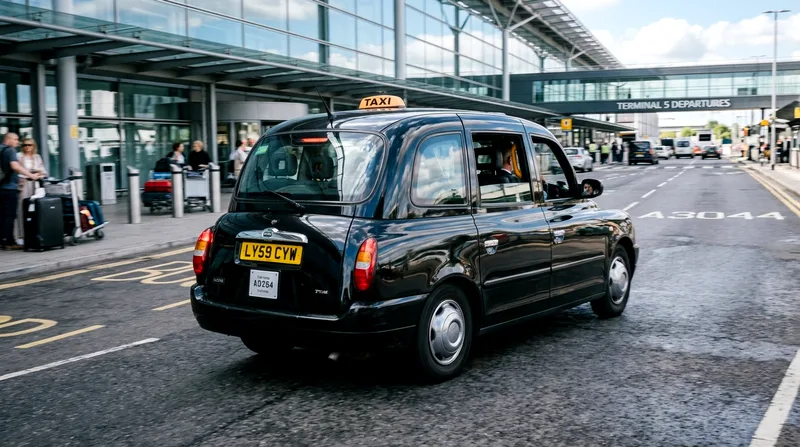
London black cabs queue at designated ranks at every terminal at Heathrow and Gatwick, and you simply join the line — no booking, no app, no advance payment. Fares are metered under Transport for London regulation, which means the price reflects actual traffic and route, not a flat estimate. That's good when roads are clear and bad when the M25 is crawling.
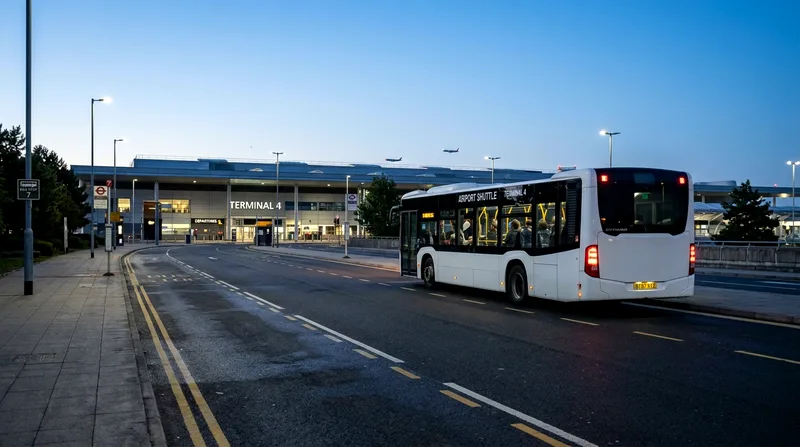
Uber and Bolt both operate at Heathrow and Gatwick, with designated pickup zones usually a short walk or shuttle ride from arrivals — which is itself a minor headache if you're hauling luggage. Pricing is dynamic: a ride that costs one amount at 2pm can cost noticeably more during a Friday evening surge. For a lone traveller without much luggage, this is usually still the cheapest route into Central London. For anyone navigating an unfamiliar pickup zone for the first time, jet-lagged, it's the fiddliest of the three.
Head-to-Head: Cost, Time and Effort
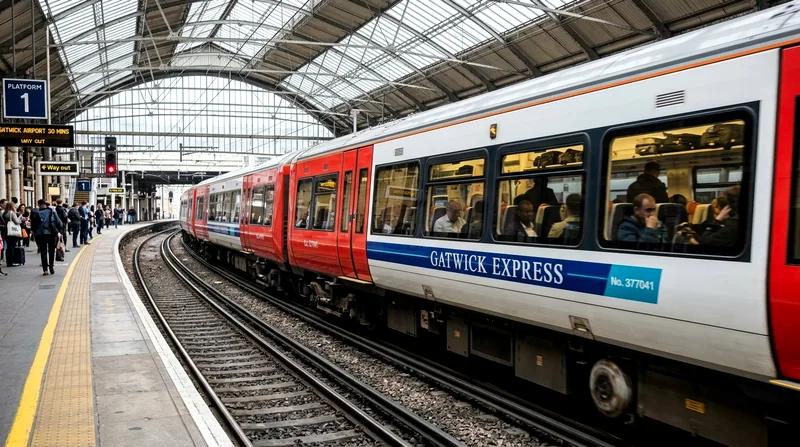
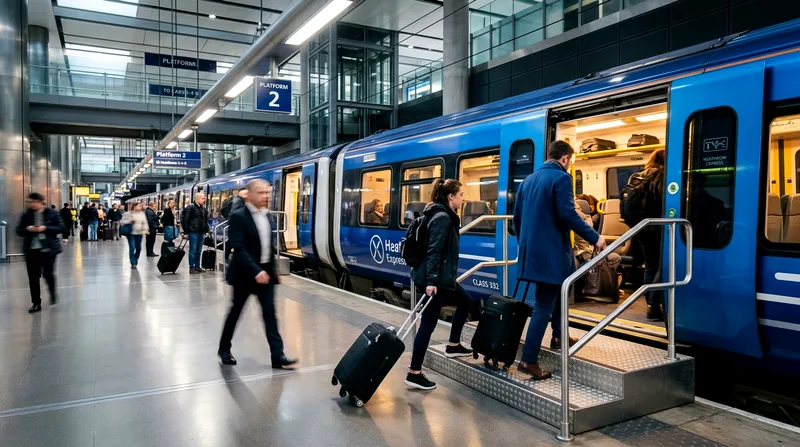
Cost is the question everyone asks first, but it's the wrong one to ask alone — time and effort matter just as much once you're standing in arrivals with a trolley full of bags. Here's how the three stack up against each other, and against the train alternatives most Londoners would actually recommend to a fit, light-packing traveller: the Elizabeth line or Heathrow Express from Heathrow, both of which reach Central London in 15–45 minutes depending on your station, for a fraction of any taxi fare.
A private transfer costs more but removes waiting, queuing and surge pricing risk entirely.
London private airport transfer vs black cab vs ride-hailing compared
| Option | Typical cost level | Booking needed | Waiting/queue time | Luggage space | Best for |
|---|---|---|---|---|---|
| Private transfer | Higher | Yes, in advance | None (meet inside terminal) | Generous, often MPV available | Families, seniors, heavy luggage |
| London black cab | Mid to higher | No | 10-20 min at peak | Good, fits most cases | Flexible travellers, no booking wanted |
| Uber/Bolt | Lower to mid (variable) | Yes, on arrival | 5-15 min walk to pickup zone | Limited in standard class | Solo/light-packing travellers |
| Elizabeth line/Heathrow Express | Lower | No | Minimal | Carry-on manageable only | Fit travellers staying near a station |
Cost levels and timings are typical ranges; actual fares and journey times vary by traffic, time of day and operator, so check current prices when booking.
Fixed pricing vs metered fares
A pre-booked airport transfer in London sits at the higher end of the cost scale, but the price is locked in before you land — no surprises, no meter ticking up because the driver got stuck on the A4. Black cabs run on TfL-regulated meters, which are honest but exposed to traffic; a heavy-traffic afternoon run from Heathrow to the West End can cost noticeably more than the same trip at 10am. Ride-hailing apps are usually the lowest-cost option in normal conditions, but surge pricing during peak travel periods or bad weather can push an Uber fare close to, or even past, a metered cab fare, which defeats the point of choosing it on price.
If predictability matters more to you than squeezing out the lowest possible fare, a fixed-price transfer removes the anxiety entirely. If you're comfortable with some variability and want the lowest average cost, the apps usually win.
Meeting point, waiting time and journey time
Private transfers typically include a meet-and-greet inside the terminal and flight tracking, so there's no waiting time beyond walking from baggage claim to your driver. Black cabs have no booking step but can mean a 10–20 minute queue at busy periods, particularly early evening at Heathrow Terminal 5. Ride-hailing requires walking to a separate pickup zone, which at Heathrow can add 10 minutes or more versus a private transfer's inside-terminal meet point.
Journey time itself is largely the same across all three road options — Heathrow to Central London runs roughly 45–75 minutes by car depending on traffic and destination, Gatwick to Central London closer to 60–90 minutes. None of the three beats the train on raw speed; what they offer instead is door-to-door convenience the Elizabeth line can't match if you're staying somewhere without a nearby station.
Luggage, Comfort and Accessibility Compared
This is where the three options separate most clearly, and where price comparisons alone mislead people. A black cab famously fits five passengers and a reasonable amount of luggage thanks to its boxy design — genuinely one of the better standard vehicles for luggage in any major European capital, arguably better than a typical Paris taxi or Rome minivan for the same fare class. But it's still one car, one size, and you can't choose it.
A private transfer lets you choose the vehicle class at booking: an executive saloon like a Mercedes E Class for two people and two large suitcases, or an MPV/minivan for groups of five to seven with matching luggage. That flexibility is the real selling point for families and anyone travelling with mobility equipment, not just comfort.
Vehicle size, child seats and mobility needs
If you're travelling with a baby or toddler, ask at booking whether a child seat is included — most private transfer operators offer them on request, usually free or for a small additional fee, but it needs to be specified in advance, not assumed. Black cabs in London are required to accommodate wheelchairs and have retained a famously spacious rear cabin for this reason, making them a solid fallback for mobility needs without pre-booking. Ride-hailing apps are the weakest here: standard Uber and Bolt vehicles vary widely in boot space and rarely guarantee a child seat unless you book a specific higher-tier option, and availability of those tiers at the airport isn't guaranteed.
For a senior traveller with a hip replacement or a family with two car seats and three suitcases, I'd skip the apps entirely. The uncertainty isn't worth the saving.
Which Option Suits Which Traveller
There's no single right answer here, which is exactly why this comparison exists. The right choice depends on who's travelling, how much they're carrying, and whether the flight lands at a sensible hour or at midnight with a connecting train system half-shut.
Families and seniors
For families with children or older travellers, a pre-booked airport transfer in London is usually worth the extra cost. The driver waits, helps with bags, and the vehicle is sized correctly from the start — no negotiating with a cab driver about whether a pushchair fits in the boot. Seniors in particular benefit from the meet-and-greet service: no walking a long terminal corridor to find a pickup zone, no standing in a cab queue after a long-haul flight. Compare this to arriving in Rome or Barcelona, where airport taxi ranks can be chaotic and overcharging tourists is a known issue — London's regulated black cabs don't have that problem, but a private transfer still removes more friction for less able travellers.
Heavy luggage, groups and late arrivals
Groups of four or more with full-size luggage should book an MPV transfer rather than hope a cab or two Ubers can handle it — splitting a group across vehicles after a flight is more hassle than it sounds, especially with a toddler or an elderly relative needing to stay together with their bags. Late-night arrivals (after midnight, when the Elizabeth line has stopped and Heathrow Express frequency drops) are another case where pre-booking wins outright: a confirmed driver beats hoping for a cab or an app ride in a near-empty terminal at 1am.
Our Verdict
Book a private transfer when certainty, luggage space or ease matter most, and take a black cab or app ride when you are travelling light and flexible. If you're a couple with one suitcase each, landing mid-morning with no particular rush, a black cab from the rank or an Uber from the designated zone will serve you fine and save money over a pre-booked car. If you're flying into Heathrow as a family of four with two car seats, or helping a senior parent through Gatwick after a long flight, the fixed price and meet-and-greet of a private transfer earns its premium.
I wouldn't recommend ride-hailing apps for first-time visitors unfamiliar with Heathrow's terminal layout — the walk to the pickup zone has tripped up enough travellers that it's a real downside, not a minor one. And I wouldn't recommend the train to anyone with more than one large suitcase each, regardless of how often guidebooks push the Elizabeth line as the default — dragging luggage through interchanges at Paddington or Tottenham Court Road isn't the breezy experience it sounds like.
Whichever you choose for the airport leg, it's worth planning the rest of your London arrival logistics the same way — a day pass for the Underground, or a private transfer onward to a day trip to Windsor or Oxford, tends to be booked separately and is easy to add once you've settled on how you're getting into the city.
Frequently asked questions
What is the difference between a private transfer and a taxi in London?
A private transfer is booked in advance for a specific flight, with a fixed price, allocated driver and meet-and-greet in the terminal. A black cab is hailed or queued for on arrival with no booking, charged on a regulated meter that reflects actual traffic and distance.
Is a private transfer cheaper than a black cab from Heathrow?
Usually not — a private transfer typically costs somewhat more than a metered black cab under normal traffic conditions, because you're paying for a guaranteed price and meet-and-greet service. In heavy traffic, the gap narrows or can even reverse, since the cab meter keeps running.
How long does a Heathrow to Central London transfer take?
By car, expect roughly 45 to 75 minutes depending on traffic, time of day and your exact destination. The Elizabeth line or Heathrow Express can be faster, around 15 to 45 minutes to Paddington, but only if your accommodation is near a station and you're not carrying heavy luggage.
Can private transfers handle large groups and heavy luggage?
Yes — most operators offer MPV or minivan options specifically for groups of five to seven with full-size luggage, which you select when booking rather than discovering on arrival whether it fits. Specify your group size and luggage count at booking to avoid being sent the wrong vehicle class.
Are child seats available on London airport transfers?
Most private transfer operators provide child seats on request, often at no extra charge, but you need to request the specific age-appropriate seat when booking, not on arrival. Black cabs and ride-hailing apps rarely guarantee one without a specific premium vehicle tier, so don't assume it will be there.