Comparing an east end food tour with a Borough Market tour: food variety, neighbourhood character, value and who each suits, so you can choose.
East End vs Borough Market at a Glance
Anyone choosing a London food tour usually narrows it down to these two: an east end food tour through Shoreditch, Spitalfields and Brick Lane, or a Borough Market tour around Southwark's stalls. Both get booked heavily by first-timers searching for the best food tour London has to offer, and both show up constantly in TripAdvisor rankings for operators like Eating Europe and Walk Eat Talk Eat. They are not interchangeable experiences, though, and picking the wrong one for your appetite or your patience level can leave you disappointed.
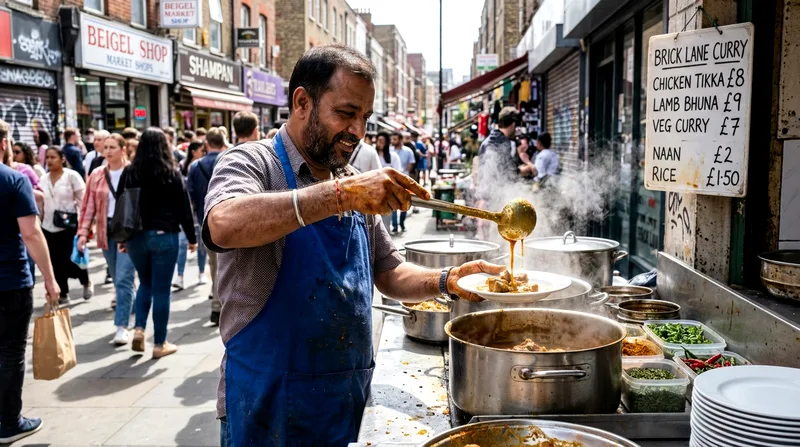
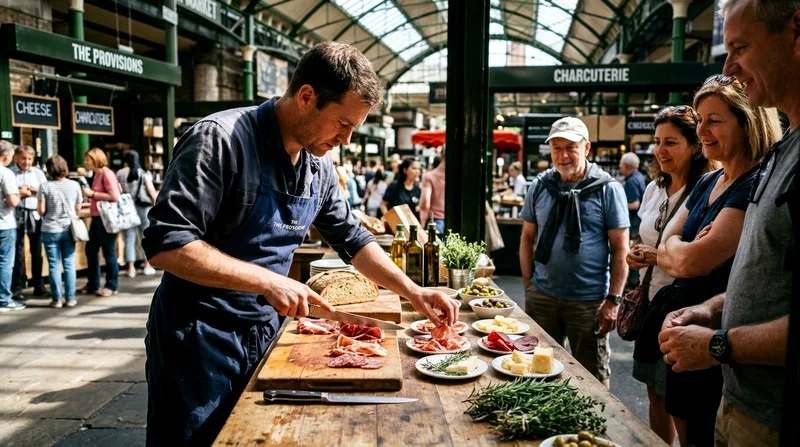
The East End route is built around walking between independent restaurants and street-food vendors across a few connected neighbourhoods — expect curry houses, bagel shops and a stop or two tied to Banglatown's Bangladeshi community. A Borough Market tour, by contrast, mostly keeps you within one covered and partly open-air market, sampling from stalls selling cheese, charcuterie, baked goods and prepared food. One is a neighbourhood crawl; the other is closer to a guided grazing session in a single location.
I'd rank the East End ahead for anyone who wants cultural context alongside their food — you're learning about Huguenot silk weavers, Jewish immigration, and Bangladeshi settlement as much as you're eating. Borough Market wins on convenience and on produce quality if you're more interested in artisan British food than in neighbourhood history.
The East End tour covers more ground and more cuisines, while Borough Market offers a tighter, produce-focused experience with less walking.
East end food tour vs Borough Market tour compared by duration, cost and cuisine
| Tour Type | Typical Duration | Cost Level | Cuisine Variety | Walking Effort | Best For |
|---|---|---|---|---|---|
| East End food tour | approx. 3 hours | Moderate to high | High — South Asian, Jewish, British | Moderate, flat streets | History lovers, first-timers |
| Borough Market tour | approx. 2–2.5 hours | Moderate | Medium — British, European artisan | Low, compact area | Produce fans, shorter visits |
| Self-guided Brick Lane walk | 1–2 hours | Low | High if you choose widely | Moderate | Budget travelers, repeat visitors |
| Self-guided Borough Market visit | 1 hour | Low | Medium | Low | Quick stops, solo travelers |
Figures are typical ranges; exact duration, stops and pricing vary by operator and season, so confirm details before booking.
Quick Comparison Table
See the comparison table below for a side-by-side breakdown of duration, cost level, cuisine variety and walking effort. It's the fastest way to see which tour matches your schedule and interests before reading the fuller comparisons in the sections that follow.
What Each Tour Typically Covers
A typical East End food tour runs through Spitalfields Market, along Brick Lane, and into side streets around Shoreditch, with five to eight tastings spread across roughly three hours. Expect a mix of a curry sample, a salt beef bagel, maybe a stop near St. John Bread & Wine or a similar modern British kitchen, and often a sweet finish like a doughnut or cardamom bun. A Borough Market tour usually sticks to the market itself and its immediate surroundings near London Bridge, covering six to ten smaller tastings in two to two and a half hours — cheese, cured meat, fresh oysters, baked goods, and maybe a pint from a nearby pub. Exact stops vary a lot by operator, so always check the specific itinerary before booking.
Food Variety and Cuisines Compared
This is where the two tours diverge most sharply. The East End draws on genuine immigrant food history — it's not a curated "world foods" theme but the actual layered settlement pattern of East London, where Bangladeshi curry houses sit near old Jewish bakeries and newer Vietnamese and Turkish spots. Borough Market's variety comes from stallholders who've been vetted for quality and provenance rather than from any particular community history, so the cuisines on offer skew British and broadly European.
East End: Banglatown, Street Food and Classic British
Brick Lane's southern end is officially branded Banglatown, and a good east end food tour will stop at a proper curry house there rather than a tourist-trap one — ask your operator how they pick restaurants, because quality varies wildly along that strip. You'll typically also hit a beigel shop for salt beef (a genuine East London institution, open since the Jewish community dominated the area decades ago), plus something representing modern London dining, possibly near St. John Bread & Wine's nose-to-tail British cooking. Street art stops are common too, since much of Shoreditch's wall art sits along the same route. The cuisine range on a three-hour walk can realistically span four or five distinct culinary traditions.
Borough Market: Produce, British and Artisan Stalls
Borough Market tours lean heavily on quality ingredients rather than cooked ethnic dishes — think aged cheddar, Spanish jamón, fresh oysters, sourdough, and maybe a scotch egg or a bowl of paella from one of the hot-food stalls. It's excellent if you care about provenance and want to taste genuinely good raw produce, but it's a narrower culinary story than the East End offers. You won't get the layered immigrant history; you'll get a showcase of British and European artisan food production, which is a different (and in some ways simpler) pleasure.
Neighbourhood Character and History
Food tours sell you atmosphere as much as food, and here the two areas feel genuinely different to walk through. Shoreditch and Spitalfields have a scruffier, creative energy — converted warehouses, independent galleries, and market stalls selling vintage clothing alongside food vendors. Borough Market sits under railway arches near London Bridge, with a more traditional "market hall" feel that's existed in some form for over a thousand years, making it one of London's oldest food markets.
Shoreditch, Spitalfields and Brick Lane
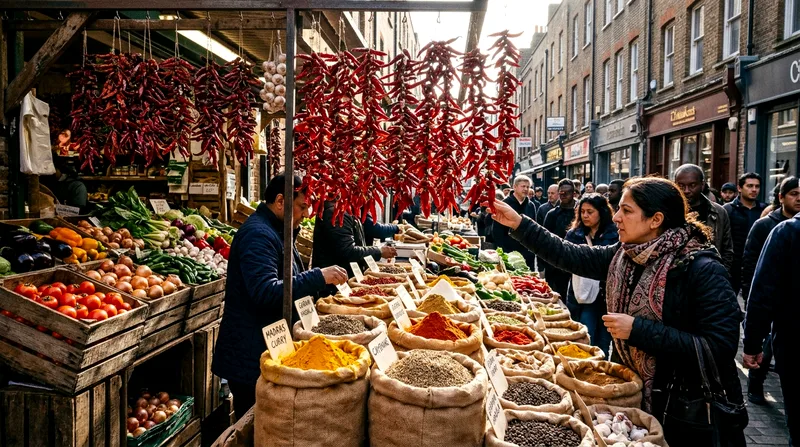
Spitalfields Market itself is a mix of Victorian market hall and modern retail units, worth a browse before or after your tour even if the stalls aren't part of the tasting route. Brick Lane runs south from there into Banglatown, lined with murals that change regularly, vintage shops, and the kind of late-night bagel trade that's been running for generations. Shoreditch proper, just north, adds tech-office energy and newer restaurant openings. The whole area feels less polished than central London, which some visitors love and others find a bit rough around the edges — don't expect manicured streets.
Southwark and the Market's Historic Setting
Borough Market sits beside Southwark Cathedral and under the brick arches of London Bridge station, with the Thames and Shakespeare's Globe a short walk away. The setting is more contained and arguably more photogenic for a single shot — vaulted ironwork, hanging produce displays, a defined market square. It's easier to pair with other sightseeing in one afternoon since Tower Bridge, the Shard and the South Bank are all within fifteen minutes on foot, something the East End route doesn't offer as naturally.
Value, Time and Effort Compared
Neither tour is cheap compared to simply buying your own lunch, but both are priced for the volume of tastings and the guiding included. Expect an east end food tour to run slightly longer and cost somewhat more than a Borough Market equivalent, given the extra ground covered and typically higher number of full dishes versus smaller market bites.
Tastings, Duration and Cost Level
Most East End tours last around three hours and include five to eight tastings, several of which are substantial enough to replace a meal. Borough Market tours run shorter, often two to two and a half hours, with more numerous but smaller bites — six to ten samples that add up to a generous snack rather than a full lunch. Cost tends to track duration: the East End option usually sits in the moderate-to-higher bracket, Borough Market in the moderate range. Always check what's included (drinks, gratuities, market entry) since this varies by operator and changes the real value comparison.
Crowds, Walking Effort and Accessibility
Borough Market gets seriously crowded on weekends, particularly Saturday afternoons, to the point where moving between stalls as a group becomes slow going. Weekday tours are noticeably calmer. The East End spreads visitors across open streets rather than one enclosed space, so it feels less congested even when busy. In terms of physical effort, the East End route involves more total walking — figure one to one and a half miles over flat pavement — while Borough Market tours mostly shuffle within a compact footprint. Neither is strenuous, but if you're traveling with a wheelchair or pushchair, ask operators specifically about market aisle width and Brick Lane's uneven sections before booking.
Who Should Choose Which Tour
There's no universal right answer here — it depends on what you're optimizing for on your trip. If you've got one afternoon in London and want maximum cultural storytelling per step taken, the East End wins. If you're tight on time, traveling with the Shard or Tower Bridge already on your itinerary, or you simply prefer tasting raw ingredients over cooked ethnic dishes, Borough Market is the more efficient choice.
First-Time Visitors, Foodies and Families
First-time visitors to London often do better with the East End tour because it doubles as a history lesson on immigration patterns you won't get from a guidebook. Foodies chasing variety and genuine ethnic cuisine should lean the same way — a Brick Lane food tour simply covers more culinary ground. Families with younger children may find Borough Market easier logistically, since it's compact, has seating nearby, and doesn't require sustained walking over nearly two miles. Teenagers tend to enjoy the East End's street art and edgier atmosphere more than a produce market.
Dietary Needs and Photography
Both tour types can usually accommodate vegetarians, and most operators will work with gluten-free or dairy-free requests if you flag them at booking — but always confirm directly rather than assuming, since substitutions at small independent stalls aren't always possible on short notice. Severe allergies need extra caution on East End curry stops given shared kitchen equipment. For photography, Borough Market's covered stalls and produce displays photograph well in any weather; the East End's street art and shopfronts are better in daylight and can look flat on an overcast London afternoon.
Verdict: Which Food Tour Is Best?
If you're asking which is simply the best food tour London offers, the honest answer is that it depends on what "best" means to you. For cultural depth, cuisine variety, and a proper Brick Lane food tour experience, the East End earns the edge — it's more memorable and tells a richer story about the city. For efficiency, ingredient quality, and easy pairing with South Bank sightseeing, Borough Market is hard to beat, and a shorter time commitment suits travelers juggling a packed itinerary.
My actual recommendation: if you can only do one, and you're not in a rush, do the East End. It's more distinctly "London" in a way that a produce market, however good, can't quite match. But if you're already planning a Thames-side day near Tower Bridge or the Globe, slot in Borough Market instead rather than cross-town to Shoreditch. Either way, compare current food tours and prices before you book, since stops, group sizes and inclusions differ meaningfully between operators even within the same neighbourhood.
Frequently asked questions
How long is an East End food tour?
Most run around three hours, covering roughly one to one and a half miles on foot through Spitalfields, Brick Lane and parts of Shoreditch. Some condensed versions run closer to two hours with fewer tastings, so check the listed duration and stop count before booking if time is tight.
What cuisines are featured on an East End food tour?
Expect South Asian food from Banglatown's curry houses, Jewish-influenced items like salt beef bagels, and modern British dishes from newer Shoreditch kitchens. Some itineraries also include Vietnamese or Turkish stops, reflecting the area's layered immigration history — though exact cuisines depend on which restaurants the operator currently partners with.
Is an East End food tour suitable for all fitness levels?
It's suitable for most people who can comfortably walk one to one and a half miles on flat city pavement over roughly three hours, with stops for sitting or standing while tasting. It's not ideal for anyone needing frequent seated rest breaks; ask the operator about pace and break points if mobility is a concern.
Is a Borough Market tour better than an East End food tour?
Neither is objectively better — Borough Market suits travelers wanting shorter duration, less walking and higher-quality raw ingredients, while the East End suits those wanting cultural variety and a longer, more immersive neighbourhood experience. Match the choice to your schedule and interests rather than ratings alone.
Can food tours in London cater to dietary requirements?
Most operators can accommodate vegetarian and many gluten-free or dairy-free requests if notified at booking, though options at small independent stalls are sometimes limited. Severe allergies require direct confirmation with the operator beforehand, since shared kitchen equipment at curry houses and market stalls isn't always allergen-controlled.