Compare Brick Lane food tours: curry, bagels and street food. See which tour style suits you, what to check before booking and how to dodge tourist traps.
Who Brick Lane Food Tours Suit
Brick Lane runs through what used to be the heart of London's East End garment and spice trade, and the food still tells that story — Bangladeshi curry houses sit a few doors from Jewish bagel shops that have barely changed their recipe in decades. A brick lane food tour works best as a way to taste both halves of that history in one sitting, rather than guessing which of the twenty curry restaurants with near-identical menus is actually good.
The honest trade-off: you're paying a guide fee on top of food that, bought directly, might cost less. But most visitors overpay anyway, lured in by a tout offering "50% off" outside a restaurant that's half-empty for a reason. A guide typically has standing relationships with a handful of kitchens and street stalls, so you skip the theatrics and eat where locals actually queue.
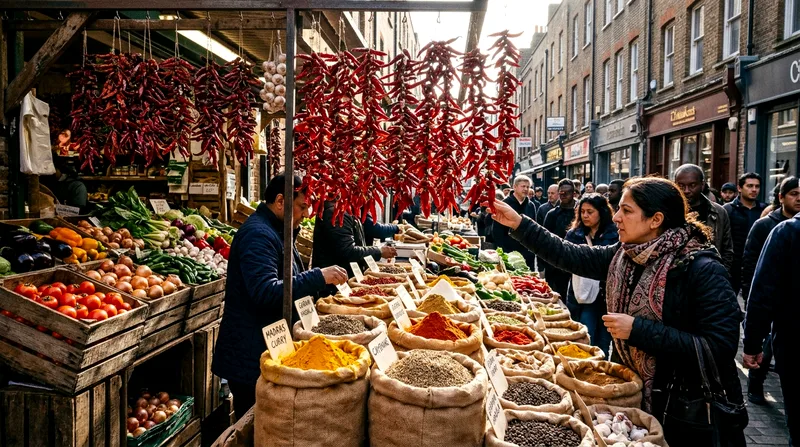
If you're the type who'd rather wander and discover things yourself, skip the tour — Brick Lane rewards aimless walking too, especially on a Sunday when Brick Lane Market and the Sunday Upmarket inside Truman Brewery are both running. But if your time in London is short, or you've been burned before by a mediocre curry in a tourist zone, a guided tour removes that risk in exchange for a few hours of your itinerary.
First-time visitors and curry lovers
If this is your first trip to London and Brick Lane curry is the whole point of the visit, book a guide. The street's reputation for "the best curry in London" is overstated for maybe two-thirds of the restaurants lining it — many cater almost entirely to tourists with set menus and persistent doorstep sales pitches. A guide who's eaten their way down the street repeatedly will steer you toward the Bangladeshi-run kitchens that locals actually use, which tend to sit slightly off the main strip or lack flashy signage. Expect a tour to run two to three hours and cover three to six stops, enough to compare a lamb curry, a street snack like a samosa or bhaji, and something sweet.
Families, solo travelers and dietary needs
Solo travelers get an obvious benefit — company, and a reason to try five small dishes instead of ordering one large meal alone. Families with children do fine on daytime tours, though check the walking distance and stop count first since some routes cover close to a mile with stairs at market venues. For dietary needs, Brick Lane's South Asian food is naturally strong on vegetarian options (dal, paneer, vegetable curries), and halal options are common given the area's Muslim Bangladeshi community, but vegan and gluten-free diners should confirm specifics directly with the tour operator before paying a deposit — don't assume a tour description covers it fully.
Main Types of Brick Lane Food Tour
Tours on and around Brick Lane generally split into two decisions: how narrow the food focus is, and whether you're in a group or going private. Neither choice is objectively better — it depends on your appetite, budget and how much you want a guide's full attention versus a cheaper shared experience.
A curry-focused tour sticks almost entirely to Bangladeshi and wider South Asian food — multiple curry house stops, maybe a spice shop visit, sometimes a sweet shop for jalebi or barfi. A mixed East End tour widens the net to include the bagel shops, Spitalfields Market stalls, and sometimes a pub stop, giving more variety at the cost of depth in any one cuisine. Group tours (shared with strangers, usually six to fifteen people) cost less per head and have a fixed pace; private tours let you set dietary limits, skip stops you don't want, and move faster or slower as your group needs.
Curry-focused group tours give the most food per pound, while private mixed tours give the most flexibility and dietary control.
Brick Lane food tour categories compared by focus, pace and group size
| Tour Category | Typical Duration | Food Focus | Group Size | Best For |
|---|---|---|---|---|
| Curry-focused group | 2-3 hours | Bangladeshi curry, South Asian street food | Shared, 6-15 people | Curry lovers, first-timers |
| Mixed East End group | 2.5-3.5 hours | Curry, bagels, market stalls, street art | Shared, 6-15 people | Couples, first visit to London |
| Curry-focused private | 2-3 hours | Bangladeshi curry, tailored stops | Private, your group only | Families, dietary restrictions |
| Mixed East End private | 3-4 hours | Full East End history plus food | Private, your group only | Special occasions, senior travelers wanting a slower pace |
Durations and inclusions vary by operator; always confirm the stop list and pace before booking.
Curry-focused vs mixed East End tours
Go curry-focused if curry is genuinely why you're there — comparing three or four different Bangladeshi kitchens teaches you more about the cuisine's range (and the East End food tour London crowd tends to prefer this for serious food travelers) than one curry stop buried in a broader itinerary. Choose mixed if you want the full East End story: Spitalfields food tour routes often weave in the bagel shops, Truman Brewery's food stalls, and a stretch of street art, which suits travelers who want context and photos as much as food. The downside of mixed tours is thinner portions per stop since there's more ground to cover in the same two to three hours.
Group vs private tours compared
Group tours suit solo travelers and couples on a moderate budget — you'll pay less per person, though you lose flexibility on timing and can't easily swap out a stop you're not interested in. Private tours suit families, larger groups, or anyone with a specific dietary restriction that needs discussing in detail with the guide beforehand, not negotiated mid-walk with a group of strangers waiting. Private tours cost more, roughly comparable to booking a private guide in Rome's Trastevere food scene or a private tapas crawl in Barcelona — expect to pay a premium over the group rate, though exact pricing varies enough that you should compare current listings before booking rather than relying on any fixed figure.
What You'll Eat on a Guided Tour
Expect to arrive hungry and leave full — most tours are built around grazing, not a single sit-down meal, so pacing yourself across four to six stops matters more than it sounds. The strength of Brick Lane's food scene is contrast: fiery Bangladeshi curry fifteen minutes' walk from a century-old Jewish bagel counter, both shaped by waves of immigration into the same few streets.
Bangladeshi curry and South Asian street food
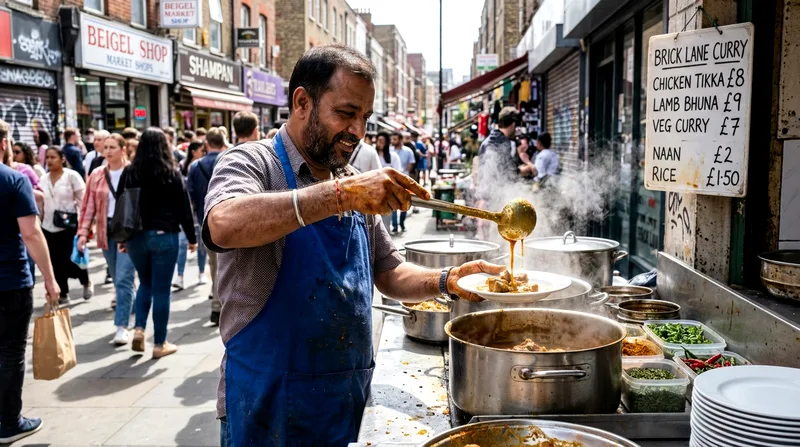
The Bangladeshi community has run curry houses on Brick Lane since the 1970s, and the better kitchens serve dishes you won't find on the generic tourist-menu boards — proper fish curry, bhuna, and regional specialities rather than just chicken tikka masala. A tour guide worth booking will also stop at a street food stall for something like a vegetable chop or onion bhaji, since these cost little but show a different side of South Asian cooking than restaurant curry. Don't expect the "best curry in London" claim printed on half the shopfronts to mean anything — it's marketing, not a ranking.
Jewish bagels and Spitalfields history
Brick Lane bagels — specifically the salt beef bagel — are a holdover from the area's Jewish East End history before the Bangladeshi community became dominant from the 1970s onward. A handful of 24-hour bagel shops near the northern end of Brick Lane still bake on-site and sell for a few pounds each, which is why most tours treat this as the "palate cleanser" stop between heavier curry tastings. Good guides use this stop to explain the layered immigration history — Huguenot weavers, then Jewish garment workers, then Bangladeshi families — which gives the food context that eating alone wouldn't.
What to Look for When Booking
Not all listings calling themselves a guided food tour London travelers can trust are equal — some are glorified walking tours with one food stop tacked on. Read the stop-by-stop description carefully, not just the headline, before you commit.
Inclusions, group size and pace
Check exactly how many tastings are included and whether drinks (including alcohol, if relevant) are part of the price or extra. A tour listing four "tastings" that are really four tiny bites won't fill you up — ask or check reviews for portion size specifics. Group size matters for pace: a tour capped at eight or ten people moves faster through narrow market aisles like those at the Sunday Upmarket than one with fifteen-plus, where you'll spend time waiting for stragglers. If mobility is a concern for older travelers, ask about total walking distance and whether there are stairs at any venue — Truman Brewery's upper floors often require them.
Cancellation terms and dietary options
Always check the cancellation window before paying — many London food tours require 24 to 48 hours' notice for a full refund, and weather or illness cancellations outside that window often aren't covered. Confirm dietary accommodations in writing rather than assuming; a tour description that says "vegetarian available" doesn't always mean vegan, halal, or nut-free is handled with the same care. This is the one area where generic listings fall short compared to operators who let you message questions directly before booking — use that option if it's offered.
When to Book and Visit
Weekends — especially Sunday — are when Brick Lane is busiest, because that's when the Sunday Upmarket and the wider Brick Lane Market are both running alongside the vintage shops and street art tours that draw a separate crowd entirely. If you want the market atmosphere alongside your food tour, book a Sunday slot; if you'd rather avoid crowds and move through curry houses without queuing, a weekday evening tour is calmer and arguably better for actually tasting the food without being jostled.
Book at least a few days ahead for weekend slots, since small-group and private tours fill first. Evening tours suit couples and solo travelers wanting atmosphere — the street art and neon curry house signs look better after dark — while families with younger children do better on a late afternoon or early evening slot that doesn't run past typical dinner and bedtime. Compared with food tour markets in Paris's Marais or Dublin's Liberties, Brick Lane is smaller and more walkable, so even a three-hour tour rarely feels rushed — but it does get crowded fast once market stalls open, so build in slack if you're also trying to browse Spitalfields Market separately. Compare current Brick Lane food tour prices and reviews before you book, since availability and inclusions shift seasonally.
Frequently asked questions
What is the best Brick Lane food tour?
There's no single best option — it depends on whether you want curry depth or East End breadth. A curry-focused group tour suits food-first travelers wanting several Bangladeshi kitchens compared side by side; a mixed East End tour suits first-time visitors wanting bagels, market stalls and history alongside the food. Check recent reviews for portion size and pace before booking either.
How do I avoid tourist trap curry houses on Brick Lane?
Avoid restaurants with touts standing outside offering discounts — that's usually a sign the food doesn't sell itself. Look for queues of local Bangladeshi diners rather than tourists, and check if the menu includes regional dishes beyond chicken tikka masala. A guided tour sidesteps this entirely since guides already know which kitchens locals actually use.
Where can I find authentic Jewish bagels on Brick Lane?
The salt beef bagel shops near the northern end of Brick Lane, close to the junction with Bethnal Green Road, have been baking on-site for decades and often run 24 hours. They're a standard stop on mixed East End food tours precisely because they represent the area's Jewish garment-trade history before the Bangladeshi community became dominant.
Are there guided food tours that include Brick Lane?
Yes — most East End or Spitalfields food tour listings in London include Brick Lane as a core stop, often paired with Spitalfields Market and sometimes Truman Brewery. Some broader London food tours (like those billed as "Eating London" style walks) combine Brick Lane with neighbouring Shoreditch stops for a longer route.
Do Brick Lane food tours cater for vegan, halal or vegetarian diets?
Vegetarian and halal options are generally easy to find given the South Asian food base, but vegan and gluten-free needs vary by operator and aren't guaranteed by default. Message the operator directly before booking to confirm specific stops can accommodate you, rather than assuming a generic "dietary options available" line covers it fully.