Discover local food in London, from pie and mash to Sunday roast and fish and chips. Learn the history, where to eat by area, and how food tours fit in.
London's Signature Dishes at a Glance
Local food in London isn't one cuisine — it's at least three overlapping ones. There's the old East End working-class tradition of pie, mash and eels. There's the pub repertoire of Sunday roasts, fish and chips, and ploughman's lunches that spread nationwide from London taverns. And there's the immigrant cooking — Bangladeshi, Turkish, Caribbean, West African, Vietnamese — that's been feeding Londoners since at least the 1950s and arguably defines the city's food identity more than roast beef does now.
Knowing which dish belongs to which tradition helps you plan better than just picking restaurants off a list. If you only have a day or two, prioritise one East End meal, one pub meal, and one market stop — that combination covers more ground than any single "best of London" restaurant crawl.
Traditional British dishes to try
The core list is shorter than people expect: pie and mash with liquor, fish and chips, the Sunday roast (beef, lamb or chicken with Yorkshire pudding, roast potatoes and gravy), bangers and mash, and a full English breakfast. Add in a ploughman's lunch — bread, cheese, pickle, cold meat — as the classic pub lunch when you don't want a hot meal. None of these are difficult to find, but quality varies enormously. A £14 "traditional" roast in a tourist-heavy pub near Leicester Square is rarely as good as one in a proper neighbourhood pub where locals actually eat on a Sunday.
Seasonal specialities
Some dishes track the calendar. Jellied eels and cockles were historically eaten in summer around the East End and are still sold at a handful of stalls and pie shops. Christmas brings mince pies and Christmas pudding to every pub menu from late November. Game — venison, partridge, pheasant — shows up on gastropub menus in autumn and winter. If you're visiting in December, a pub Sunday roast with all the trimmings plus a side of festive pudding is a genuinely good way to spend a cold afternoon, better value than a dedicated "Christmas market" food stall in most cases.
Pie and Mash: An East End Classic
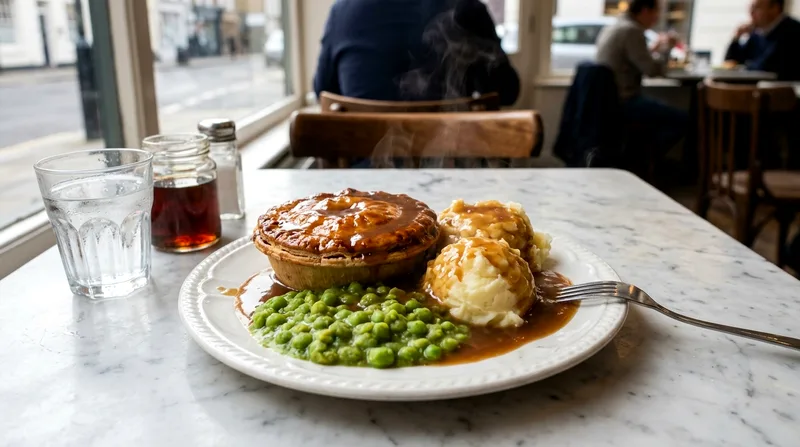
Pie and mash is the dish most tied to London specifically, rather than Britain generally. It's a minced beef pie, mashed potato, and a green parsley sauce called "liquor" — historically made with the stock from stewed eels, though most shops today use a vegetarian or beef-based version. It's cheap, filling, and genuinely old: this isn't a dish invented for tourists.
M.Manze on Tower Bridge Road is the name most food writers point to, and for good reason — the shop dates to the early 1900s and keeps its original tiled interior, marble counters and bench seating. It's not fancy, and you shouldn't expect it to be. That's the point. I'd rate it above most "heritage" food experiences in London precisely because the prices and the crowd are still mostly local, not coach tours.
History and origins of pie, mash and liquor
Pie and mash shops grew out of the eel trade along the Thames in the 18th and 19th centuries, when eels were cheap and plentiful and dockworkers needed filling, affordable food. Shops selling jellied and stewed eels added meat pies and mash as the eel supply declined through the 20th century, and the liquor sauce — originally eel stock thickened with flour and parsley — stuck around even as eels became a side dish rather than the main event. At their peak there were well over 100 pie and mash shops across London; many have closed, but the format survives strongest in the East End and south of the river.
How to order like a local
Order "one and one" — one pie, one mash — if you want the classic combination, and ask for liquor on both; it's not optional in the way gravy sometimes is elsewhere. Chilli vinegar is the standard condiment, kept in bottles on the table, and it's meant to be used liberally. Jellied eels are usually a separate, optional order, cold and served in their own jelly — worth trying once, but they're an acquired texture, not a crowd-pleaser. Don't expect table service with menus and small talk; most shops still run on a counter-order, cash-friendly system that's changed little in decades.
Sunday Roast, Fish and Chips, and Pub Food
If pie and mash is the East End's dish, the Sunday roast is London's broader pub tradition — and arguably the single best meal for visitors who want traditional British food without hunting down a specialist shop. Fish and chips runs a close second, sold everywhere from chippies to pubs to Michelin Guide-listed restaurants that have put a smarter spin on it.
The trade-off with both dishes is consistency. A Sunday roast can be excellent or a reheated disappointment depending entirely on the pub, and there's no shortcut — check whether a pub actually cooks it fresh (many stop serving roasts by mid-afternoon because they sell out) rather than keeping trays warm all day.
Pie and mash and market street food are the cheapest ways to eat traditional British food in London, while a sit-down Sunday roast or Michelin-listed fish and chips cost more but suit a slower meal.
Local food in London compared by dish, cost, and where to find it
| Dish | Typical cost | Best area | Best for |
|---|---|---|---|
| Pie and mash | Low | East End, Tower Bridge Road | Quick, cheap, historic meal |
| Sunday roast | Mid to high | West and south London pubs | Sit-down, slow lunch |
| Fish and chips | Low to mid | South Bank, Waterloo | Casual, takeaway-friendly |
| Market street food | Low | Borough Market, Ridley Road | Grazing, variety, budget trips |
| Curry and South Asian food | Low to mid | Brick Lane, Euston (Roti King) | Spice, immigrant food history |
| Modern gastropub dishes | High | Notting Hill, Battersea | Higher-end, reinvented classics |
Costs are relative comparisons, not fixed prices — always check current menu prices before you order, as they vary by venue and season.
What makes a proper Sunday roast
A proper roast has a choice of meat — usually beef, lamb, pork or chicken, sometimes a vegetarian nut roast — with roast potatoes, a Yorkshire pudding (a baked batter pudding, not just a side for beef despite the name), seasonal vegetables, stuffing, and gravy poured generously over everything. The Yorkshire pudding should be crisp outside, soft inside, and large enough to actually matter on the plate, not a token garnish. The Ladbroke Arms in Notting Hill is a solid example of a gastropub doing the roast tradition with better-than-average ingredients, while still keeping the format recognisable rather than reinventing it.
Traditional versus modern takes
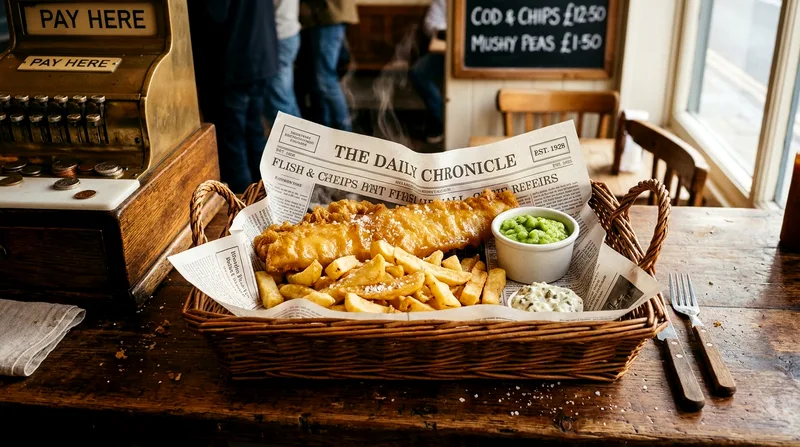
Traditional fish and chips means battered cod or haddock, chunky chips, mushy peas, and either newspaper-style wrapping or a plain plate — cheap, salty, vinegar-heavy, and best eaten near the coast or a market rather than a sit-down restaurant markup. Modern takes swap in sustainable fish, beer batter variations, or triple-cooked chips at a higher price point. Both are legitimate; what's not worth it is paying West End prices for a version that's no better than a proper chippy near Waterloo or in south London. Gastropubs have done the same thing to pie and mash and bangers and mash — reinvented, sometimes well, sometimes just marked up.
Where to Eat Local Food by Neighbourhood
Where to eat local food in London depends heavily on which "local" you want — East End working-class, pub-centric west London, or the immigrant food economies of the inner boroughs. Spreading your meals across two or three areas tells you more about the city than staying in one zone.
East End and Dalston
The East End around Bethnal Green and Tower Bridge Road is pie-and-mash territory, and also home to Pellicci, a classic Italian-run caff on Bethnal Green Road serving fry-ups and simple British food since the early 20th century — a genuinely different institution from pie shops but just as much a local fixture. Dalston, further north, is the opposite end of the spectrum: Turkish grills, Vietnamese pho, Caribbean takeaways and West African stalls sit along Kingsland Road, reflecting decades of migration into Hackney. Ridley Road Market in Dalston is the best single stop here — a working market, not a tourist-dressed version of one, selling Caribbean produce, fish, and cheap hot food stalls.
South Bank, Waterloo, and Battersea
South of the river, Waterloo and the South Bank mix tourist-facing restaurants with genuinely good local spots a few streets back from the river — look past the riverside chains. Borough Market sits right by London Bridge and is the obvious stop for market-to-table eating, though it's busier and pricier than Ridley Road; go early on a weekday if you want to avoid queues. Battersea has become a food destination in its own right over the past decade, with a mix of gastropubs and newer restaurants that's worth a detour if you're already heading to Battersea Park.
Street Food, Markets, and Immigrant Influences
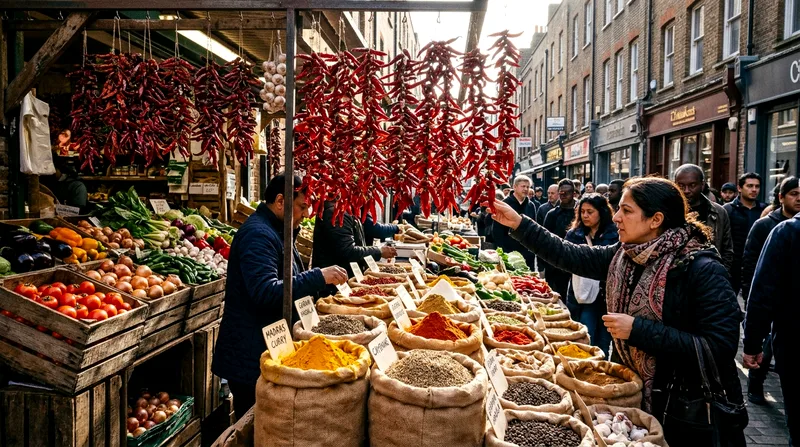
London street food markets are where the city's food story gets interesting, because they show how much "local food" has been shaped by immigration rather than tradition alone. Roti King, tucked near Euston station, is a good example — a basic-looking Malaysian canteen that's built a reputation for roti canai and curry entirely on word of mouth rather than location. Barrafina, with several London branches, shows the same pattern at a higher price point: counter-only Spanish tapas that's become a genuine London institution despite not being British food at all.
Market-to-table eating
Borough Market, Maltby Street Market, and Broadway Market each offer a version of market-to-table eating — buy from a stall, eat standing or on a nearby bench, move to the next stall. This format suits solo travelers and couples better than families with young children, since seating is limited and queues at peak weekend hours (Saturday lunchtime especially) can run 15–20 minutes at popular stalls. Weekday mornings are consistently quieter and a better bet if you're short on patience.
Budget-friendly local eats
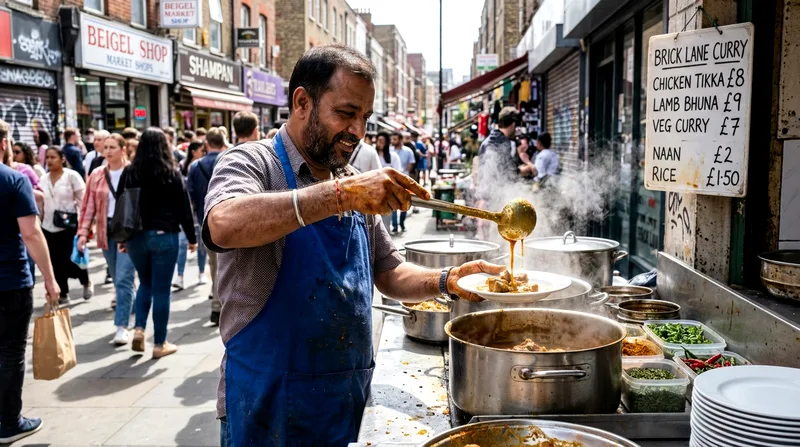
If you're on a budget, skip the markets at peak times and head to the same areas on an ordinary weekday instead — a curry in Brick Lane's less-hyped side streets, a roti at Roti King, or a pie and mash lunch will all come in well under the cost of a sit-down tourist-zone meal. Caribbean and West African takeaways around Dalston and Peckham are some of the best value hot food in the city, often cheaper than a mid-range sandwich chain in central London, and far more interesting.
Food Tours and Spotting Tourist Traps
London food tours are worth booking if you want context rather than just calories — a good guide explains why pie and mash developed where it did, or how Brick Lane went from Huguenot silk weavers to Bangladeshi curry houses to Vietnamese pho in under two centuries. That history is hard to pick up just by eating.
What a London food tour covers
Most London food tours run two to three hours, cover a single neighbourhood (Borough Market, the East End, or Soho and Chinatown are common routes), and include tastings at four to six stops rather than a full meal at each. Expect a mix of a market stall, a bakery or pie shop, and one sit-down or counter-service spot, with the guide handling the food history and local context along the way. Compare current London food tours and prices before you book, since routes and inclusions vary by operator and season, and some focus purely on street food while others blend in pub history or market trivia.
Signs of an authentic local spot
A few tells separate a genuine local spot from a tourist trap: a menu with photos of every dish and multiple languages printed on laminated cards is a bad sign; a menu that's short, handwritten, or only in English with no pictures usually means it's cooking for regulars. Queues of local workers at lunchtime are a better signal than a queue of visitors with cameras. Price is a clue too — if a pie and mash shop near the City is charging double what M.Manze charges on Tower Bridge Road, you're paying a location premium, not a quality one. Avoid restaurants with staff actively pulling people in off the street near Leicester Square or Covent Garden; the food is rarely worth the markup.
Frequently asked questions
What are London's signature dishes?
Pie and mash with liquor, fish and chips, the Sunday roast, bangers and mash, and the full English breakfast make up the core of traditional British food in London. Beyond that, curry — especially from Brick Lane and the city's many Bangladeshi-run restaurants — is often called Britain's unofficial national dish, so it belongs on any serious shortlist too.
Where can I find authentic pie and mash in London?
M.Manze on Tower Bridge Road is the best-known historic shop, dating to the early 1900s with its original tiled interior intact. Other long-running shops are scattered through the East End and south London; look for places with counter service, laminated price lists rather than printed menus, and chilli vinegar on the table — that's the real format, not a tourist-styled version of it.
Where do locals eat in London?
Outside the main tourist zones — Dalston, Peckham, Walthamstow, parts of south London like Battersea — rather than Leicester Square, Covent Garden, or directly around major attractions. Market stalls at Ridley Road, neighbourhood caffs like Pellicci, and ordinary pubs a few streets from a tube station are better bets than anywhere with a tout outside trying to seat you.
What is the best street food in London?
There's no single best, but Borough Market, Ridley Road Market in Dalston, and Broadway Market each offer different strengths — Borough leans toward produce and artisan stalls, Ridley Road toward Caribbean and African hot food at lower prices, Broadway toward a weekend crowd and baked goods. Go on a weekday morning if you want shorter queues at any of them.
Where can I find cheap local food in London?
Pie and mash shops, market stalls outside peak weekend hours, and immigrant-run takeaways in areas like Dalston and Peckham are consistently the cheapest way to eat well. Avoid sit-down restaurants within a few minutes' walk of major attractions like Big Ben or Leicester Square — the markup rarely buys better food, just a more central table.