Plan your London Eye visit: compare standard, flexi and fast-track tickets, find the best times for views and shorter queues, and see what's close by.
What the London Eye Is and Why Go
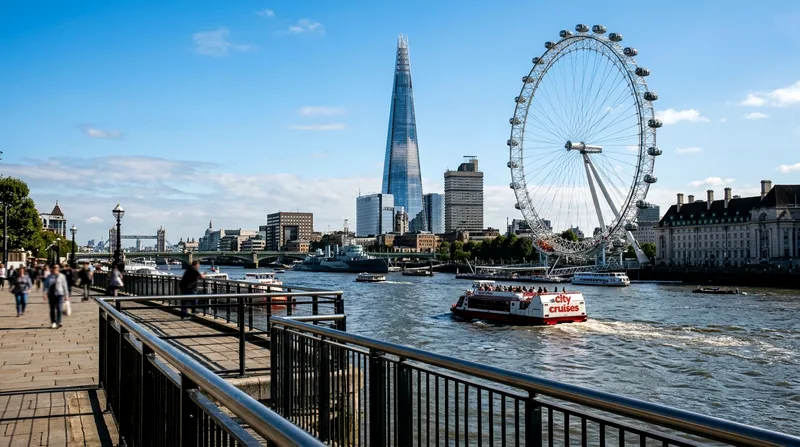
The London Eye is a 135-metre observation wheel on the South Bank of the River Thames, directly across from the Houses of Parliament and Big Ben. Built for the millennium and still sometimes called the Millennium Wheel, it opened to the public in 2000 and has stayed one of the most visited paid attractions in the city ever since. It's not subtle — you can see it from Trafalgar Square, from London Bridge, from the window of a plane coming into the city — and that visibility is part of the point. It's a landmark you orient yourself by, not just one you visit.
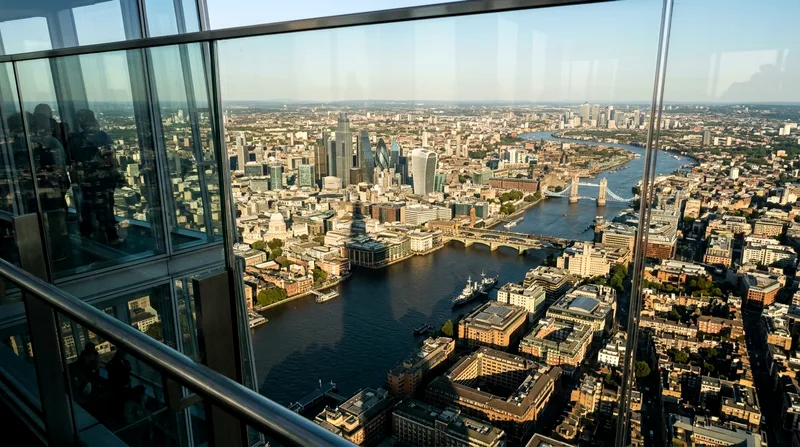
What you're paying for is altitude and angle. London doesn't have many tall structures clustered near its most historic core, so the Eye gives you a vantage point over Westminster that nothing else at ground level can match. Compare it to the Shard, which is taller and gives you a wider, more abstract city panorama — the Eye instead puts Big Ben, the Thames, and the Houses of Parliament almost at eye level, close enough to feel specific rather than miniaturised.
Views and ride experience
Each capsule is fully enclosed and air-conditioned, holding up to 25 people, though you won't usually be packed in that tight outside of peak summer afternoons. The wheel rotates continuously at a slow, steady pace — slow enough that most riders board and disembark without it stopping, though it will pause for passengers who need more time or use a wheelchair. On a clear day you can see roughly 25 miles in every direction, which stretches as far as Windsor on a good day. On a grey or hazy one, you'll still get Westminster and the river clearly, just less of the wider skyline.
Is it worth it?
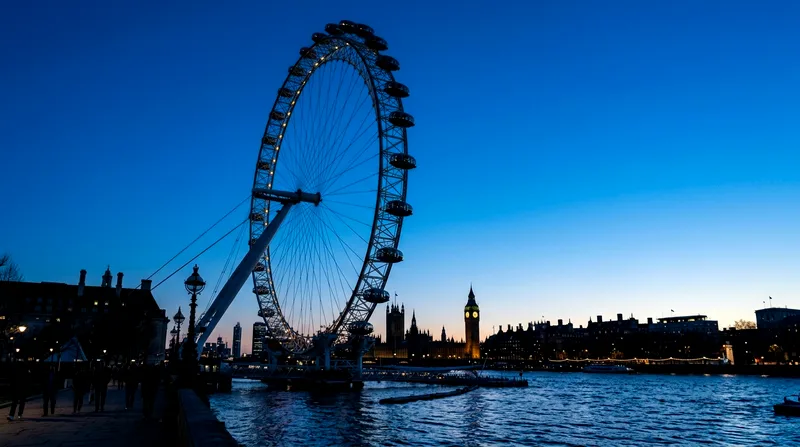
Honestly, it depends on what else is on your itinerary. If you've got three days in London and this is your first visit, yes — it's a quick, low-effort way to get oriented, and riding at dusk when the lights of Westminster come on is genuinely a nice half hour. If you've already climbed the Monument, been up the Shard, or you're on a tight budget, I'd skip it; the price-to-time ratio is weak compared to free viewpoints like the top of the Sky Garden at 20 Fenchurch Street, which costs nothing but requires advance booking of its own.
How to Visit: Independently or With a Tour
Most people visit the London Eye independently — buy a ticket for a time slot, turn up, ride, leave. There's no real need for a guided tour of the wheel itself since there's nothing to explain once you're in the capsule beyond what you can see with your own eyes. Where a tour adds value is when it's bundled with something else: a Thames river cruise plus Eye ticket, or a combination pass that also covers Madame Tussauds or the London Dungeon, both a short walk away. These bundles can save money if you were going to do all of them anyway, but don't buy one just for the discount if you'd only ever do the Eye.
If you want context — why the wheel was built, how the capsules work, what you're looking at from the top — book a slot and read up beforehand, or use the audio guide included with most ticket types, which points out landmarks as you rotate past them. It's enough information for a 30-minute ride; you don't need a human guide standing next to you repeating it.
Location and getting there
The Eye sits on the South Bank next to the Southbank Centre and Jubilee Gardens, on the opposite bank from Westminster Bridge and Big Ben. The nearest Tube stations are Waterloo (about a 10-minute walk) and Westminster (closer, but you'll cross Westminster Bridge on foot to reach it). Waterloo Station itself is a major rail hub, so if you're coming from outside London by train, you can often walk straight from the platform to the river in under 15 minutes. Driving isn't worth considering — there's no dedicated parking, and central London's congestion charge and ULEZ zones make it an expensive, slow option compared to the Tube or a riverboat from Westminster Pier.
Accessibility and facilities
The capsules are step-free and can accommodate wheelchairs, with staff on hand to slow the wheel's rotation for boarding if needed — let the ticket desk know in advance if you require this. There are accessible toilets at the base, and the surrounding South Bank promenade is flat and paved, which makes it one of the easier central London attractions to navigate with a pushchair or mobility aid. The one catch: on busy days, the standard queue area has barriers and switchback lanes that aren't especially wide, so if mobility is a concern, fast-track or a pre-booked accessible slot is the more comfortable route in.
London Eye Tickets: Standard, Flexi and Fast Track
London Eye tickets come in a few tiers, and picking the right one is really the main decision this page is here to help with. Standard tickets are the cheapest and require you to book a specific time slot in advance — you still queue, but it's the regular queue, which can run anywhere from 15 minutes on a quiet weekday morning to well over an hour on a summer Saturday afternoon. Flexi tickets cost more but let you turn up any time on the date you've booked, without committing to a slot — useful if your schedule is loose or you're not sure when you'll finish lunch. Fast Track tickets are the premium option: a dedicated, much shorter queue lane that gets you into a capsule in minutes rather than queuing with everyone else.
Fast Track cuts queue time to minutes, while standard tickets save money if you're willing to book a fixed slot and queue normally.
London Eye ticket types compared: queue time, flexibility and best use case
| Ticket type | Typical queue wait | Time flexibility | Best for |
|---|---|---|---|
| Standard | 15–60+ min, varies by season | Fixed time slot | Budget-conscious visitors, off-peak times |
| Flexi | 15–60+ min, varies by season | Any time on chosen date | Uncertain schedules, families |
| Fast Track | Under 10 min | Fixed time slot | Peak season, school holidays, weekends |
| Combination (Eye + attraction) | Same as chosen tier | Depends on bundle | Visitors doing 2+ attractions same trip |
Wait times are typical ranges and vary by season, weather and day of week — check current queue guidance when booking.
Ticket tiers compared: pros and cons
Standard tickets make sense if you're on a budget and can commit to a time slot — book an early morning or late evening one and the queue barely matters anyway. Flexi tickets suit travelers whose day isn't fixed, families juggling kids' naps, or anyone who'd rather not stress about arriving on time. Fast Track is worth the extra cost mainly in peak season — school holidays, weekends, June through August — when the standard queue genuinely eats 45 minutes or more. Outside of peak times, Fast Track is money spent on a problem that doesn't exist yet. I'd avoid buying Fast Track for an 8am slot in November; you're just paying more for the same empty queue.
Booking in advance and combination tickets
Book through the Official London Eye website rather than third-party resellers where possible — it's the most reliable way to guarantee your slot matches what you paid for, and avoids inflated "skip the line" listings that just resell standard access at a markup. Combination tickets pairing the Eye with a Thames river cruise, Madame Tussauds, or the London Dungeon can work out cheaper per attraction if you're doing two or more anyway, but check the fine print on validity dates — some combo tickets expire within a set number of days and aren't as flexible as buying separately. Prices and exact time-slot availability change with demand and season, so check current prices and slots on the official booking page before you commit to a date.
Best Time to Visit the London Eye
Timing affects two separate things here: how long you wait, and what you actually see once you're in the capsule. They don't always point to the same slot, so it's worth thinking about which matters more to you.
Time of day, day of week and season
Early morning, right after opening, is consistently the quietest window — tour groups and day-trippers haven't arrived yet, and the light is often clean and soft. Late evening, especially the last hour or two before closing, is the other low-queue window, and it's when the dusk and night views come into their own, with Big Ben and the Houses of Parliament lit up against the darkening sky. Weekday visits beat weekends by a wide margin; a Tuesday morning in March might mean a near-empty standard queue, while a Saturday in late July can mean an hour's wait even with a booked time slot, because everyone with a flexi ticket is also trying to ride. School holidays — particularly the summer break and the week around Christmas and New Year — push wait times up across every ticket tier, so build in extra buffer time or lean toward Fast Track if that's when you're visiting.
Weather, visibility and photography tips
London's weather is unpredictable enough that booking far ahead for a specific view is a bit of a gamble — rain and low cloud happen in every month, including midsummer. If visibility matters to you more than convenience, check the forecast the morning of your ride and book a same-day or next-day slot rather than committing weeks out. For photography, the capsule's windows can cause glare, so angle your phone or camera slightly off the glass rather than flat against it, and avoid flash entirely — it just bounces back at you. Golden hour, roughly an hour before sunset, gives the warmest light on the Houses of Parliament and the river; blue hour, shortly after sunset, is when the wheel's own lights and the city's start to balance nicely for photos from outside, if you're shooting the Eye itself from Westminster Bridge rather than from inside it.
Nearby Attractions on the South Bank
The Eye's location is genuinely one of its best features, because you're dropped into one of the densest clusters of things to do in London without needing a single Tube journey to reach the next one. Pair it with a Thames river cruise from the nearby pier for a different angle on the same stretch of river, or simply walk.
Walkable sights along the River Thames
Cross Westminster Bridge and you're at the Houses of Parliament and Big Ben within five minutes on foot. Head the other way along the South Bank promenade and you'll pass the Southbank Centre, Royal Festival Hall, and eventually reach the Tate Modern and Shakespeare's Globe, roughly a 25-minute walk, with Borough Market just beyond that. The Southbank Centre itself often has free exhibitions and food stalls on weekends, worth a browse even if you're not booked for a concert. Compared to similarly central attractions in Paris or Rome, where the big sights can be spread across the city and require a Metro or taxi between them, London's South Bank cluster is unusually walkable — you could reasonably do the Eye, a riverside walk, and the Tate Modern in one afternoon without checking a transport map once.
Frequently asked questions
Do you need tickets to go on the London Eye?
Yes — there's no walk-up, pay-at-the-door option in practice. You need a ticket, and for anything other than a Flexi ticket, a booked time slot too. Buying ahead, even the night before, is strongly recommended, especially on weekends and school holidays when slots for popular times can sell out.
How long is the London Eye ride?
A full rotation takes about 30 minutes. The wheel moves continuously and slowly, so most riders board and disembark while it's still turning — it typically only stops fully for passengers who need extra boarding time, including wheelchair users.
What is fast-track access at the London Eye?
Fast Track is a ticket tier that puts you in a separate, much shorter queue lane, getting you into a capsule in minutes instead of waiting in the standard line. It costs more than a standard ticket but is worth it mainly during peak times — weekends, summer, and school holidays — when regular queues run long.
What is the best time to visit the London Eye?
Early morning right after opening or the last hour or two before closing both tend to have shorter queues. For views, clear days anytime give the best visibility, while dusk slots offer the lit-up Houses of Parliament and city skyline — check the weather forecast close to your visit date rather than booking purely on guesswork weeks ahead.
What attractions are near the London Eye?
The Houses of Parliament and Big Ben are a five-minute walk across Westminster Bridge. The Southbank Centre and Jubilee Gardens are right next to the Eye itself, and walking the South Bank promenade further brings you to the Tate Modern, Shakespeare's Globe, and Borough Market within about 25 minutes on foot.