See how London tickets price out across top attractions, how online and gate prices differ, and the smartest ways to book and save on every sight.
Where Your London Sightseeing Money Goes
Add up the Tower of London, Westminster Abbey, St Paul's Cathedral, Madame Tussauds and a Thames cruise, and a family of four can hit £300–£400 before lunch is even bought. That's the real shock most people hit on their first morning of planning — not that any single ticket is outrageous, but that London stacks several £25–£35 adult entries back to back, with no single cheap day out to balance them.
The good news: London's free sights are genuinely excellent, not consolation prizes. The British Museum, National Gallery, Tate Modern, Natural History Museum and the Science Museum cost nothing to enter, and they're as good as anything you'll pay for in Paris or Rome. A sensible itinerary mixes paid headline attractions with these free institutions, which keeps the average daily spend down without cutting out the big names.
Big-ticket attractions vs free sights
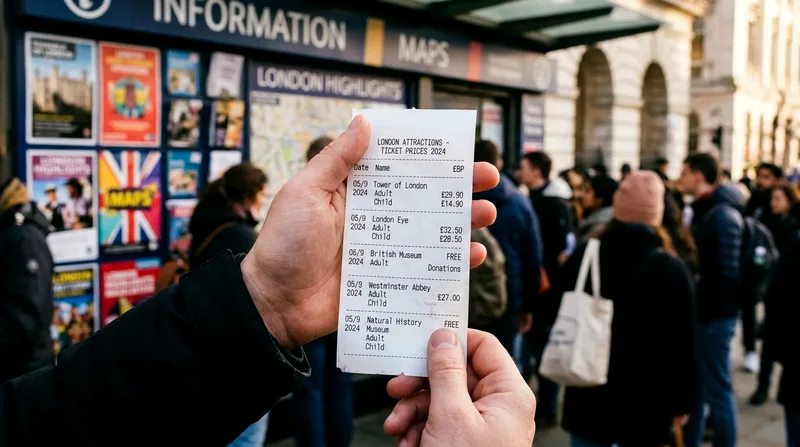
Roughly speaking, London attractions fall into three bands: free national museums (British Museum, Tate Modern, V&A), mid-price sights (£15–£28, like the Monument or Shakespeare's Globe tours), and premium headline attractions (£28–£40+, like the Tower of London, London Eye and Warner Bros. Studio Tour). A realistic week-long itinerary for two adults might include three or four premium sights, two or three mid-price ones, and several free museum visits — and that mix, not avoiding paid attractions altogether, is what keeps costs sane.
Hidden extras: queue skips, audio guides, add-ons
Base admission is rarely the final price. Audio guides at St Paul's Cathedral and Westminster Abbey are usually included in the standard ticket, but "fast-track" or "skip-the-line" upgrades at the Tower of London or Madame Tussauds can add £5–£15 per person. Thames River Cruises often sell a basic hop-on-hop-off fare separately from themed cruises with commentary or afternoon tea, and the gap between those two can be £20 or more per person. Read what's actually included before assuming the headline price is the final one — it rarely is for the most commercialised attractions.
London Attraction Price Table
Treat the figures below as price bands rather than fixed numbers — London attractions adjust pricing a couple of times a year, and most now use dynamic or tiered pricing depending on date and time slot. Always check the official attraction site before paying, since gate prices in particular can run noticeably higher than what's quoted here.
Booking online instead of at the gate typically saves 10–25% across London's major paid attractions, and locks in a timed entry slot besides.
London tickets price comparison: headline attractions, online vs gate
| Attraction | Typical Online Price (Adult) | Gate Price Difference | Best Booking Channel |
|---|---|---|---|
| Tower of London | £30–£35 | Higher, often +£5–£8 | Official Historic Royal Palaces site |
| London Eye | £25–£30 | Higher, often +£8–£10 | Official Merlin/London Eye site |
| Westminster Abbey | £27–£30 | Minimal difference | Official Abbey site |
| St Paul's Cathedral | £25–£28 | Minimal difference | Official Cathedral site |
| Madame Tussauds | £35–£40 | Higher, often +£10–£15 | Official Merlin site |
| Buckingham Palace (State Rooms) | £32–£35 | Minimal, seasonal only | Royal Collection Trust site |
| Royal Museums Greenwich (paid sites) | £18–£22 | Higher, often +£3–£5 | Official RMG site |
| Thames River Cruise (standard) | £15–£25 | Varies by operator | Compare operator sites directly |
Figures are typical price bands, not fixed quotes — always verify current prices on the official attraction site before booking.
Price bands for headline attractions
The Tower of London, run by Historic Royal Palaces, typically sits in the £30–£35 adult band online, with family tickets offering a modest saving over buying four singles. The London Eye starts around £25–£30 for standard rotation slots, climbing toward £40+ for fast-track or combo tickets with a river cruise. Westminster Abbey charges roughly £27–£30 for adults, while St Paul's Cathedral is a close £25–£28. Madame Tussauds London is one of the pricier single attractions, often £35–£40 online, more if bought on the day. Buckingham Palace State Rooms tours are seasonal — they only open for a limited summer window plus some winter dates — and tickets usually land around £32–£35. Royal Museums Greenwich mixes free sites (the National Maritime Museum, Queen's House) with paid ones (Royal Observatory, Cutty Sark), the latter typically £18–£22.
Cheapest booking channel for each
For Historic Royal Palaces sites — the Tower of London, Hampton Court Palace, Kensington Palace — the official HRP website is almost always the cheapest channel, and HRP membership can pay for itself if you're visiting more than two of their sites. For the London Eye and Madame Tussauds, the operator's own site usually beats gate prices by a wide margin, and combining both into one multi-attraction ticket on the same site often beats buying separately. Westminster Abbey and St Paul's sell directly online at a flat rate with no real discount elsewhere, so there's little to gain from shopping around there. For Thames River Cruises, comparing two or three operators matters more than for fixed-site attractions, since routes, duration and commentary style vary enough to justify checking current prices across providers before booking.
Online vs Gate Prices Explained
This is where the phrase "london attraction tickets online vs gate" earns its keep — the gap is real and it's not small change. Most major London attractions now charge a premium for walk-up admission, partly to manage queues and partly because they know a visitor standing outside with no ticket has little bargaining power. It's a deliberate pricing structure, not an accident, and it rewards planning over spontaneity.
Why advance tickets usually cost less
Advance tickets let attractions predict and smooth visitor numbers, which is worth money to them — hence the discount passed to you. The Tower of London and Madame Tussauds both price gate admission visibly higher than their own websites, sometimes by £8–£15 per adult. I'd avoid ever paying gate price at either; there's no upside to it, since online tickets are refundable or changeable within a reasonable window on most official sites. The one exception is somewhere like St Paul's, where online and gate prices sit close together — there, booking ahead is about avoiding a queue, not saving money.
Dynamic and timed-entry pricing
Several attractions, the London Eye especially, use dynamic pricing tied to time slot and date — an early morning weekday slot in February can cost noticeably less than a Saturday evening slot in August. This mirrors how Rome's Colosseum and the Vatican Museums price peak-season entry higher than shoulder-season visits. If your schedule has any flexibility at all, checking two or three different time slots before booking can shave a meaningful amount off a family's total spend.
Smart Ways to Save on Tickets
The cheapest way to book London attractions isn't one single trick — it's matching the booking method to your actual itinerary, rather than defaulting to whatever's easiest.
Passes and combo tickets vs single entries
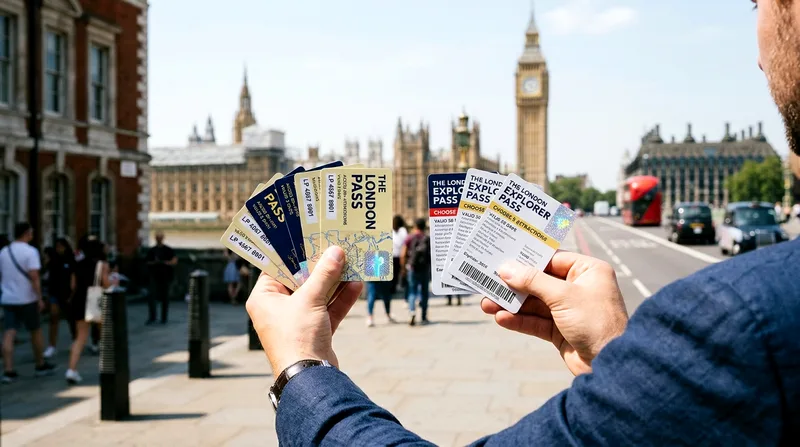
A London sightseeing pass vs single tickets decision comes down to volume and pace. The London Pass bundles entry to dozens of attractions, including some Royal Museums Greenwich sites and various tours, for one upfront cost, with options from one day up to ten. It makes sense if you're genuinely visiting four or more paid attractions a day for several days — a determined family sightseeing trip, not a relaxed one. If you're planning two or three attractions over a five-day trip mixed with parks, markets and free museums, you'll almost certainly spend less buying single tickets. I'd also flag that passes reward a punishing pace some travelers, especially senior travelers or families with young children, won't actually want to keep up. Don't buy a pass assuming you'll "probably" use it enough — do the maths on your actual planned stops first.
Booking early, off-peak days and off-season
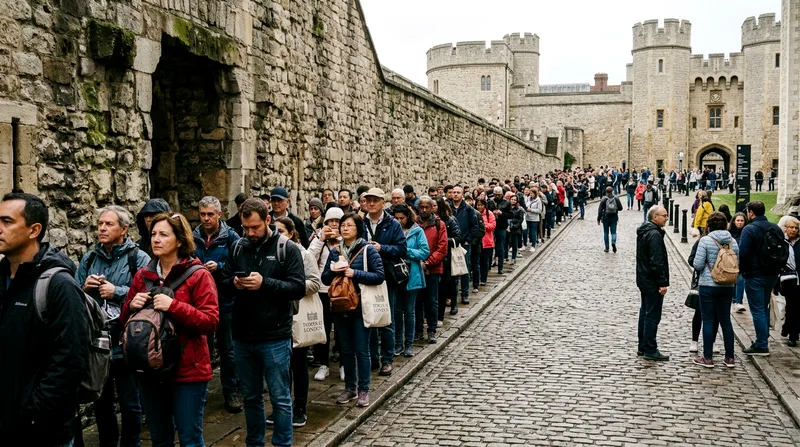
Booking two to four weeks ahead generally secures the lowest standard online rate and the widest choice of time slots, especially for the Tower of London and Warner Bros. Studio Tour, which can sell out entirely in school holidays. Visiting on a weekday rather than a weekend, and choosing November through February over July and August, also tends to mean shorter queues and occasionally lower dynamic pricing at attractions like the London Eye. This is the same logic that applies in Amsterdam with the Anne Frank House or in Barcelona with Sagrada Família — timed-entry sights everywhere reward early, off-peak booking, and London is no exception.
What Not to Skimp On
Saving money shouldn't mean gambling with your actual day. There are two places where cutting corners costs you more than it saves.
Timed slots for the most popular sights
Don't try to save a few pounds by booking the cheapest available slot if it doesn't match your actual schedule — a missed timed entry at the Tower of London or Westminster Abbey usually isn't refunded, and re-booking on the day, if even possible, often costs more. Buy the slot you'll actually make, not the one that looks cheapest on paper.
Flexible tickets for unpredictable weather
For outdoor-dependent experiences — Thames River Cruises, open-top bus tours, the London Eye on a clear-visibility day — it's worth paying slightly more for a flexible or date-changeable ticket rather than the cheapest fixed-date option. London's weather turns quickly, and a soaked, grey-sky River Cruise is a worse use of £20 than a dry one two days later. This is the one category where I'd actively tell you not to chase the absolute lowest price.
London Ticket Booking Checklist
Before you book anything, run through a short list: check the official attraction site first for baseline pricing, compare that against a combo or pass only if you have four-plus paid stops planned, book timed slots two to four weeks out for anything school-holiday-sensitive, and leave weather-dependent bookings flexible where the option exists. Avoid buying a multi-day pass just because it feels efficient — plenty of travelers end up with an expensive pass and two unused attraction credits. And always read what's included in "premium" or "fast-track" upgrades before assuming they're worth the extra cost; sometimes a standard ticket with an early morning slot achieves the same short queue for less money. Compare current prices and time slots on official attraction sites before you book, since figures shift a couple of times a year and seasonal offers come and go.
Frequently asked questions
How much do London attraction tickets cost?
Expect roughly £25–£35 for most headline paid attractions — the Tower of London, London Eye, Westminster Abbey, St Paul's Cathedral and Madame Tussauds all sit in that band online. Family tickets usually offer a modest saving over four separate adult entries. Free sights like the British Museum and Tate Modern cost nothing, which helps balance a multi-day itinerary's average daily spend.
What is the price difference between online and gate tickets?
At attractions like the Tower of London and Madame Tussauds, gate prices typically run £8–£15 higher per adult than booking online in advance. Some sights, including Westminster Abbey and St Paul's Cathedral, show little to no difference between the two channels. As a rule, always check the official site first — walk-up pricing rarely works in your favor in London.
Is a London sightseeing pass cheaper than buying single tickets?
Only if you're visiting four or more paid attractions per day across several days — genuinely fast-paced sightseeing. For a typical trip mixing two or three paid sights with free museums and parks, single tickets booked directly usually cost less than a multi-day pass like the London Pass.
How far in advance should I book London attractions?
Two to four weeks ahead is a safe window for most sights, and it's close to essential for the Tower of London or Warner Bros. Studio Tour during school holidays, when popular time slots sell out. For flexible, less time-sensitive visits — a free museum or a Thames cruise — a few days' notice is usually enough.
Which London attractions are free to visit?
The British Museum, National Gallery, Tate Modern, Natural History Museum, Science Museum, and the National Maritime Museum and Queen's House at Royal Museums Greenwich are all free to enter. Many churches, including parts of some City of London churches, also allow free entry outside of paid areas like cathedral towers or crypts.