London Pass vs Explorer Pass compared: how each works, cost level, effort and who should choose which, so you can pick the right London attraction pass.
The Two Passes at a Glance
Stand outside Westminster Abbey with a paper itinerary and you'll see the problem immediately: London's big sights are expensive one by one, and two competing products promise to fix that. The London Pass vs Explorer Pass decision trips up a lot of first-time visitors because the names sound almost interchangeable, but they work on completely different logic. One is a day-pass model — pay once, visit as much as physically possible within 24, 48 or more hours. The other, Go City's Explorer Pass, is a bank of credits you spend on a set number of attractions whenever you like, no clock running.
Get this choice wrong and you either overpay for a pass you didn't use fully, or you buy individual tickets that end up costing more than a pass would have. Neither mistake is catastrophic, but both are avoidable if you do the maths before you book — which is the whole point of this comparison.
All-inclusive day pass model
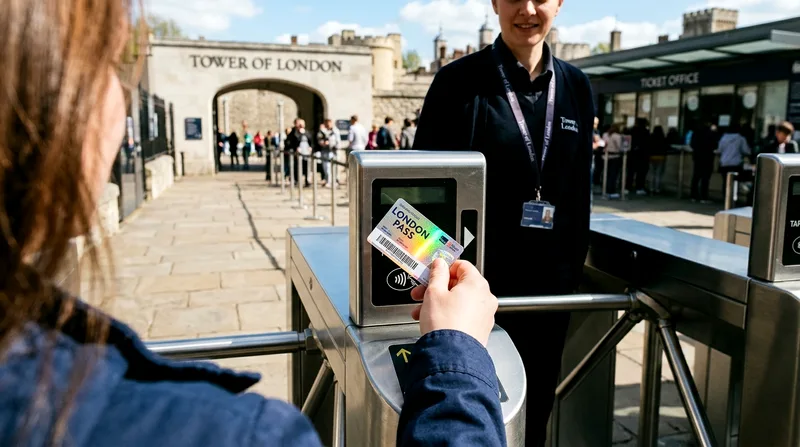
The London Pass works like a theme-park ticket: you buy a block of consecutive days (typically ranges from 1 to 10 days), and during that window you can enter as many included attractions as you can physically reach, once each. There's no daily cap on number of visits beyond "one entry per attraction," so the incentive is to move fast and queue-jump where the pass allows it. It covers paid entry to well over 80 attractions and tours across London, including some river cruises and walking tours. The catch: the clock starts the moment you first use it, and unused days don't roll over or refund.
Pick-your-attractions model
The Explorer Pass flips the model. You buy a set number of credits — commonly 2, 3, 4, 5 or 7 — and each attraction on Go City's London list costs one credit regardless of its ticket price, with a handful of premium experiences costing two. You then have a long validity window, often 60 days from first use, to redeem them at your own pace. This suits people who want, say, the Tower of London, a Thames river cruise and the Shard, but have no interest in cramming in a fourth or fifth stop the same day. It rewards selectivity over speed, which is the opposite psychology to the London Pass.
Head-to-Head: Cost, Time and Effort
Cost comparisons between these two passes are almost pointless without doing your own arithmetic, because the "winner" changes entirely based on how many attractions you'll actually enter and how many days you have. What's consistent is the effort each demands from you. The London Pass asks for stamina and a route plan — you're optimising a day like a logistics puzzle. The Explorer Pass asks for a shortlist — you decide the handful of things you care about and ignore the rest.
The London Pass favours fast, attraction-packed days while the Explorer Pass favours a short, flexible list redeemed over weeks.
London Pass vs Explorer Pass comparison for sightseeing cost, flexibility and pace
| Pass | Pricing model | Validity | Pace required | Best for |
|---|---|---|---|---|
| London Pass | Fixed price per consecutive day block | Starts on first use, runs consecutive days | Fast, multiple attractions per day | First-timers cramming in sights |
| Explorer Pass (Go City) | Fixed price per credit bundle (2-7 credits) | Long window, often 60 days from first use | Slow or spread out | Short lists, families, repeat trips |
| Individual tickets | Pay per attraction at the door or online | No expiry pressure | Whatever pace you like | Very light sightseeing (1-2 stops) |
| Oyster/contactless pay-as-you-go | Per-journey transport fare, not attraction entry | No expiry | N/A | Transport only, not a sightseeing pass |
Cost levels and credit counts change between providers, so total up current individual ticket prices against live pass pricing before you book.
How the savings maths works
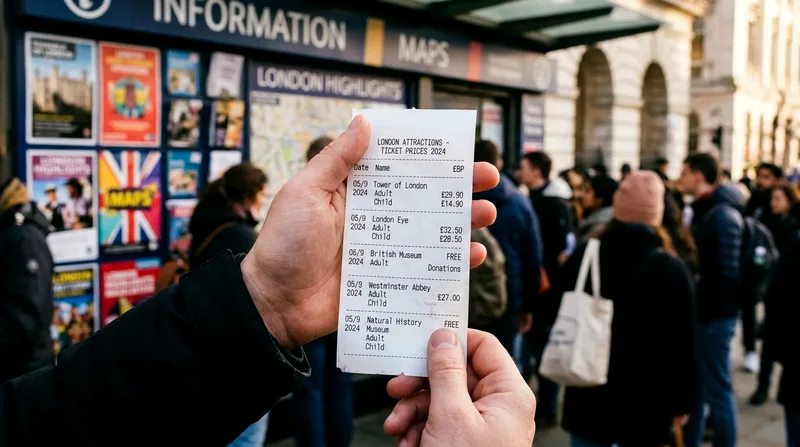
Before buying either, list your worth seeing attractions and look up their standalone adult ticket prices — Tower of London, Westminster Abbey, a Thames cruise, the Shard, whatever's on your list. Add them up. That total is your benchmark. If it comfortably exceeds the price of a London Pass covering your trip length, the day-pass model wins. If your list is short — three or four attractions — compare that same total against an Explorer Pass sized to match the credit count; often the per-credit cost undercuts buying tickets separately, though not always, especially for lower-priced attractions. Threads on Reddit's r/london and r/AskUK regularly repeat this exact advice: do the ticket-price addition first, because people who skip it frequently end up with an unused day or three leftover credits.
Pace, crowds and planning effort
A London Pass day that "works" typically means three to five attractions visited back to back, with transport time between them kept tight — Tower of London in the morning, a river cruise at midday, Westminster Abbey or the Shard in the afternoon. That's achievable, but it's a specific kind of holiday: early starts, less time lingering, more walking. Families with young children or senior travellers who tire by 3pm often find this pace exhausting rather than efficient. The Explorer Pass removes that pressure entirely — spend an unhurried morning at the Abbey, skip the next day if you want a park walk instead, and use another credit three days later. It's the lower-stress option, though it rewards patience over hustle.
Attractions and Transport Compared
Both passes cover a similar pool of major sights, but the fine print on transport and extras is where they genuinely diverge — and it's often the deciding factor for European travellers who are also juggling a wider multi-city trip through Paris, Amsterdam or Dublin and don't want to overspend on logistics in any one city.
Top sights like the Tower of London
The Tower of London, Westminster Abbey, the Shard, Madame Tussauds and a Thames river cruise appear on both passes' lists, so the headline attractions aren't really the differentiator. What matters is depth of coverage. The London Pass tends to include more second-tier and niche attractions — smaller museums, some walking tours, a few "extra" experiences — because its all-you-can-visit model benefits from offering volume. The Explorer Pass list is shorter but still covers the big names, and Go City periodically swaps attractions in and out, so check the current list for your travel dates rather than relying on last year's lineup — Tripadvisor forums and Go City's own site are more reliable for this than general travel blogs.
Transport and extras differences
Some London Pass tiers have, at various times, bundled unlimited public transport within zones 1-2, which can meaningfully change the maths if you're not using an Oyster card or contactless tap-in already — but this inclusion has varied by pass version, so verify it's active before assuming it's included. The Explorer Pass generally does not include transport; you're paying separately via Oyster or contactless regardless. Neither pass is a substitute for the Underground — you'll still be tapping in and out between attractions, and a weekly Travelcard or capped contactless pay-as-you-go often works out cheaper for transport than hoping a sightseeing pass covers it. Don't assume either pass replaces your transport budget; check that detail specifically, since it's the part people most often get wrong when estimating total trip cost.
Who Should Pick Which Pass
Strip away the marketing and this decision comes down to one honest question: are you the kind of traveller who enjoys a packed itinerary, or one who'd rather see three things properly? Be truthful with yourself here, because the wrong answer wastes real money either way.
Fast-paced first-timers and cramming itineraries
If you've got two or three days in London before moving on to Edinburgh or across the Channel to Brussels, and you want to tick off as much as possible — Tower of London, St Paul's, a river cruise, Churchill War Rooms, maybe a hop-on hop-off bus — the London Pass structure suits that compressed, high-volume style. It's built for exactly this traveller: someone treating London as one stop on a wider European circuit who wants maximum sights per day without stopping to calculate each entry fee. The risk is burnout; pacing five attractions into one day sounds efficient until you're standing in a fourth queue at 4pm with tired kids or sore feet.
Slow travellers, families and repeat visitors
If your list is genuinely short — the Tower, maybe the Shard, a cruise, and one more — the Explorer Pass's credit model fits better, especially for families with young kids who can't sustain a five-stop day, or senior travellers who want a slower trip with rest days built in. It also suits people returning to London for a second or third visit who've already done the obvious sights and just want two or three specific things this time. The downside: if you end up wanting a sixth or seventh attraction, buying more credits or topping up isn't always the cheapest route, and you might be better off just paying for that one extra ticket directly.
Verdict: Which Pass Wins
There's no single winner in the London Pass vs Explorer Pass debate — only a better fit for your actual itinerary. If you're the type who'll genuinely hit four or more paid attractions in a day, consecutively, for two or more days running, the London Pass's day-based model usually comes out ahead on pure cost per attraction. If your real list tops out at three to five attractions spread across a week, book the Explorer Pass instead and enjoy the lack of a ticking clock. World travelers comparing London against a Rome or Barcelona city-pass equivalent will recognise this same split — the all-inclusive day pass versus the credit bundle is a pattern that repeats across most major capitals, and the same arithmetic applies wherever you are.
When to skip both passes
Skip both if your trip is mostly free sights — the British Museum, the National Gallery, a walk along the Thames, Hyde Park — because London has more free world-class museums than Paris or Rome, and no pass adds value to something that's already free. Also skip both if you're only doing one or two paid attractions total; at that point, buying direct tickets (sometimes with online-only discounts the attraction itself offers) is almost always cheaper than any bundled pass. And be wary of buying a pass "just in case" — unused days or leftover credits are the single most common complaint in Tripadvisor reviews of both products, and that regret is entirely avoidable with ten minutes of arithmetic before you pay.
Frequently asked questions
Is the London Pass worth it?
It's worth it if you'll visit four or more paid attractions per day across consecutive days — add up individual ticket prices for your actual list and compare against the pass cost for your day count. If your list is shorter or your pace slower, it usually isn't, and the Explorer Pass or direct tickets will cost less overall.
What is the difference between the London Pass and the Explorer Pass?
The London Pass is an all-inclusive day pass — unlimited entries to included attractions within a fixed consecutive-day window. The Explorer Pass (from Go City) is credit-based — you buy a set number of attraction credits and redeem them at your own pace over a longer validity window, often around 60 days.
How do Explorer Pass credits work?
You buy a bundle, commonly 2 to 7 credits, and each attraction on the list costs one credit, with a few premium experiences costing two. You redeem credits whenever you like within the validity window rather than on a strict daily clock, which suits a slower, selective sightseeing style.
Which pass is better for first-time visitors?
It depends on pace, not on being a first-timer per se. First-timers who want to cram in a high volume of sights over two or three packed days generally do better with the London Pass; first-timers who prefer a shorter, relaxed list do better with the Explorer Pass.
How many days do I need in London to get value from a pass?
For the London Pass, two to three consecutive sightseeing days with multiple attractions each day is the realistic minimum for it to beat individual ticket prices. For the Explorer Pass, there's no day minimum — value comes from matching the credit count to your actual shortlist, whether that's used in two days or spread across two weeks.