London skip the line tickets explained: which attractions have queues long enough to justify fast track, what it includes, where to book, who should skip it.
What Skip-the-Line Tickets Actually Are
Here's the mistake people make constantly: buying a "skip the line" upgrade for an attraction that already sells timed-entry tickets, which means there was no line to skip in the first place. London skip the line tickets fall into two genuinely different categories, and conflating them wastes money.
The first is a true fast-track lane — a separate, shorter queue that runs alongside the general admission line, letting you bypass visitors who bought standard tickets or turned up without booking. The second is simply a timed-entry slot, where you reserve a specific half-hour window and walk straight to the gate because everyone else booked a window too. Both get marketed as "skip the line," but only the first one is actually buying you priority over other ticket holders.
Westminster Abbey, the Tower of London, and Harry Potter Studios in Watford all operate largely on timed entry now. Book a slot in advance through the official site and you're not queuing with walk-ups — you're just arriving at your allotted time. Paying extra for a "fast track" version of these tickets often gets you nothing beyond what standard advance booking already delivers, aside from maybe a different entrance or a guide.
Timed entry vs true fast-track lanes
A timed-entry ticket fixes your arrival window — say, 10:00 to 10:30 — and you queue briefly with others booked for that same slot. A true fast-track ticket gets you a dedicated lane that cuts past the general queue entirely, useful where walk-up demand still swamps the entrance regardless of time slots. The London Eye is the clearest example: standard timed tickets still involve a wait at busy periods because capacity per slot is tight, so a genuine fast-track product there does something extra. Check the product description carefully — "priority" and "fast track" sometimes just mean a nicer-sounding timed ticket.
Why many London sights already sell timed slots
Timed entry became standard practice across London's major sights largely to manage crowd flow and, originally, pandemic-era capacity limits — and operators kept it because it works. The Tower of London, Westminster Abbey, and the Sky Garden (which is free but requires a booked slot) all use this model. The practical effect for you: book your date and time slot on the official website a few days ahead, and you've already solved the queue problem without paying a fast-track surcharge on top.
What Fast Track Includes and Excludes
Fast-track products vary a lot between operators, and the listing copy doesn't always make clear what you're actually paying for. Read past the headline "skip the line" claim to the fine print.
Typical inclusions: priority entry, guides, bundled extras
A legitimate fast-track ticket typically includes priority entry through a separate lane, and often bundles in extras to justify the premium — an audio guide, a guided tour group, or combined admission to a second attraction. Tower of London skip-the-line tickets, for instance, are frequently sold with a Beefeater-led tour included, which adds genuine value beyond queue avoidance. London Eye fast-track tickets usually include a specific boarding window plus the priority lane, and some bundle in a River Thames cruise with operators like City Cruises. If the fast-track price is only a few pounds above standard, the bundled extra is probably where the value sits, not the time saved.
Common exclusions: security checks, internal queues, add-ons
Fast track almost never covers security screening — everyone queues for bag checks and metal detectors at the Tower of London and the London Eye regardless of ticket type, and this can itself take 15–20 minutes at peak times. It also doesn't eliminate internal waits once you're inside: popular rooms at Westminster Abbey or the Crown Jewels exhibit at the Tower still bottleneck during busy hours. Don't assume "skip the line" means a frictionless visit start to finish — it addresses one specific queue, not every wait you'll encounter that day.
Queue Times at London's Major Sights
Queue length in London swings hard with season, day of week, and time of day, and no attraction publishes reliable real-time wait data — so treat any figure, including mine, as a typical range rather than a promise.
Fast track earns its premium mainly at the Tower of London and the London Eye during peak season — elsewhere, a timed advance ticket does the job.
London skip the line tickets: typical queue times and whether fast track is worth it
| Attraction | Peak-season queue (walk-up) | Off-peak queue | Fast track worth it? |
|---|---|---|---|
| Tower of London | 45-90 min | 10-20 min | Yes, in summer/holidays |
| London Eye | 30-60 min | 10-15 min | Yes, in summer/weekends |
| Westminster Abbey | 20-30 min | 5-15 min | Rarely — advance ticket enough |
| Harry Potter Studios | Timed entry only | Timed entry only | No — book slot early instead |
| Sky Garden | Timed entry, free | Timed entry, free | No fast-track product exists |
Typical ranges based on published visitor patterns; actual waits vary by day, weather, and events, so confirm current booking options on the official site.
Where fast track saves an hour or more
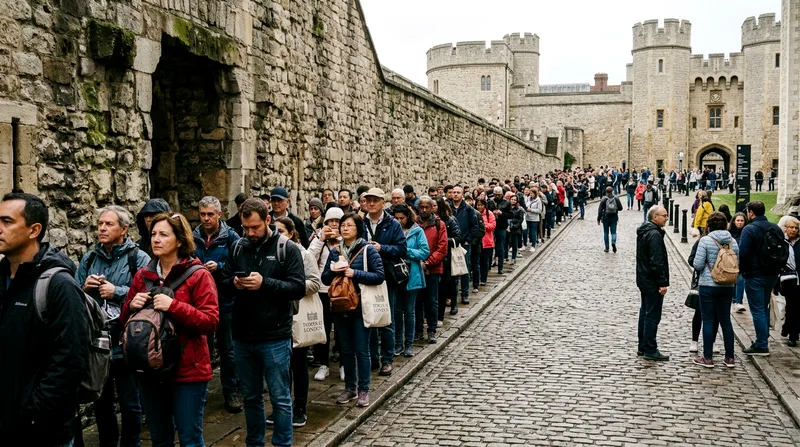
The Tower of London in July and August can see walk-up queues of 45–90 minutes at the main entrance by late morning, particularly on weekends and during school holidays. The London Eye without a pre-booked slot can mean 30–60 minute waits at peak summer afternoons, since capacity per rotation is fixed regardless of demand. Harry Potter Studios doesn't have a walk-up option at all — it's timed entry only — so fast track isn't really a relevant category there beyond securing a preferred slot early. For the Tower and the Eye in peak season, paying for priority access is a reasonable trade if your schedule is tight.
Where it adds little: advance booking is enough
Westminster Abbey's queues rarely stretch beyond 20–30 minutes even in summer, and a standard advance ticket with a time slot usually removes most of that wait already. Sky Garden has no paid fast-track product because entry is free and capacity-controlled by booking — there's nothing to upgrade. Smaller paid attractions like the Moco Museum London (the Amsterdam original's London outpost near Marble Arch) rarely have queues worth paying to skip at all outside of a busy Saturday afternoon. In off-peak months — November through February, excluding the Christmas and New Year period — even the Tower and the Eye often move fast with just a standard advance ticket.
Fast Track vs Standard Tickets Compared
The core calculation is simple: how much is an hour of your trip worth, and does the premium actually buy you that hour?
Time saved against extra cost
Fast-track Tower of London tickets typically carry a premium of roughly £8–15 over standard adult admission, phrased approximately since operators and bundles vary — check the official Historic Royal Palaces site for current figures. Against a possible 60–90 minute summer queue, that's a reasonable exchange if you've got a packed itinerary and a lunch reservation to make. London Eye fast-track tickets carry a similar kind of premium over standard timed entry. If you're traveling with young kids who can't handle standing in heat for an hour, or you've only got one full day in London and need to hit three sights, the cost is easy to justify. If you're retired with a flexible week and no fixed schedule, it's money spent solving a problem you don't have.
Passes and bundles vs single tickets
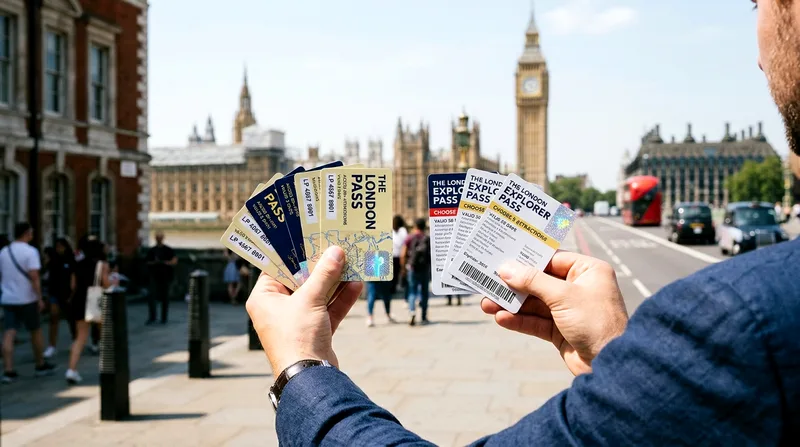
Multi-attraction passes bundle entry to several sights with some including fast-track access at select locations — these can work out cheaper than buying fast track individually if you're visiting four or more paid attractions in a short trip. But do the math honestly: these passes are priced on the assumption you'll visit enough included sights to beat buying tickets separately, and many visitors don't hit that threshold. Compare the pass price against buying your actual planned itinerary at standard rates before committing — platforms like Headout and Viator list both options side by side, which makes the comparison straightforward.
Where and How to Buy Safely
London's major attractions attract a surprising number of resale sites that mimic official branding, so buying the right ticket from the wrong source is a real risk.
Official attraction sites vs authorised resellers
Buying directly from the official site — hrp.org.uk for the Tower of London, londoneye.com, westminster-abbey.org — guarantees the ticket is valid, correctly priced, and backed by the venue's own refund and rescheduling policy. Authorised resellers like Viator, Headout, and GetYourGuide are legitimate and often bundle extras like guided tours or river cruises, and they're generally fine to use — TripAdvisor's experiences marketplace runs on similar partnerships. The difference tends to be price transparency: official sites show the base admission clearly, while third-party listings sometimes bury a markup inside a "premium" or "VIP" label that doesn't add much. When the add-on genuinely interests you — a Beefeater tour, a Thames cruise — the markup is easier to accept.
Spotting misleading listings and free ways to cut waits
Watch for listings that say "skip the line" without specifying whether that means a fast-track lane or just a timed slot — if the description is vague, assume it's the latter and price-check against official standard admission. Also watch for third-party sites charging significantly above official rates for identical access; a quick visit to the attraction's own site before buying elsewhere takes two minutes and often saves money. Free ways to cut waits: arrive at opening time (the Tower of London's first hour is consistently quieter), visit on a Tuesday or Wednesday rather than weekends, and avoid the two weeks around Easter and the summer school holidays if your dates are flexible at all.
Is Fast Track Worth It for You?
The honest answer depends entirely on your trip length, travel dates, and who you're traveling with — there's no universal yes.
Families, first-timers, short-stay visitors
If you're visiting London for three or four days in July with kids under ten, fast track at the Tower of London and the London Eye is worth the premium — standing in a slow-moving queue with tired children eats into a day you don't have spare. First-timers trying to cover Westminster Abbey, the Tower, and the Eye all in one day should prioritize fast track at whichever two have the longest queues that season, rather than buying it everywhere out of anxiety. European travelers on a long weekend from Paris or Amsterdam face the same tight-schedule logic — a wasted hour matters more when your trip is 48 hours, not a week.
Budget and repeat visitors
If you're on a budget, skip fast track entirely and instead book standard timed tickets as early as possible — most major sights release booking windows weeks ahead, and early slots in the morning carry shorter waits regardless of ticket type. Repeat visitors and senior travelers with flexible schedules should lean on off-peak timing instead of paying for priority — visiting the Tower of London on a Tuesday morning in November costs nothing extra and queues are typically minimal. Compare this to Edinburgh Castle or the Alhambra in Granada, where timed entry is mandatory and fast track barely exists as a product — London's fast-track market is really a symptom of its sheer visitor volume in peak months, not a universal necessity.
Frequently asked questions
Is fast track worth it on the London Eye?
Yes, during peak season — summer weekends and school holidays — when walk-up and even some timed slots can mean 30–60 minute waits. Outside peak months, a standard timed ticket booked a few days ahead usually gets you on within 10–15 minutes, making the fast-track premium unnecessary. Check londoneye.com for current slot availability before deciding.
Is a London Pass worth it for skipping queues?
Only if you're visiting enough included attractions to justify the cost, and some do include priority access at select sights. Add up the standard admission price for everything you'd actually visit and compare it against the pass price before buying — many visitors overestimate how many paid attractions they'll fit into a trip.
Is it cheaper to buy Tower of London tickets in advance?
Yes — advance online tickets through the official Historic Royal Palaces site are consistently cheaper than paying at the gate, and gate availability isn't guaranteed on busy days. Booking ahead also locks in a timed slot, which removes most of the queue problem without needing a fast-track upgrade.
Which London attractions have the longest queues?
The Tower of London and the London Eye see the longest walk-up queues in summer, sometimes exceeding an hour at midday. Westminster Abbey's queues are shorter and usually manageable with a timed ticket. Attractions with mandatory timed entry, like Harry Potter Studios and Sky Garden, don't really have walk-up queues at all.
Do skip-the-line tickets save time at every attraction?
No. At sights that already run on timed entry — Westminster Abbey, Harry Potter Studios, Sky Garden — a standard advance ticket achieves the same result as a "skip the line" product, so the premium buys you little beyond perhaps a different entrance or a bundled extra.