Compare Jack the Ripper tours in London: historian-led Whitechapel walks vs theatrical ones, group sizes, guide credentials and evening timings.
Which Ripper Tour Suits You
Search "Jack the Ripper tour London" and you'll get dozens of near-identical listings on TripAdvisor, GuruWalk and similar booking platforms, all promising the same dark corners of Whitechapel. They are not the same product. Some are led by guides who've read the Victorian police files and inquest reports; others are built around actors, fake blood and a script designed to make you jump. Both have a place — the mistake is booking one expecting the other.
Here's my honest take: the theatrical walks get the louder reviews because they're built for entertainment, and entertainment photographs well for social media. The historian-led walks get quieter but more specific praise — reviewers mention dates, named victims, and the actual geography of 1888 Whitechapel rather than "spooky atmosphere." If you want to learn something you can repeat accurately afterward, that distinction matters more than the star rating.
Price isn't usually the differentiator — most walking tours in this category sit in a similar modest range, roughly what you'd pay for a pub meal, and private tours cost several times more. The differentiator is tone and depth. A sober East End history tour will spend real time on the social conditions of Victorian Whitechapel — poverty, overcrowding, the workhouse system — because the murders don't make sense without that context. A theatrical one will skip straight to the crime scenes and the mythology.
History-minded visitors and returning Londoners
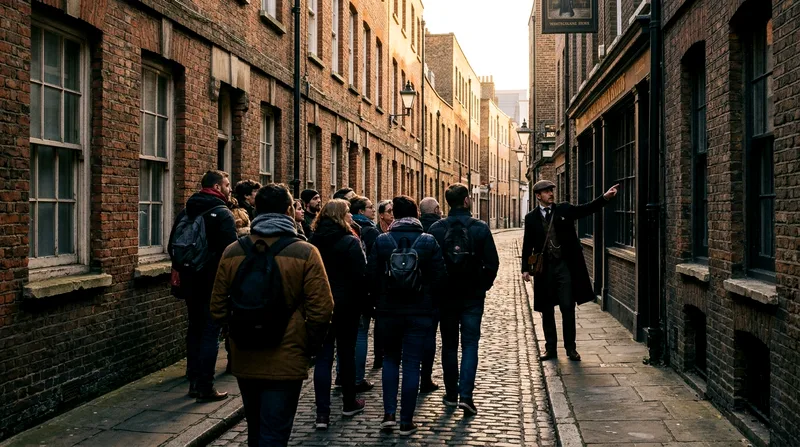
If you've already done the big London sights — the Tower, the Shard, a Thames river cruise — and you want something that actually teaches you about the city's social history, book a historian-led walk. Operators like London Walks have run Ripper-themed routes for decades and tend to employ guides with genuine research backgrounds rather than actors reading a script. These walks typically run 90 minutes to two hours, cover around 1.5 miles on foot, and spend as much time on Victorian East End poverty and policing as on the murders themselves. Expect a guide carrying reproduction maps or photographs, pausing at actual addresses rather than invented "spooky" stops. This is the version worth it for a second or third London visit, and it pairs naturally with a daytime visit to the Museum of London Docklands or a Whitechapel gallery crawl.
First-timers, groups and thrill-seekers
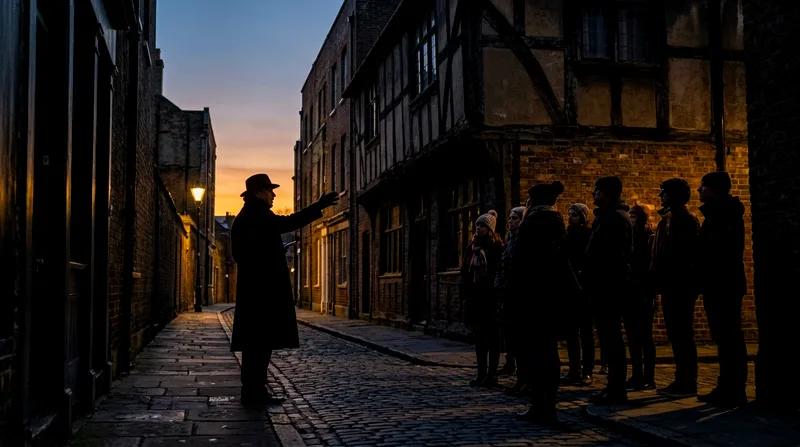
If you're visiting London for the first time with a group of friends, or you simply want an atmospheric evening out rather than a history lesson, the theatrical format works fine — just go in with the right expectations. These tours lean into costumed characters, dramatic retellings and sometimes jump-scare staging near the murder sites. They suit hen parties, student groups and couples looking for a Halloween-adjacent night out any time of year. The trade-off is historical accuracy: some theatrical scripts repeat long-debunked Ripper suspects or sensationalise victims in ways serious historians have criticised. If accuracy matters to you at all, ask the operator directly — via GuruWalk or the platform's Q&A — whether the guide is a trained historian or a performer before booking.
Ripper Tour Types Compared
Broadly, Jack the Ripper walking tours fall into four formats: historian-led, theatrical/immersive, private, and tip-based (sometimes marketed as "free"). None of these labels are official certifications — they're just how the market has sorted itself — so read the description and recent reviews rather than trusting the tour name alone.
Historian-led walks suit people who want accurate Victorian history, while theatrical and tip-based tours suit those after an atmospheric, budget-flexible evening out.
Jack the Ripper tour London formats compared: historian-led, theatrical, private and tip-based
| Format | Typical group size | Tone | Guide expertise | Best for |
|---|---|---|---|---|
| Historian-led | 15-25 people | Factual, measured | Researched historian or trained guide | History enthusiasts, repeat visitors |
| Theatrical/immersive | 15-30 people | Dramatic, costumed | Performer, variable history depth | Groups, first-timers, Halloween-style nights out |
| Private | 1-8 people | Flexible, conversational | Often senior historian-guide | Couples, families, serious researchers |
| Tip-based ("free") | 10-30 people | Varies by guide | Inconsistent, check recent reviews | Budget travelers, solo backpackers |
Group sizes and formats vary by operator and season; always check the current listing and recent reviews before booking.
Historian-led vs theatrical walks (comparison table)
The table below breaks down the two dominant categories plus private and tip-based variants, since most people are really choosing between these four. Use it to match the format to what you actually want from the evening — education, atmosphere, flexibility or budget.
Group, private and tip-based options
Standard group walks run with anywhere from 10 to 30 people depending on the operator and season, and you book a fixed time slot in advance. Private Ripper tours, bookable through several London Walks-style operators or independent historian-guides, let you set the pace, ask detailed questions, and avoid crowding around narrow Whitechapel doorways — but they cost multiples of the group rate, often three to five times as much per person for a small party. Tip-based tours, listed on platforms like GuruWalk or run by companies such as Strawberry Tours, have no upfront ticket price; you pay what you think the guide earned at the end. These vary enormously in quality — some guides are excellent and rely on tips as their main income, others are inexperienced seasonal hires. Read the most recent reviews, not just the overall score, since quality can shift when an operator changes staff.
Guides, Credentials and Group Size
The single biggest quality variable in this category isn't price — it's the guide. Whitechapel Ripper tours are unregulated as a product; anyone can print a script off the internet and call themselves a guide. That's not a reason to avoid them, but it is a reason to look past the marketing copy.
Spotting a genuine historian-guide
Look for specifics in the tour description: named primary sources (inquest records, contemporary newspaper reports, Metropolitan Police files), mention of the social history of Victorian London rather than just the murders, and a guide bio that references actual research, publications or long-term affiliation with an operator like London Walks. Reviews on TripAdvisor that quote the guide by name and describe specific content — rather than just "spooky" or "fun" — are a good sign. Be wary of listings that promise ghost sightings or paranormal "experiences" dressed up as history; that's a different product wearing a historical label, and it tells you the operator prioritises theatre over accuracy.
Why smaller groups work better in Whitechapel's narrow streets
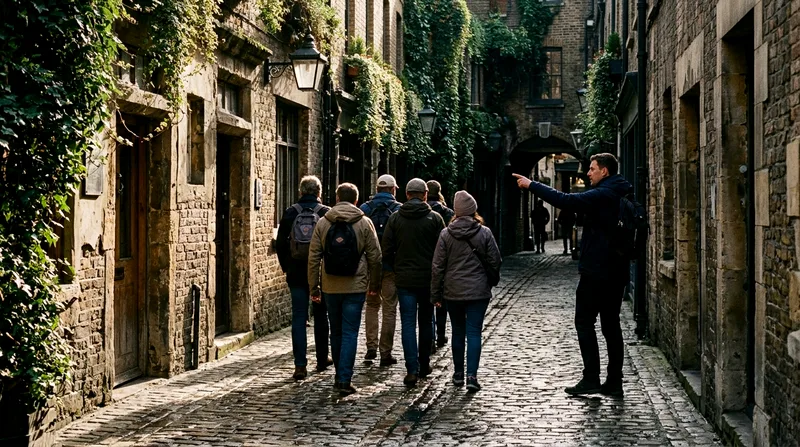
Much of the route around Whitechapel and the wider East End runs along narrow Victorian-era lanes and alleys that were never built for crowds of thirty tourists. In a large group, you'll often end up at the back, unable to hear the guide over street noise or struggling to see the photographs and maps they're holding up. Groups above roughly 20 people start to lose cohesion on these walks — stragglers, traffic noise near Commercial Street, and the simple problem of twenty-five people trying to stand in a space built for five. If you can find a smaller group tour, or stretch to a private option for a family or couple, you'll hear far more of the actual content and spend less time jostling for position.
What to Check Before Booking
Booking platforms make these tours look interchangeable with a thumbnail and a star rating. They're not. A few minutes checking the fine print saves you from a wasted evening or an unexpected charge.
Inclusions, meeting point and route
Most Ripper walks meet at Aldgate East Underground Station, though some start at Liverpool Street or Tower Hill — confirm the exact exit, since Aldgate East alone has multiple street-level entrances and it's easy to miss your guide in the crowd. Check whether the price includes anything beyond the walk itself: some private and themed tours bundle in a pub stop or a Victorian-era drink, most don't. Ask whether the route covers the canonical five murder sites (Mary Ann Nichols, Annie Chapman, Elizabeth Stride, Catherine Eddowes, Mary Jane Kelly) or a reduced version — some shorter tours cut this to two or three stops to fit a 75-minute slot.
Cancellation terms, accessibility and photography rules
Check the cancellation window before paying — many platforms allow free cancellation up to 24 hours ahead, but tip-based bookings through GuruWalk sometimes require only a reservation with no penalty, which is worth knowing if your plans are flexible. Accessibility is a genuine issue here: cobbled streets, uneven pavement and standing for up to two hours rule these tours out for wheelchair users on several routes, and operators rarely advertise this clearly, so email ahead if mobility is a concern. Photography is usually fine outdoors, but some theatrical tours restrict filming during performed segments to protect their script from being copied online — read the small print if you plan to record anything.
When to Book and Which Time Slot
Timing changes the experience more than most people expect. A Whitechapel walking tour at 7pm in December, with the shops shut and the lanes near-empty, feels completely different from the same route at 6pm in July with daylight still lingering and tourists everywhere.
Evening vs daytime walks and safety
Evening slots, typically starting between 6:30pm and 7:30pm, are far more common and generally considered more atmospheric since the original murders happened at night. Whitechapel today is a busy, well-populated area with regular foot traffic, late-opening shops and good Underground access, so evening tours are not inherently unsafe — but solo travelers and parents with children may prefer a late-afternoon or early-evening slot that still has daylight for part of the walk. If a listed tour runs past 9pm and you're relying on public transport afterward, check the last Tube times from Aldgate East or Whitechapel station before committing.
Seasonal demand and booking windows
Demand spikes hard around Halloween (late October) and during summer school holidays, when both historian-led and theatrical tours sell out group slots days in advance. Booking two to three days ahead is usually enough outside peak season; during October, book a week or more out if you want a specific time slot or a smaller private group. Winter weekday tours often have the most availability and, arguably, the best atmosphere — fewer tourists, earlier darkness, and guides with more time to answer questions. Compare current listings and reviews on your chosen platform before paying, since availability and exact timings shift by week.
Frequently asked questions
How long is a Jack the Ripper walking tour?
Most run 90 minutes to two hours, covering roughly 1.5 to 2 miles through Whitechapel and parts of the wider East End. Theatrical versions sometimes run shorter, around 75 minutes, to keep pacing tight for performance segments. Private tours can run longer if you want extra time at specific sites.
What is the best Jack the Ripper tour in London?
There's no single best tour — it depends on whether you want history or theatre. For accuracy, look for historian-led walks with established operators like London Walks and guides with a documented research background. For atmosphere and entertainment, theatrical tours with costumed performers suit groups better. Check recent reviews on TripAdvisor or GuruWalk rather than relying on an overall star rating alone.
Where do Jack the Ripper tours start?
Aldgate East Underground Station is the most common meeting point, with Liverpool Street and Tower Hill also used by some operators. Always confirm the specific exit in your booking confirmation, since Aldgate East has several street-level exits and groups can miss each other in the crowd.
Are there free Jack the Ripper tours?
"Free" tours are really tip-based — you pay what you feel the guide earned, usually at the end. They're listed on platforms like GuruWalk and run by operators including Strawberry Tours. Quality varies more than on paid tours since guide experience isn't guaranteed, so check recent reviews before joining.
Is a Jack the Ripper tour suitable for children?
Generally not recommended for young children. The subject matter covers graphic Victorian-era violence against women, and most guides don't soften the content significantly. Theatrical tours with jump-scares can also frighten younger kids. Some operators suggest a minimum age around 12-14; check the specific listing if you're considering bringing a teenager.