Plan your London Transport Museum visit: how tickets and the annual pass work, top kids' highlights, best times to go and Covent Garden add-ons.
Why Visit London Transport Museum
Most children in London want to touch things, climb on things, and pretend to drive something enormous. The London Transport Museum, tucked into the old flower market building on Covent Garden Piazza, is built almost entirely around that instinct. It's not a museum where you file past glass cases reading wall text — though there's plenty of that too, for the adults who want it. It's a museum where a seven-year-old can sit in a genuine Routemaster bus cab, ring a tram bell, and ask you forty questions about why the Underground map doesn't look like a real map.
I'd rank it above several more famous London museums for anyone traveling with kids under 12, simply because the hands-on ratio is so high. The Natural History Museum and Science Museum are bigger and free, which matters for budget-conscious families, but they're also far more crowded and spread over several floors that eat up a whole day. London Transport Museum is compact — most visits run two to three hours — and every floor has something a child can physically interact with, not just look at.
What You'll See in the Collections
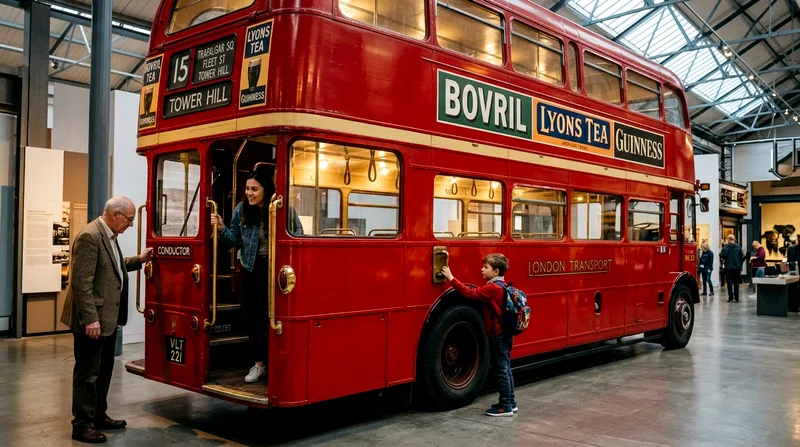
The collection traces London's transport story from horse-drawn omnibuses through steam trains, early electric trams, wartime Underground shelters, and the design history of the Tube map itself (yes, that famous diagram has its own small shrine, and design-minded visitors will linger there). Full-size vehicles dominate the main hall — a horse bus, a steam locomotive, Victorian and modern Tube trains, buses from several decades. Upper floors cover posters, uniforms, and the engineering behind escalators and signalling, which sounds dry written down but plays out through screens and models that keep momentum going.
Why Transport-Loving Children Love It
If you have a child who's obsessed with trains, buses, or anything with wheels and a timetable, this is arguably the single best indoor attraction in London for them — better than the London Eye, better than Madame Tussauds. The driving simulators are the obvious draw, but the quieter wins are things like the horse bus kids can climb into, or the actual 1930s Tube carriage with its original wooden seats and advertising posters still intact. It's tactile history, not a screen-heavy theme park experience, which some parents will prefer and others — honestly — might find a bit old-fashioned if they were expecting something flashier.
Kids' Highlights by Age Group
The museum is genuinely designed across a wide age range, which isn't always true of London's family attractions — the Tower of London, for instance, is fascinating but mostly lost on under-sixes. Here's roughly what works at each stage.
Toddlers and Under-Fives
The ground floor has low-level play areas, a mock bus stop, and soft seating shaped like vehicles where toddlers can clamber without much supervision needed. There's a dedicated under-fives play zone called "All Aboard" with ride-on toys and a small train track — it gets busy on wet weekends, so arrive close to opening if that's the main draw for your family. Buggies are allowed throughout the galleries, though the museum does get tight in spots during school holidays, so collapsible buggies move more easily than larger prams.
Primary-Age Children and Pre-Teens
This is the sweet spot. Kids aged roughly 6 to 12 get the most out of the driving simulators (a Tube train cab and a bus simulator are usually the biggest queues in the building), the interactive signal box, and the quiz trails available at the front desk that turn the visit into a scavenger hunt. Pre-teens with any interest in engineering or design tend to gravitate to the map gallery and the "Mind the Gap" style exhibits on how the network actually runs. Expect to queue 10-20 minutes for the most popular simulators on weekends — it's worth doing those first and saving the static galleries for when energy dips.
How to Visit: Independently or Guided
Most people should visit this one independently. There's no complicated ticketing logic to navigate, no sprawling site where a guide's local knowledge saves you hours, and the museum itself provides family trails, touchscreen panels, and staff stationed near the simulators who'll happily explain things. Paying extra for a guided tour of the museum itself is rarely worth it.
Where a guide earns their fee is if you bundle the museum into a wider themed day — London Transport Museum also runs separately bookable Hidden London tours to disused Tube stations and depots, which is a different product entirely and worth booking well ahead if it interests older kids or transport enthusiasts, since those sell out faster than general admission. For the museum itself, independent visits via Viator or direct booking work fine; skip-the-line options exist on aggregator sites but queues here are rarely long enough to justify the premium, unlike at, say, the Eiffel Tower in Paris or the Colosseum in Rome, where timed entry genuinely saves hours.
Getting There and Accessibility
The museum sits directly on Covent Garden Piazza, a two-minute walk from Covent Garden Tube station (Piccadilly line) — though that station's lifts are notoriously slow and crowded, so many Londoners walk the extra few minutes from Leicester Square or Holborn instead, especially with a buggy. The building is fully accessible with lifts between floors, and most of the hands-on exhibits are set at wheelchair-accessible height. Photography is allowed throughout for personal use, including of the vehicles, which isn't true of every London museum (the Churchill War Rooms, for comparison, restrict photography in several rooms).
Joining a Tour or Guided Experience
If you do want a guided layer, look at combining the museum with a Thames river cruise or a hop-on hop-off bus tour booked through the same afternoon — practical rather than essential, but it extends the "transport" theme kids enjoy without needing a dedicated museum guide. TripAdvisor and TimeOut both rank the museum consistently among London's better family days out, and reviewers across both sites tend to flag the simulators and the café as the two things worth timing your visit around.
Tickets and How the Annual Pass Works
Here's the detail that catches people out: the London Transport Museum doesn't sell a separate "annual pass" product at a higher price. Instead, the standard adult ticket you buy for a single day automatically converts into unlimited entry for 12 months from the date of purchase. You don't pay extra, you don't register for a membership scheme — you just keep your ticket or show your booking confirmation on return visits. For any family planning more than one London trip within a year, or anyone staying long enough to pop back on a quiet weekday, that's real value most single-visit museums don't offer.
The standard adult ticket already works as a 12-month pass, so the real decision is whether a multi-attraction pass like the London Pass makes sense for your wider trip.
London Transport Museum tickets compared: single visit, annual value and family passes
| Ticket Type | Cost Level | Validity | Best For |
|---|---|---|---|
| Adult single/annual ticket | Standard one-time price | 12 months from purchase | Repeat visitors, families staying weeks apart |
| Child/under-18 ticket | Free | Per visit | All families with children |
| Concession ticket | Reduced | 12 months from purchase | Seniors, students |
| London Pass (multi-attraction) | Higher upfront cost | Set number of days | Visitors combining several paid sights |
| Hidden London guided tour | Separate, higher price | Single dated slot | Transport enthusiasts, older kids |
Typical structure only; confirm exact prices and terms on the official London Transport Museum website before booking.
Single Entry vs Annual Ticket
Because the "annual pass" is baked into the regular adult ticket, there's no real decision to make between the two — you're not choosing a pricier option for repeat access, you're getting it by default. The only thing to watch is that concession and child tickets may follow different rules on renewal, so check the terms on the official site before assuming the whole family's tickets roll over the same way. Compare that to the London Pass, a separate multi-attraction sightseeing pass covering dozens of sites including this museum — worth considering only if you're also hitting several paid attractions in a short trip, since buying it purely for this museum wouldn't make financial sense.
Free Entry for Children and Where to Book
Children and under-18s get in free, full stop — no ticket required for them, though some booking systems still ask you to register a free child ticket alongside the paying adult's slot, mainly for capacity management. Book directly through the London Transport Museum's official website for the most reliable pricing and the clearest statement of current terms; third-party sites like Viator can work for bundling with other experiences, but for this particular museum, going direct is simpler and avoids any booking fee. Always check current prices and opening hours on the official site before you travel, since both can shift seasonally.
Best Time to Visit
Weekday mornings, right at opening, are consistently the calmest window — you'll get the simulators with little or no wait and have the main hall's vehicles mostly to yourselves for the first half hour. Weekends are busier across the board, particularly early afternoon, and the under-fives play zone fills up fast once local parent groups arrive.
Quieter Times and School Holiday Crowds
School holidays — particularly the two weeks around Christmas, Easter, and the six-week summer break — bring a noticeable jump in visitors, plus the museum often runs extra holiday activities that are worth it for engagement but mean longer simulator queues. If you can visit on a term-time weekday, do it; you'll likely finish in under two hours instead of three. Avoid the first hour after any school group arrivals, typically mid-morning on weekdays during term time, if you're hoping for a quiet run at the hands-on exhibits.
Nearby Covent Garden Add-Ons
The museum's location is one of its biggest practical advantages. Covent Garden Piazza sits a few minutes from Leicester Square, the Royal Opera House, and Seven Dials, so a museum visit folds easily into a half-day or full-day out without much extra transit time — unlike, say, planning around the Tower of London or Kew Gardens, both of which tend to anchor a whole day on their own.
Covent Garden with Kids: Food and Street Performers
Covent Garden with kids works well because the piazza itself is part entertainment venue — street performers (jugglers, escapologists, string quartets) draw regular crowds outside the old market building, usually running short acts every 20-30 minutes through the afternoon. For food, the covered market has casual stalls suited to picky eaters, though it's pricier than you'd find a ten-minute walk away near Seven Dials. If the kids still have energy after the museum, the nearby Seven Dials area has a smaller, calmer shopping stretch that's easier to navigate with a buggy than the main piazza on a busy Saturday.
Frequently asked questions
How much does it cost to visit the London Transport Museum?
Adults pay a standard one-time entry fee that doubles as a 12-month pass, while under-18s enter free. Concession rates apply for seniors and students. Prices are reviewed periodically, so check the official London Transport Museum website for the current figure before you book rather than relying on older listings or third-party sites.
Are children free at the London Transport Museum?
Yes — all children and under-18s get free entry, no ticket purchase required, though some online booking systems ask you to register a free child ticket alongside a paying adult's slot purely to manage visitor numbers on busy days.
How does the London Transport Museum annual pass work?
There's no separate annual pass to buy. The regular adult admission ticket automatically grants unlimited entry for 12 months from the purchase date — keep your ticket or email confirmation as proof when you return. Concession and child entries may follow slightly different renewal terms, so check at the desk on your first visit.
Is the London Transport Museum good for kids?
It's one of the better hands-on museums in London for children roughly aged 2 to 12, with driving simulators, a toddler play zone, and full-size vehicles kids can climb into. It suits transport-obsessed kids especially well, though children with no interest in vehicles may tire of it faster than at a more varied museum like the Science Museum.
How long do you need at the London Transport Museum?
Most families need two to three hours to see the main galleries and let kids queue for the simulators without rushing. Add 30-45 minutes if visiting during school holidays, when queues for hands-on exhibits run longer and extra holiday activities are often running alongside the permanent collection.