A clear guide to museums and galleries in London free to enter, from the British Museum to Tate Modern, plus which exhibitions still need a ticket.
Why London's National Museums Are Free
London is one of the few major world capitals where you can walk into a world-class museum and spend nothing. This isn't a temporary promotion or a quiet policy — it's been government policy for national museums since 2001, when admission charges were abolished for the UK's major national collections. That single decision is why museums and galleries in London free of charge now include the British Museum, the National Gallery, the Natural History Museum and a dozen others that would charge €20-25 entry in Paris, Rome or Amsterdam.
The trade-off is that these institutions rely heavily on other income: gift shops, cafés, donations, and — increasingly — ticketed special exhibitions. That's an important distinction for anyone planning a trip around free culture. The permanent collection is free. The blockbuster Leonardo drawings show or the major Hockney retrospective usually isn't. I'll come back to that split in detail below, because it trips up a lot of first-time visitors who assume "free museum" means "everything inside is free."
Compare this to Barcelona, where the Picasso Museum charges roughly €14-20 depending on exhibitions, or Dublin, where the National Gallery of Ireland is free but most comparable civic museums charge. London's free-entry model is genuinely unusual, and it's worth building a trip around.
How free admission works
Free admission applies to the permanent collections of museums funded as "national museums" — a specific legal and funding category, not a marketing term. These institutions receive public funding partly on condition that general admission stays free. You don't need to register in advance, show ID, or prove residency; this isn't a UK-citizens-only perk. Anyone, including overseas visitors, walks in through the main entrance at no cost. Some venues now ask you to book a free timed-entry slot online, particularly in peak summer months or around school holidays — the British Museum and Natural History Museum both do this periodically. It costs nothing, but skipping it can mean a longer queue at the door.
Voluntary donations explained
You'll see donation boxes or card-payment donation points near most entrances, often suggesting a specific amount, commonly in the £5-10 range. These are genuinely optional — staff won't stop you or ask why. I'd still argue you should give something if you can. These museums have real running costs and no admission fee to cover them, and a £5 donation is still far less than the £20+ entry fee you'd pay for an equivalent institution in Rome or Barcelona. If you're traveling on a tight budget, don't feel obligated — the "free" in free museum is not conditional on paying anyway.
Free National Museums in London
London's free national museums cluster in two main areas, which makes planning genuinely easy: you can walk between several in one afternoon without touching public transport. The core list includes the British Museum (Bloomsbury), the Natural History Museum, Science Museum and Victoria and Albert Museum (all South Kensington), and the Imperial War Museum (Lambeth, a short bus or walk from Waterloo). All have free general admission to their permanent collections, funded under the same national museum model described above.
My honest take: don't try to do South Kensington's three museums in one day. I've watched visitors attempt the Natural History Museum, Science Museum and V&A back to back, and by museum three everyone is running on fumes and seeing nothing. Pick one as your main event and treat the others as a 45-minute browse if you have energy left.
The British Museum and National Gallery draw the biggest crowds, while the Imperial War Museum and Tate Britain stay comparatively quiet even in peak season.
Free museums and galleries in London compared by area, focus and crowd levels
| Venue | Area | Collection focus | Typical crowd level |
|---|---|---|---|
| British Museum | Bloomsbury | World history and antiquities | Very high |
| National Gallery | Trafalgar Square | European painting | High |
| Natural History Museum | South Kensington | Natural sciences | Very high |
| Science Museum | South Kensington | Science and technology | High |
| Victoria and Albert Museum | South Kensington | Design and decorative arts | Moderate |
| Tate Modern | Bankside/South Bank | Modern and contemporary art | High |
| Tate Britain | Millbank | British art 1500–present | Low to moderate |
| Imperial War Museum | Lambeth | Military and conflict history | Low |
Crowd levels are general patterns, not guarantees — school holidays, weekends and free temporary exhibitions can all shift them.
South Kensington museum cluster
Three free national museums sit within a five-minute walk of each other around Exhibition Road and Cromwell Road: the Natural History Museum (dinosaur skeletons, the blue whale skeleton in the main hall, earthquake simulator), the Science Museum (interactive galleries, the Apollo 10 capsule, an IMAX cinema that does charge separately), and the Victoria and Albert Museum (design, fashion, and decorative arts spanning 5,000 years). South Kensington Tube station (Circle, District, Piccadilly lines) has a covered underground walkway direct to all three — useful in bad weather, which in London is often. Expect queues at the Natural History Museum's main entrance on weekends and during school holidays; the exhibition road side entrance is usually quieter.
Bloomsbury and the City
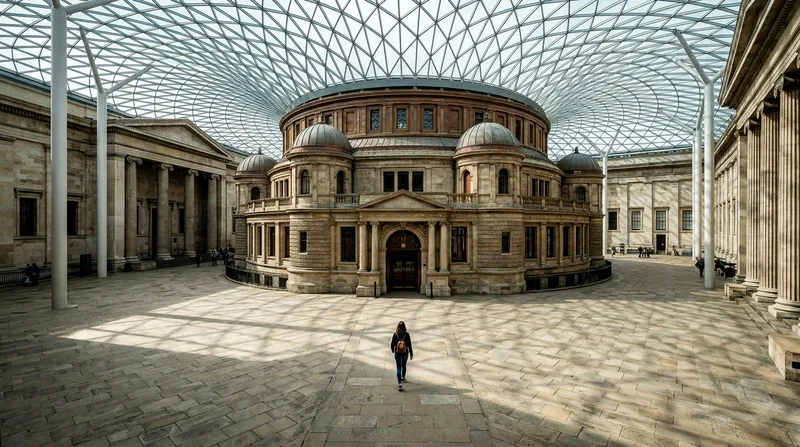
The British Museum sits in Bloomsbury, a 10-minute walk from Russell Square or Holborn Tube stations, and houses the Rosetta Stone, the Parthenon sculptures and Egyptian mummies across a collection spanning two million years of human history. It's the UK's most visited attraction, and that popularity is itself worth factoring into your plan — arrive at opening time (check current hours when booking) or come in the last two hours of the day to avoid the worst of the crowds. The Imperial War Museum in Lambeth is less central but far less crowded, with free permanent galleries covering both World Wars and more recent conflicts; it pairs well with a walk along the South Bank toward Tate Modern.
Free Galleries in London
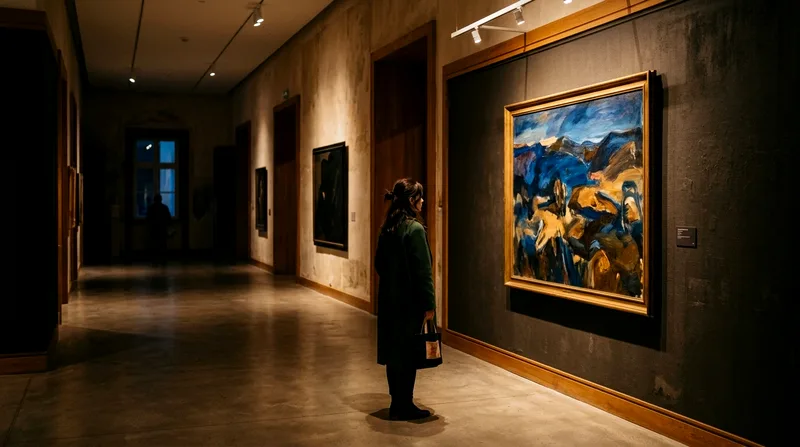
Free galleries in London follow the same national-funding logic as the museums, and the big four — National Gallery, National Portrait Gallery, Tate Modern and Tate Britain — cover almost every period of Western art without charging a penny for the permanent collection. If you only have time for one, I'd send most first-time visitors to the National Gallery for breadth (Van Gogh, Vermeer, Turner, da Vinci, all under one roof) and art-focused visitors to Tate Modern for scale and ambition.
National Gallery and National Portrait Gallery
Both sit on or just off Trafalgar Square, making this one of the easiest free-culture combinations in the city — you can do both in one visit without moving more than 200 meters. The National Gallery holds over 2,300 Western European paintings from the 13th to 20th centuries; the National Portrait Gallery, reopened after a major refurbishment, focuses on faces rather than movements — useful if you find gallery fatigue setting in faster with unfamiliar landscapes and still lifes. Charing Cross station is the nearest rail and Tube hub, a two-minute walk.
Tate Modern and Tate Britain
Tate Modern, in a converted power station on the South Bank, holds the free permanent collection of international modern and contemporary art — and the Turbine Hall alone, a cavernous former generator room, is worth the walk even if you're not usually drawn to modern art. Tate Britain, a 40-minute riverside walk away (or a free Tate-to-Tate boat, which does charge a fare), focuses on British art from 1500 to the present, including the largest Turner collection anywhere. I find Tate Modern consistently more rewarding for first-time visitors; Tate Britain rewards people who already know British art history and want depth over spectacle.
Special Exhibitions That Need a Paid Ticket
This is the part that catches people out, so read it before you book anything. Every museum named above offers free permanent collections but regularly runs ticketed special exhibitions — a Vermeer loan show, a major fashion retrospective at the V&A, an Ancient Egypt blockbuster at the British Museum. These sit in separate, often purpose-built gallery spaces within the same building, and prices vary by exhibition, so I won't quote figures here — check the museum's own website for the current exhibition and its price before you travel.
My view: most visitors don't need the paid exhibition. The permanent collections are deep enough that you could spend a full day in the British Museum or V&A and never touch a ticketed room. Pay for the special exhibition only if it covers an artist, era or theme you specifically came to see — not because it's the thing everyone's talking about that month.
How to tell free from ticketed displays
Ticketed exhibitions are almost always signposted separately from general admission — look for a distinct name (not just "Egyptian Sculpture Gallery" but "Pharaohs of the Sun: A Special Exhibition"), a separate entrance or barrier with staff checking tickets, and its own listing on the museum's website with a price next to it. If a gallery requires you to scan a ticket or wristband to enter, it's paid. The general rule: permanent collection galleries have open doorways and no checks; special exhibitions have a controlled entry point.
Booking tips without overpaying
Book directly through the museum's official website rather than third-party resellers, who sometimes add booking fees for tickets that cost nothing extra at the source. Many museums offer discounted rates for students, under-18s, and sometimes last-entry or weekday morning slots — worth checking if you're flexible on timing. If a major exhibition is fully booked weeks out (this happens with blockbuster shows at the British Museum and Tate Modern), don't pay a premium through a secondary site; it's usually better to pick a different ticketed show or simply enjoy the free collection instead.
Planning Your Visit: Access, Crowds and Transport
Free admission doesn't mean the logistics take care of themselves. London's major museums can feel genuinely overwhelming on a wet Saturday in August, when half the city's tourists have the same idea you do. A little planning saves real time.
Best times to avoid crowds
Weekday mornings, right at opening, are consistently the quietest window at every venue on this list — arriving even 30 minutes after opening at the British Museum or Natural History Museum can mean a noticeably longer entry queue. School holidays (particularly the summer break and the week around Christmas and Easter) bring far more families, which is good news if you're traveling with kids wanting company but tougher if you want quiet galleries. Tuesdays and Wednesdays tend to be calmer than weekends across the board. Avoid the last Sunday of a half-term week if you can — it's reliably the busiest combination I'd flag for anyone planning around crowd levels rather than just opening hours.
Step-free access and getting there by Tube
Most of these museums have step-free or lift access throughout, including the British Museum, Natural History Museum, Science Museum, V&A, National Gallery and both Tate sites — a genuine advantage for senior travelers or anyone with mobility needs, especially compared with some older European museum buildings in Rome or Paris that still have unavoidable stairs. Transport for London's step-free Tube map (available on the TfL website) is worth checking before you travel, since not every Tube station on this list has step-free access even if the museum itself does — South Kensington and Russell Square both have some step-free routes but not every platform. Buses are a reliable backup; most routes are fully accessible.
Family-Friendly and Online Free Options
Free museums are one of the genuine budget wins for families in London, where a day out can otherwise run up fast between transport, food and paid attractions. The permanent collections above cost nothing for any number of children, and most have dedicated family trails, activity backpacks or hands-on zones that don't require separate payment.
Best free museums for kids
The Natural History Museum wins for younger children almost every time — dinosaurs and the blue whale skeleton do a lot of heavy lifting with a six-year-old's attention span. The Science Museum's interactive galleries suit slightly older kids (roughly 7 and up) who want to press buttons and run experiments rather than just look. The British Museum works well for curious 10-plus kids, particularly around the Egyptian mummies, but it's less forgiving for toddlers given the scale of the building and the amount of walking involved. I'd avoid attempting the V&A with under-7s on a first visit — it's a brilliant museum, but its appeal is more adult and design-literate than immediately hands-on.
Virtual tours and online collections
Several of these institutions also offer free online collections worth knowing about before or after your trip — useful for trip planning, homework projects, or simply revisiting something you saw. The British Museum, National Gallery and Tate all publish searchable online collection databases with high-resolution images of thousands of works, free to browse without registration. These aren't a substitute for standing in front of the real object, but they're a genuinely useful planning tool — search the collection online first, note down three or four works you actually want to see, and you'll move through the physical museum with far more purpose than wandering room to room.
Frequently asked questions
Which museums in London have free admission?
The British Museum, National Gallery, National Portrait Gallery, Natural History Museum, Science Museum, Victoria and Albert Museum, Tate Modern, Tate Britain and Imperial War Museum all offer free entry to their permanent collections. This applies to UK residents and overseas visitors alike — no ID, booking fee or residency proof required for general admission.
Which is the best free museum to visit in London?
For most first-time visitors, the British Museum offers the broadest single collection, covering world history from Ancient Egypt to the present. If you prefer art, the National Gallery gives you more variety per hour than any other free gallery in the city. Families with younger children usually get more out of the Natural History Museum.
Are special exhibitions in free London museums free?
No — special or temporary exhibitions inside otherwise free museums usually require a separate paid ticket, with prices varying by show. The permanent collection stays free regardless; only the clearly signposted, separately ticketed exhibition spaces charge. Check the museum's website for the current exhibition and price before visiting.
What are places to visit in London for free?
Beyond the national museums and galleries, free options include the Houses of Parliament exterior and Westminster Abbey's cloisters (though the abbey interior charges), walking the South Bank, Hyde Park, Greenwich Park, and the permanent collections of the Design Museum and Wellcome Collection. Combine two or three in one day since most are within walking distance of each other.
Do you need to book tickets for free museums in London?
Generally no, but some museums — notably the British Museum and Natural History Museum — introduce free timed-entry booking during peak periods like summer and school holidays to manage queues. It costs nothing to book, but skipping it when it's in effect can mean standing in a longer line at the door.