Plan your visit to the V and A Museum London: which exhibitions sell out, how to book tickets, and the best free galleries in South Kensington.
What the V&A Is and Why Go
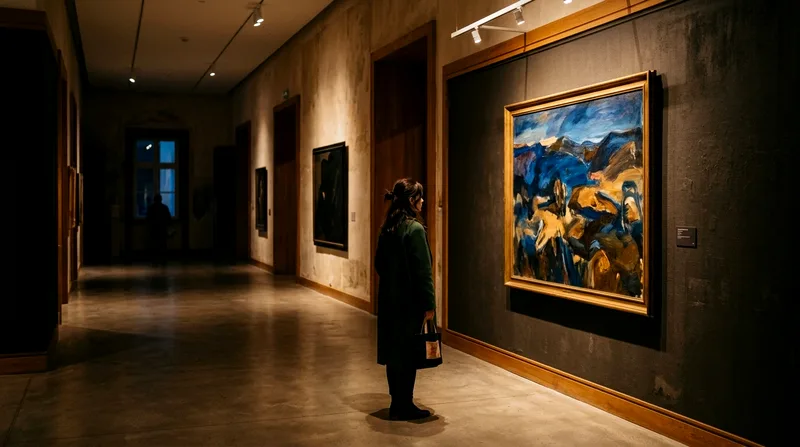
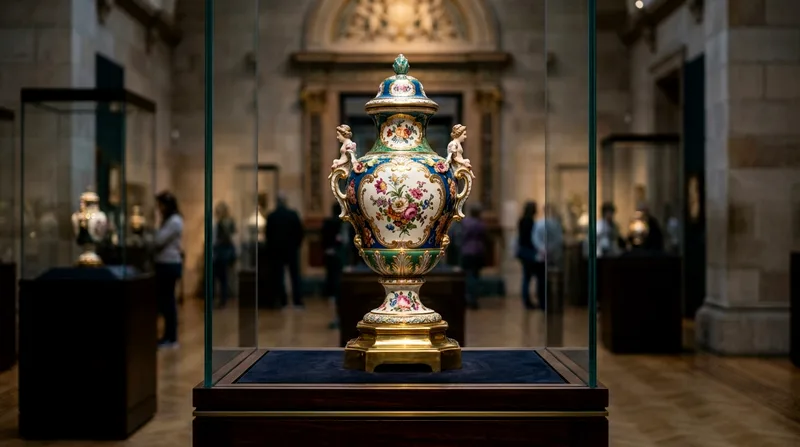
The Victoria and Albert Museum — almost everyone just says "the V&A" — is the world's largest museum of applied and decorative arts, design and performance. Fashion, ceramics, jewellery, sculpture, architecture, theatre costumes, photography: it's all here, spread across roughly 145 galleries in a building that's itself worth studying. If you only know London's museums through the British Museum or the Natural History Museum next door, the V&A feels different — less about ancient civilizations, more about how humans have made beautiful and useful things across six centuries.
I'd put it above the Design Museum in Kensington for scale, ahead of most design-focused museums in Paris or Amsterdam for sheer breadth. The Musée des Arts Décoratifs in Paris covers similar ground but at a fraction of the size. What the V&A does particularly well is juxtaposition — you can walk from Raphael's cartoons to a room of Islamic ceramics to a display of 1960s punk fashion within twenty minutes, which either delights you or leaves you a bit scattered. Pick which type of visitor you are before you go.
Location and getting there
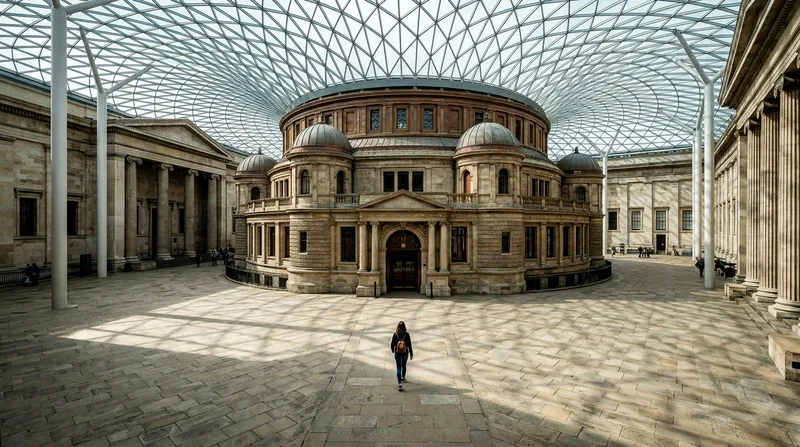
The main museum sits on Cromwell Road in South Kensington, directly opposite the Natural History Museum and a short walk from the Science Museum. The nearest station is South Kensington on the Piccadilly, Circle and District lines — there's a tunnel connecting the station to the museum quarter that's handy in bad weather, though it can feel like a maze the first time. Bus routes 14, 74 and C1 all stop nearby if you prefer surface travel. Driving isn't worth it; there's no dedicated parking and Kensington's resident parking zones are unforgiving.
Main V&A versus V&A East
V&A East Museum, which opened in Queen Elizabeth Olympic Park in Stratford, is a separate site — not a satellite gallery of the same collection. It focuses on design, making and behind-the-scenes storage access, including a large working collection you can view up close. If you're only in London for a day or two, stick with the South Kensington building; it has the depth and the famous galleries. V&A East is worth a special trip if you're already doing the Olympic Park, the ArcelorMittal Orbit, or a Stratford shopping day, but it shouldn't replace the original on a first visit.
How to Visit: Independently or Guided
Most people visit the V&A independently, and for good reason — entry to the permanent galleries is free, there's no mandatory booking slot for general admission, and the building is easy enough to navigate with a printed map from the information desk near the Cromwell Road entrance. You lose nothing by skipping a guide if you're happy to read gallery labels and wander with intent.
Where a guide earns its cost is context. A volunteer-led gallery talk — usually free, offered a few times a day and listed at the information desk — gives you the kind of detail a label can't: why the Cast Courts exist, how the Jameel Gallery's plasterwork was made, what the V&A's founding after the Great Exhibition of 1851 actually meant. Paid guided tours bought through third-party operators tend to bundle the V&A with other South Kensington museums or combine it with a Kensington Palace walk — useful if you want a structured day without planning it yourself, less useful if you already know what you want to see.
Self-guided visit with a gallery plan
Grab the free floor plan at the entrance and pick three or four galleries before you start — the building's scale punishes aimless wandering. A sensible route: Cast Courts on the ground floor, the Fashion Gallery, the Jewellery Gallery (keep valuables close; it gets tight), then up to the British Galleries if you have time. Budget two hours for a focused visit, three to four if you're adding a ticketed exhibition. Most visitors on TripAdvisor and Google reviews flag the same thing: it's easy to underestimate how big the museum is and run out of energy before covering half of it.
Guided tours and family-friendly options
Families should look at the V&A's own family trails and activity backpacks, available at the desk, rather than paying for an external tour — they're designed for children aged five to twelve and keep kids engaged through the Cast Courts and the Theatre and Performance galleries without needing a paid guide. For a more structured family day combining multiple museums, some guided options bundle the V&A with the Science Museum, which works well if you have a mixed-interest family — one child wants dinosaurs and rockets, another wants costumes and ceramics.
V&A Exhibition Tickets and Free Entry
Here's the split that confuses first-time visitors: general admission to the V&A's permanent collection is free, full stop, no ticket required. What costs money are the temporary blockbuster exhibitions — these rotate through subjects like fashion designers, major design movements, or pop culture retrospectives, staged in dedicated ticketed gallery spaces usually on the lower level or in the Sainsbury Gallery. Expect a paid exhibition ticket to run somewhere in the range of a mid-priced London museum show — always check the current price on the official V&A website, since it varies by exhibition and whether you're a member.
The permanent V&A galleries are free with no booking needed, while ticketed exhibitions require advance booking especially for fashion-themed shows.
V and A Museum London visit options compared: cost, booking and best for
| Visit type | Cost | Booking needed | Typical duration | Best for |
|---|---|---|---|---|
| Permanent galleries | Free | No | 2-4 hours | First-time visitors, families, free-entry seekers |
| Ticketed exhibition | Paid, varies by show | Yes, timed entry | 1-1.5 hours | Fashion and design enthusiasts |
| Friday Late event | Free | Sometimes, check calendar | 2-3 hours evening | Couples, solo travellers, adult-only atmosphere |
| V&A East Museum | Free (check current policy) | No for general entry | 1-2 hours | Design collection access, Stratford day trips |
| Guided gallery talk | Free | No, join at scheduled time | 30-45 minutes | Context-seekers without extra cost |
Prices and booking requirements change by exhibition and season, so confirm current details on the official V&A website before you travel.
Which exhibitions sell out and why
Fashion and pop-culture exhibitions are the ones that sell out — anything tied to a famous designer, a major music or film tie-in, or a limited-run loan from another institution. The V&A has built a reputation for this kind of show, and demand regularly outstrips the timed-entry slots in the final weeks of a run. Smaller design or photography exhibitions rarely sell out and can often be booked the same week, sometimes the same day.
How to book and avoid missing out
Book directly through the V&A's official site as soon as an exhibition is announced if it's fashion-related or has obvious mainstream appeal — these are the ones that vanish from the calendar weeks before closing. Timed-entry slots release in batches, and the museum sometimes adds extra evening slots during late openings, so if your preferred date is sold out, check back rather than assuming it's permanently gone. Avoid third-party resale sites charging a premium on top of face value; the V&A's own booking system is reliable and doesn't need a markup.
Free Permanent Galleries Worth Seeing
This is where the V&A earns its reputation, and it's the section I'd tell a first-timer to read most carefully. The free galleries aren't an afterthought to the ticketed shows — they're the reason people compare the V&A favourably to the Victoria-era design collections in Edinburgh's National Museum of Scotland or the applied arts wings of Rome's smaller civic museums, both good but neither matching this scale for free.
Worth seeing collections and highlights
The Cast Courts are the single most photographed free gallery — full-scale plaster casts of Trajan's Column (cut in two to fit the ceiling height) and a replica of Michelangelo's David stand among dozens of others, originally made so Victorian students could study European sculpture without travelling to Italy. The Fashion Gallery rotates historic and contemporary garments; the Jewellery Gallery holds one of the most thorough collections in the world across four centuries. Don't skip the Raphael Cartoons room or the ironwork and stained glass in the medieval and Renaissance galleries — both consistently underrated compared with the louder Cast Courts.
Photography, accessibility and facilities
Photography without flash is generally permitted throughout the permanent galleries, though some ticketed exhibitions restrict or ban cameras entirely — check signage at the entrance of each show. The museum is step-free throughout with lifts to all floors, accessible toilets on multiple levels, and wheelchairs available to borrow at the information desk on a first-come basis. The John Madejski Garden courtyard, with its shallow reflecting pool, is a genuinely good spot to rest — benches, café access nearby, and usually quieter than the galleries on a sunny afternoon.
Best Time to Visit the V&A
Weekday mornings, right at opening, are consistently the calmest window — school groups tend to arrive from mid-morning, and weekend afternoons get noticeably busier in the Cast Courts and Fashion Gallery, the two most Instagrammed rooms in the building. Check current opening hours on the official V&A website before you travel, since they can shift around public holidays.
Quieter days and times
Tuesday and Wednesday mornings tend to be the quietest combination, based on general museum crowd patterns across South Kensington. Avoid the first two hours after opening on weekends and avoid school holiday afternoons if you dislike crowds — the museum is a known rainy-day refuge for London families, and wet half-term days bring noticeably more pushchairs through the entrance hall.
Late openings and free events
The V&A has historically run Friday Late events — free evening openings with talks, music and a different atmosphere from the daytime crowd, aimed at adults more than families. These aren't guaranteed every week, so check the official events calendar close to your visit. They're worth building an evening around if your dates line up; it's one of the better free culture nights in London, arguably more interesting than a similar late-opening format at the Louvre or the Rijksmuseum, simply because the V&A's design and fashion focus suits a relaxed evening crowd.
Nearby Add-Ons in South Kensington
South Kensington packs three major museums within a five-minute walk of each other, which makes it one of the most efficient museum clusters in Europe — more concentrated than the Museumsinsel layout in Berlin and easier to combine in one day than Rome's scattered Vatican and Capitoline sites.
Natural History and Science Museums
The Natural History Museum sits directly across the road, free like the V&A, and dominated by the blue whale skeleton in Hintze Hall and the dinosaur gallery that draws the longest queues in school holidays. The Science Museum is a few minutes further on, also free for general admission, with hands-on galleries that suit children better than the V&A's more contemplative pace. Doing all three in one day is ambitious — I'd cap it at two unless you're happy to move fast and skip detail.
Hyde Park, Harrods and cafés
Hyde Park is a ten-minute walk north, good for decompressing after a few hours of galleries, especially with children who've had enough of being told not to touch things. Harrods on Brompton Road is about fifteen minutes on foot — worth a look at the food hall even if you've no intention of buying anything at those prices. For a sit-down break, the V&A's own café in the Gamble Room is one of the oldest museum cafés in the world and worth the stop on its own merits, rather than just as a rest point.
Frequently asked questions
Is the V&A museum free to enter?
Yes — general admission to the permanent collection at the Victoria and Albert Museum in South Kensington is free for everyone, no ticket or booking required. Only the temporary ticketed exhibitions, usually fashion or design blockbusters, charge an entry fee.
How do I book V&A exhibition tickets?
Book directly through the official V&A website, where timed-entry slots are released for each exhibition. Popular fashion-themed shows sell out weeks before closing, so book as soon as dates are announced rather than waiting. Avoid third-party resale sites that add a markup over face value.
What are the highlights of the V&A museum?
The Cast Courts with their full-scale plaster replicas of Trajan's Column and Michelangelo's David are the standout free gallery, alongside the Fashion Gallery, the Jewellery Gallery, and the Raphael Cartoons room. Google Arts and Culture also hosts a digital preview of several V&A collections if you want to scout highlights before you go.
Can you take photos in the V&A museum?
Photography without flash is generally allowed throughout the permanent galleries. Some ticketed temporary exhibitions restrict or prohibit photography entirely, so check the signage posted at each exhibition entrance before raising your camera.
Where is the V&A museum located?
The main Victoria and Albert Museum is on Cromwell Road in South Kensington, opposite the Natural History Museum and near the Science Museum. The nearest station is South Kensington, served by the Piccadilly, Circle and District lines, with a pedestrian tunnel linking the station directly to the museum quarter.