Understand the London zones map: which zone is central London, where major attractions sit, and how zones shape daily fare caps and Travelcard choices.
How the London Zones Map Works
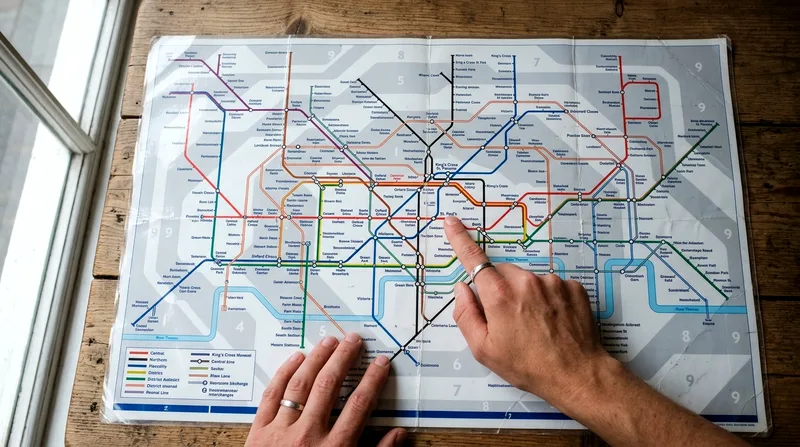
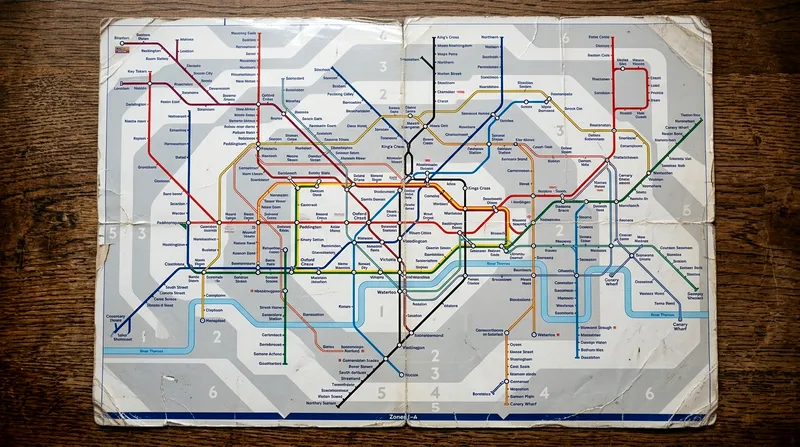
Open the London zones map for the first time and it looks like a target — concentric rings fanning out from the centre, numbered 1 to 9. That's deliberate. Transport for London (TfL) built the fare zone system in the 1980s to make pricing predictable: the further you travel from the centre, the more you pay, regardless of which direction you're heading or which line you take.
Here's the part visitors miss: the zones aren't a separate map from the Tube map. They're printed right onto it, as pale background bands behind the coloured lines. If you've ever studied the Tube map and wondered what those faint grey numbers meant, that's your answer. Every station sits in at least one zone, and the fare between any two stations is based entirely on which zones you cross, not the distance in miles or the number of stops.
Nine concentric zones explained
Zone 1 is the bullseye — the historic core of London, roughly bounded by the Circle line. Zones 2 through 6 ring outward through inner and outer London, covering most of what visitors would recognise as "London" at all, including Heathrow Airport in Zone 6. Zones 7, 8 and 9 stretch into the commuter belt — Watford, Chesham, Epping — places almost no tourist itinerary needs. If you see a hotel listing itself as "Zone 4" or beyond, understand you're looking at 25-40 minutes of Tube time into the centre, not a short hop.
Transport modes that use zones
The zone system isn't exclusive to the London Underground. It also governs fares on the London Overground, the DLR (Docklands Light Railway), the Elizabeth line, Tramlink in south London, and most of Thameslink's London stretches. This matters because visitors often assume the Overground or DLR are somehow "extra" or separate — they're not. A journey from Zone 2 to Zone 1 costs the same whether you take the Tube, the Overground, or the DLR, assuming you're using Oyster or contactless. National Rail services into London termini also use zones, but check before assuming a Travelcard covers every rail operator, since a few suburban routes have their own rules.
Which Zone Is Central London?
Zone 1 is central London — full stop. It's where you'll find the vast majority of what brought you to the city in the first place. If a hotel search result shows "Zone 1," you can book with confidence that you're walking distance from major sights or one or two Tube stops away. This is the single most useful shortcut on the whole zones map for trip planning.
Zone 1 boundaries and key areas
Zone 1 roughly covers the area inside and just beyond the Circle line loop: Westminster, the West End, the City of London, South Bank, and parts of Kensington and Chelsea. Covent Garden, Soho, Oxford Street, the Tower of London, Borough Market, and Big Ben all sit inside it. If you're comparing London to Paris, think of Zone 1 as roughly equivalent to the first four Paris arrondissements combined — dense, walkable, and where almost all the sightseeing energy concentrates. Unlike Amsterdam's compact old centre, though, Zone 1 is large enough that you'll still want the Tube or bus for some cross-town hops, say from the Tower of London to Notting Hill.
Stations on zone borders
Some stations straddle two zones — this trips up even confident travellers. Highbury & Islington, for example, counts as both Zone 1 and Zone 2, and so does Earl's Court, Fulham Broadway and a handful of others. If your journey starts or ends at one of these dual-zone stations, you're charged whichever zone combination produces the cheaper fare. Don't assume a station belongs to just one zone because of what a hotel listing or Airbnb map snippet tells you — check the official TfL Tube map, which marks boundary stations clearly with overlapping zone shading.
Which Attractions Sit in Which Zones
London attractions by zone follow a predictable pattern: the closer to the centre, the denser the concentration of must-visit sights, and the further out, the more you're trading convenience for space, lower crowds, or a specific niche interest like Wimbledon or Kew.
Zone 1 landmarks and museums
Buckingham Palace, the British Museum, the National Gallery, Westminster Abbey, the London Eye, St Paul's Cathedral, the Tower of London, and the West End theatre district are all in Zone 1. So are most of the free national museums. If your trip is three days or fewer, you could realistically stay inside Zone 1 the entire time and not run out of things to do — that's rare for a capital city this size. Compare that to Rome, where the major sights are spread across a wider historic centre with less transit infrastructure linking them, and London's concentration starts to look like a genuine planning advantage.
Zones 2-6 attractions and day trips
Zone 2 holds Camden Market, Greenwich (actually Zone 2/3 depending on the station), Notting Hill, and Hackney's street art scene. Zone 3 gets you to the Emirates Stadium and parts of Walthamstow. Zone 4 covers Wimbledon and Kew Gardens. Heathrow sits in Zone 6, which matters for airport transfer budgeting — the Piccadilly line from Heathrow into central London takes roughly 50-60 minutes and crosses all six zones, while the Elizabeth line and Heathrow Express are faster but cost more and follow different fare rules. If you're staying near Wembley Stadium (Zone 4) for a concert, don't expect a five-minute Tube ride back to your Zone 1 hotel afterward — budget 30-40 minutes.
How Zones Affect Fares and Daily Caps
The London fare zones aren't just geography — they're the entire pricing engine. Every pay-as-you-go journey on Oyster or contactless is automatically priced by the zones you pass through, and TfL applies a daily cap so you never pay more than a certain amount in a single day regardless of how many trips you take. This is genuinely one of the more traveller-friendly systems you'll find compared to Barcelona's zone-based T-Casa cards or Dublin's Leap card, mainly because London's capping is fully automatic — you don't have to pre-select a zone combination before travelling.
Zone 1 holds the highest concentration of major attractions, while Zones 2-6 add specific sights, airports and day-trip destinations worth the extra travel time.
London zones map comparison: zones, key areas and typical use for visitors
| Zone | Typical Areas | Visitor Relevance | Tube Travel Time to Zone 1 |
|---|---|---|---|
| Zone 1 | Westminster, West End, City of London, South Bank | Core sightseeing, hotels, theatre | 0-10 min |
| Zone 2 | Camden, Greenwich, Notting Hill, Hackney | Markets, parks, boundary attractions | 10-20 min |
| Zone 3 | Wimbledon fringe, Walthamstow, parts of Stratford | Local neighborhoods, occasional events | 20-30 min |
| Zone 4 | Wimbledon, Kew Gardens, Wembley | Day trips, stadium events | 25-40 min |
| Zone 5 | Richmond, Harrow | Parks, suburban day trips | 30-45 min |
| Zone 6 | Heathrow Airport, Croydon | Airport transfers | 45-60 min |
Travel times are approximate and vary by line, service pattern and time of day; always check live journey planners before travelling.
How zone combinations change the fare
A journey entirely within Zone 1 costs less than one that crosses into Zone 2, and a Zone 1-4 journey costs more again. The system charges based on the zones touched, not stops travelled, so a short hop from Zone 1 into Zone 2 and back can sometimes cost nearly as much as a longer Zone 1-only trip. For exact current figures, always check TfL's official fare pages before you travel — fares are reviewed periodically and this guide won't quote numbers that go stale.
Peak, off-peak and Night Tube basics
Fares are higher during peak hours, roughly the weekday morning and evening commute windows, and cheaper off-peak and on weekends. If your itinerary is flexible, shifting a Zone 1-3 trip to after 9:30am can shave a noticeable amount off the cost. The Night Tube, running on selected lines on Friday and Saturday nights, uses the same zone-based fares as daytime off-peak travel — a genuine advantage over Paris or Rome, where late-night metro options are far more limited.
Choosing the Right Travelcard or Payment Method
This is where most visitors overthink things. The London zone system decides your fare automatically — your job is just picking the right payment method for your trip length and travel pattern.
Oyster vs contactless vs Travelcard
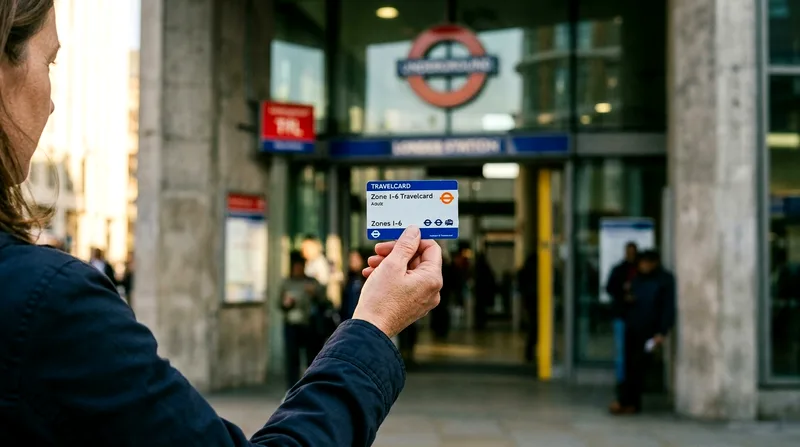
For most visitors from Europe, a contactless bank card or phone wallet is the simplest choice — tap in, tap out, daily cap applied automatically, no card to buy or top up. An Oyster card requires an upfront refundable deposit and a top-up, useful mainly if your card issuer charges foreign transaction fees that would eat into the savings. A paper or digital Travelcard, bought for specific zones (say, Zones 1-2) and a set number of days, only makes sense if you're travelling in a large group where splitting fares is awkward, or if you specifically need unlimited travel across zones your daily cap wouldn't naturally reach. For nearly everyone else, it's an unnecessary extra step.
Which option suits a short or long stay
On a trip of under a week, stick with contactless — the automatic capping does the same job a Travelcard would, without the upfront cost or the risk of buying zones you don't use. If you're staying over a month, or returning to London regularly, an Oyster card with a registered season pass becomes worth the hassle. Families should note that children under 11 travel free on most services when accompanied by an adult using Oyster or a contactless-linked Zip card, which is worth setting up before a trip with kids rather than discovering it at the gate.
Common Zone Mistakes Visitors Make
The most frequent error is booking a hotel based on price alone and not checking its zone — a room that looks like a bargain in Zone 4 can cost an extra £10-15 a day in fares and 20-30 minutes of extra travel time each way compared to a pricier Zone 1 option. Over a five-night stay, that gap in cost and time can erase whatever you saved on the room.
The second mistake is assuming the zone number reflects distance from the airport or a specific neighbourhood's reputation, rather than distance from central London specifically. Zone 3 in north London and Zone 3 in south London are nowhere near each other — the zones are circular bands, not directional sectors with consistent character.
The third: forgetting that boundary stations exist, and either overpaying by assuming the more expensive zone or under-budgeting a journey that actually needs an extra zone. And a smaller but common slip — tapping in with contactless on one card and accidentally tapping out with another (a different bank card or phone), which triggers an incomplete journey charge, often the maximum possible fare for that line. Keep one card or device assigned to travel for the whole trip and this never becomes a problem.
Zone 1 covers nearly everything on a typical visitor's list — the palaces, the museums, the markets, the theatres — so when you're booking accommodation, a London day tour, or a river cruise along the Thames, checking its zone first will tell you more about your actual day-to-day experience than star ratings ever will. Pair this zones map understanding with a solid London itinerary and the right attraction tickets, and the transport side of your trip stops being a puzzle and becomes background noise, which is exactly where it belongs.
Frequently asked questions
How many zones does London have?
London's transport fare system has nine zones in total, numbered 1 to 9, arranged as concentric rings around the city centre. Visitors rarely need to think about Zones 7-9, which cover far outer commuter towns like Chesham and Epping. Almost all sightseeing, shopping and nightlife happens within Zones 1-4.
Which zone is central London in?
Central London is Zone 1. It covers the historic core bounded roughly by the Circle line, including Westminster, the West End, the City of London and South Bank. If you're choosing a hotel and see "Zone 1" listed, that's the most central and typically most walkable option relative to major landmarks.
What are zones 5 and 6 in London?
Zones 5 and 6 cover outer London, including suburbs like Richmond, Harrow, Croydon and, importantly, Heathrow Airport, which sits in Zone 6. Visitors mainly encounter these zones when transferring to or from the airport, or visiting specific sights like Kew Gardens, which borders Zones 3 and 4.
How do London zones affect fares?
Fares are calculated by which zones your journey crosses, not the distance travelled or number of stops. A trip confined to Zone 1 costs less than one crossing into Zone 2 or beyond, and daily and weekly caps limit total spending automatically when you use Oyster or contactless. Check TfL's official fare pages for current prices, since they're reviewed periodically.
Which attractions are in which zones?
Most major attractions — the British Museum, Buckingham Palace, the Tower of London, Westminster Abbey, the London Eye — sit in Zone 1. Camden Market and Greenwich are in Zone 2, while Wimbledon and Kew Gardens are further out in Zones 3-4. Wembley Stadium is in Zone 4, and Heathrow Airport is in Zone 6.