Oyster card vs contactless for London visitors: compare fare capping, foreign card fees and child discounts to find the cheapest way to pay for transport.
Where Your London Transport Money Goes
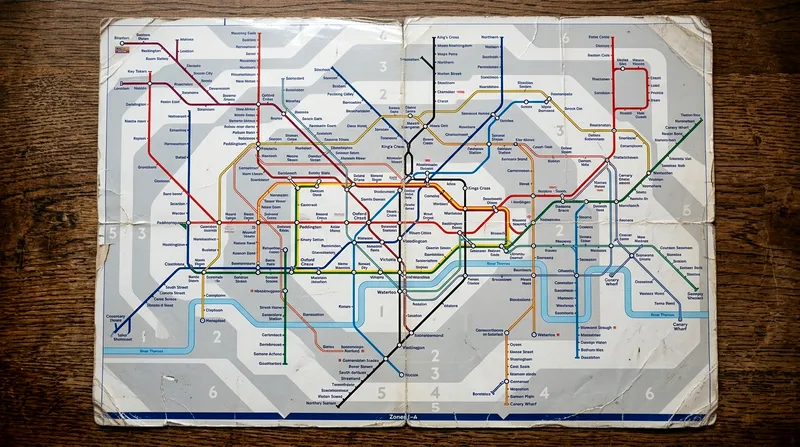
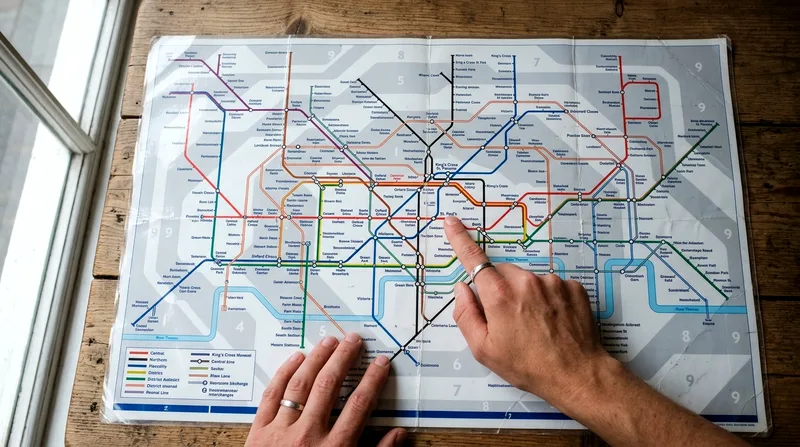
London's transport fares are built around zones, not distances in miles or kilometres. Zone 1 covers the centre — Westminster, the City, most of the big sights — and the numbers climb outward to Zone 9 near Heathrow and the far suburbs. Almost everything a visitor wants to do sits in Zones 1 and 2, which matters because fares are priced per zone combination, and sticking to central London keeps costs predictable.
Peak and off-peak timing also changes what you pay. Peak fares apply roughly during the morning and evening rush (weekday mornings and early evenings), and they're noticeably higher than off-peak fares. If you're not tied to a work schedule, travelling after 9:30am or outside the evening crush saves money on every single tap, whether you're on Oyster or contactless.
Pay-as-you-go is the default mode for both payment types now — you tap in, tap out, and the system calculates the fare based on zones travelled and time of day. This is different from Paris, where you typically buy a carnet of tickets or a Navigo pass upfront, or Amsterdam, where the OV-chipkaart works on a similar tap system but with different capping rules. London's model is more forgiving for visitors who don't know their exact itinerary in advance, because you're never locked into a ticket type before you've even left the airport.
Zones, peak times and pay-as-you-go fares
Single pay-as-you-go fares vary by mode too — the Underground, buses, Overground, the Elizabeth line and most National Rail services within London all accept the same Oyster and contactless taps, but bus fares are flat regardless of distance, while Tube and rail fares depend on zones crossed. Buses never charge peak fares, which makes them a genuinely cheaper option for short hops if you're not in a rush. Check TfL's official fare finder before you travel for the current pay-as-you-go rates by zone, since these are adjusted periodically and this page won't quote figures that go stale.
How Fare Capping Saves You Money
Fare capping is the single most useful thing to understand before you start tapping around London, and it's also the thing most visitors never read about until after their trip. Both Oyster and contactless have a daily cap — a maximum amount you'll be charged in a 24-hour period no matter how many journeys you make. Once you hit the cap, every further tap that day is free.
There's also a weekly cap that kicks in automatically if your week's travel would otherwise cost more than a 7-day cap threshold. The system totals your taps across Monday to Sunday and charges the lower of the two. This means a family doing five Tube rides a day sightseeing doesn't need to do any maths — the cap handles it in the background, deducting only up to the daily maximum.
Daily and weekly caps explained
The cap amount depends on which zones you travel through — a Zone 1-2 cap is lower than a Zone 1-4 cap, for example. For most visitors staying centrally and doing day trips to places like Greenwich or Kew, the Zone 1-2 or Zone 1-3 cap is what applies. Check the current cap amounts on TfL's website, since they're reviewed periodically, but the principle holds steady: four or five journeys in a day will often trigger the cap anyway, so there's rarely a reason to pre-buy a Travelcard for a short stay.
Why tapping the same method matters
Here's the catch that trips people up constantly: caps are calculated per payment method, not per person or per trip. If you tap in with your physical Oyster card in the morning and tap out with Apple Pay on your phone in the afternoon, the system sees two incomplete journeys and charges you the maximum fare for each — not the capped rate. Pick one method per day and stick with it. If you're switching between a physical card and a phone, that's the single most common way visitors accidentally overpay, and it's entirely avoidable.
Oyster vs Contactless: Cost Comparison
Here's the direct answer to the oyster card vs contactless question: the underlying fares are identical. TfL charges the same pay-as-you-go rate and applies the same daily and weekly caps whether you tap a plastic Oyster card or a contactless bank card, phone, or smartwatch. There is no loyalty discount for Oyster and no surcharge for contactless. Anyone telling you one is inherently cheaper than the other is working from outdated information or conflating it with foreign card fees, which is a separate issue entirely.
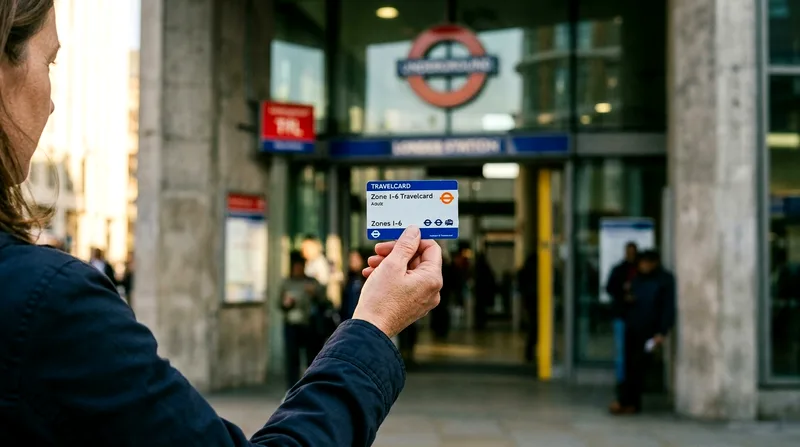
Where they differ is in logistics, not price. An Oyster card requires an upfront refundable deposit and either a top-up in cash or card at a station machine or shop. Contactless requires nothing beyond a card or phone you already own — you walk straight to the gate. For a two- or three-day visit, that's a meaningful time saving, especially if you land at Heathrow or Gatwick tired and just want to get into town.
Fares and caps are identical on Oyster and contactless, so the real differences are setup effort, foreign fees, and child eligibility.
Oyster card vs contactless payment in London: a side-by-side comparison for visitors
| Payment Method | Upfront Cost | Foreign Card Fees | Child Discount | Setup Time | Best For |
|---|---|---|---|---|---|
| Oyster card (bought in London) | Refundable deposit | None (cash top-up) | Yes, with Zip photocard | A few minutes at any station | Visitors wanting a cash option or avoiding bank fees |
| Visitor Oyster card | Small card fee plus postage | None (cash or pre-load) | Yes, with Zip photocard | Order 2-3 weeks ahead online | Fee-conscious travellers wanting the card pre-arrival |
| Contactless bank card | None | Possible, check your bank | No child rate available | Instant, already in your wallet | Short trips with a fee-free card |
| Apple Pay / Google Pay | None | Possible, check your bank | No child rate available | A few minutes to add card | Solo travellers and couples wanting speed |
Fare amounts and caps change periodically; always check TfL's official fares page for current figures before you travel.
Same fares, different trade-offs
The trade-off isn't cost, it's control and compatibility. Oyster gives you a tangible balance you can see and top up in cash, which matters if you don't want to expose a bank card to a foreign transit system, or if you're travelling with someone who doesn't have a contactless-enabled card at all — some older debit cards, particularly from outside the UK and EU, still aren't chip-and-PIN contactless. Contactless, meanwhile, means one less card to carry and no risk of losing a top-up balance if the card is lost, since it's tied to your bank account rather than a stored value.
Trip-length scenarios: weekend vs week
For a weekend trip — two or three days — contactless is almost always the better call for visitors from the US, Canada, Australia, or most of Europe, since you avoid the Oyster deposit and top-up hassle entirely. For a week or longer, the calculation shifts slightly: a physical Oyster card becomes a nice fallback if your phone battery dies or you want to keep transport spending separate from your main bank account, which some travellers prefer for budgeting. Either way, the fare total at the end of the week will be the same.
Foreign Card Fees and Visitor Oyster
This is where the real cost difference hides, and it has nothing to do with TfL. If your bank charges a foreign transaction fee — typically a percentage of each purchase, plus sometimes a flat currency conversion markup — every single tap on contactless becomes a separate foreign transaction. Do that forty or fifty times over a week-long trip and the fees add up far more than any difference in transport fares ever would.
Currency conversion and card charges
Check your bank's terms before you fly, not after. Cards from providers like Wise, Monzo, Revolut, or Chase (in the US) often waive foreign transaction fees, while many traditional high-street banks still charge them. If your only card charges a fee per transaction, loading a Visitor Oyster card or a standard Oyster card with cash sidesteps the problem entirely, since you're topping up once (or a few times) rather than paying a fee on every tap.
When a Visitor Oyster card makes sense
A Visitor Oyster card is ordered online before you travel and posted to your home address, arriving with a small initial credit loaded on. It makes sense if you want the card in hand before you land, want to avoid any foreign card fees entirely, or are travelling with children who need a photocard anyway. It makes less sense if you're coming from a country where cards with no foreign fees are easy to get, or if you're only staying a couple of days — in that case, the ordering lead time and postage cost aren't worth it. A standard Oyster card bought on arrival at any station does the same job for most people.
Child Discounts and Fares Not to Skimp On
Contactless has no concept of a child fare — a bank card or phone is always charged the full adult rate, regardless of the cardholder's age. This is the clearest case where Oyster beats contactless outright for a specific group of travellers: families.
Why children need their own card or pass
Children under 11 generally travel free on the Tube, DLR, London Overground, Elizabeth line and buses when accompanied by an adult, up to a limit of free child places per adult — check TfL's current rules, since the exact number is capped. Children aged 11 to 15 need a Zip Oyster photocard to get the discounted child rate; without one, they'll be charged full adult fare on contactless or an unregistered Oyster. Ordering a Zip card takes a few weeks and requires a passport photo and proof of age, so it's not something to sort out the week before you fly — plan ahead if your trip includes an 11-to-15-year-old doing a lot of independent travel.
Avoiding penalty fares from incorrect tapping
Forgetting to tap out — on the Underground, Overground, or National Rail — triggers a maximum fare charge, sometimes significantly more than the journey actually cost. It happens constantly to visitors rushing for a train. Buses only require a single tap in, so this risk doesn't apply there, but on anything with gates or validators at both ends, always tap out. If you're charged a maximum fare in error, you can usually claim it back through the TfL website using your account or card details, but it takes a few days and some admin you don't need on holiday.
Payment Checklist Before You Travel
Before you land, confirm three things: whether your bank charges foreign transaction fees, whether your card or phone supports contactless payment, and whether anyone in your group is a child who needs a Zip Oyster photocard. That's genuinely most of the decision-making done.
If you're travelling solo or as a couple with fee-free cards, skip Oyster altogether — tap in with your phone or card from the moment you land at Heathrow, Gatwick, or St Pancras if arriving via Eurostar from Paris or Brussels. If fees are a concern, order a Visitor Oyster card online at least two to three weeks ahead, or simply buy a standard Oyster card with a cash top-up at any Tube station on arrival — no pre-booking required for that option.
Setting up phone pay and the TfL app
Add your card to Apple Pay or Google Pay before you leave home, not at the gate — it takes a few minutes and saves fumbling with a queue of annoyed commuters behind you. Download the free TfL Go app once you arrive; it shows live Tube status, step-free access info, and journey planning, though it doesn't replace your payment method, just supports it. One genuine annoyance: the official TfL fare-checking tools online can be slow to reflect the exact pay-as-you-go total until a day or two after travel, so don't panic if your balance doesn't update instantly — check again the next morning before assuming you've been overcharged.
Frequently asked questions
Is Oyster card cheaper than contactless?
No — TfL charges the same pay-as-you-go fares and applies the same daily and weekly caps to both. The only way one becomes cheaper is indirectly, through foreign transaction fees your bank charges on contactless taps, or through child discounts that only apply with a registered Oyster photocard.
Do children get discounts with contactless?
No. Contactless payment always charges the full adult fare regardless of the cardholder's age. Children aged 11 to 15 need a Zip Oyster photocard to get a discounted rate, and under-11s travel free with an accompanying adult on most services, but only when using Oyster, not a bank card or phone.
Can I use my foreign debit card on London transport?
Yes, as long as it's contactless-enabled — look for the wave symbol on the card. It will work at Tube gates, on buses, and on the Elizabeth line and Overground. The caveat is foreign transaction fees: check with your bank before travelling, since some charge a percentage on every tap, which adds up over a multi-day trip.
How does fare capping work?
Once your taps in a single day reach a maximum amount for your zones, TfL stops charging you for further journeys that day. A separate weekly cap does the same across Monday to Sunday. Capping only works if you use the same payment method — card or phone — for every tap, all day, every day.
Is Oyster card worth it for visitors?
It's worth it if your bank card charges foreign transaction fees, if you're travelling with children who need a Zip photocard, or if you simply prefer a physical card with a visible balance. For a short trip with a fee-free card, contactless is faster and requires no setup at all.