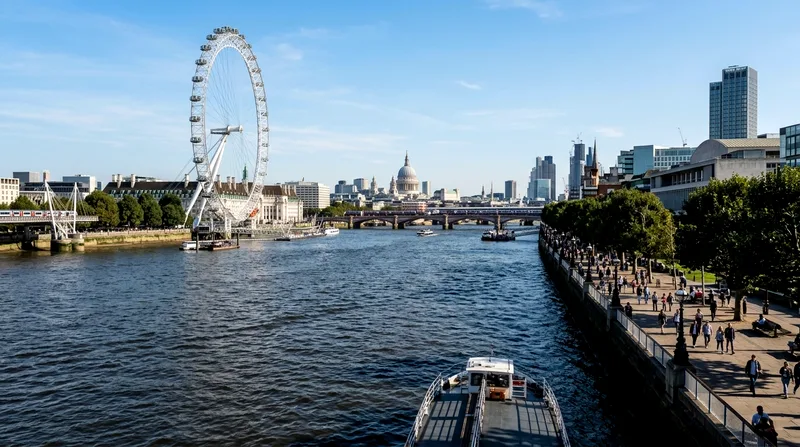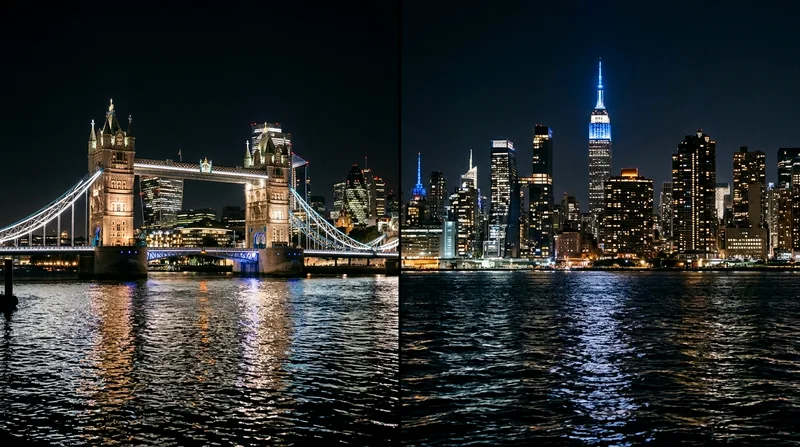
London vs New York for tourists: compare attraction costs, free museums, tours and transport to decide which city suits your travel style and budget.
London vs New York at a Glance
The London vs New York question comes up every time someone plans their first big transatlantic trip, and there's no single right answer — only a right answer for your travel style, budget and tolerance for crowds. Both cities claim roughly 8.8 to 8.9 million residents within city limits, both pull in over 20 million international visitors a year, and both can swallow a two-week itinerary without you running out of things to do.
The difference is in texture. London is a city built in layers — Roman walls under Victorian streets under glass office towers — and you feel that stacking everywhere you walk. New York feels assembled rather than layered: a grid imposed on the land in the early 1800s, then filled in fast with steel and ambition. If you like a city that rewards wandering without a map, London edges it. If you want a city that makes sense in twenty minutes because the street numbers tell you exactly where you are, New York wins.
I'd avoid picking either city based purely on film nostalgia. London isn't all red buses and tea rooms — large parts of it are glass-and-steel finance districts that could be anywhere. New York isn't all yellow cabs and steam vents — plenty of outer boroughs feel almost suburban. Go in with the real version of each city in mind, not the postcard one.
City size and character
London sprawls across roughly 1,570 square kilometres, far larger in area than New York City's five boroughs combined at about 780 square kilometres — but Manhattan itself is tiny and dense, which is why NYC feels more compact to a first-time visitor who sticks to Manhattan below 96th Street. London's tourist core — the West End, South Bank, Westminster, the City — is spread wider, and you'll do more walking or Tube-hopping to link sights. New York rewards a grid-based brain; London rewards patience with curving streets that rarely run straight for more than a few blocks.
Heritage versus modernity
This is where the two cities genuinely diverge. London's oldest standing structures predate the Norman Conquest of 1066 — the Tower of London dates to 1078 — and that depth of history shapes everything from pub architecture to street layout. New York's oldest buildings mostly date from the Dutch and early colonial period of the 1600s-1700s, with the skyline itself largely a product of the 20th century. If heritage and centuries-old institutions are what excite you, London has the edge by a wide margin. If you want to see modern architecture and skyscraper engineering at its most confident, New York's vertical skyline still outguns London's, where height restrictions near historic sites keep things lower in many areas.
Costs: Attractions, Food and Stays
Is London cheaper than New York? On balance, yes, for most categories a tourist actually spends money on — but not dramatically, and it depends heavily on exchange rates at the time you book. Numbeo's cost-of-living comparisons consistently place New York slightly higher than London on rent, restaurant meals and groceries, and that general pattern has held for years even as exact numbers shift. The Times and Travel and Leisure have both run comparison pieces reaching similar conclusions: New York tends to be pricier for meals out and mid-range hotels, while London pulls ahead on cheap museum access.
Where London saves you money isn't hotels — both cities have expensive central accommodation — it's the free national museums. The British Museum, National Gallery, Tate Modern, Natural History Museum and Science Museum charge no general admission. New York's equivalents — the Met, MoMA, the Guggenheim — all charge entry, though the Met technically operates on a "pay what you wish" basis for New York State residents only; out-of-state visitors pay the full posted price.
Food costs run closer than people expect. A casual sit-down meal in Manhattan and in central London land in a similar bracket once you account for New York's added sales tax and tipping culture, which can add 20-25% to your bill versus a London service charge that's often optional or already included. That tipping expectation genuinely catches first-time visitors off guard in New York — budget for it.
Relative cost level and where each city saves money
Think of it this way: New York saves you money if you're happy eating cheap — a slice of pizza or a bagel cart beats London's equivalent street food options on price and availability. London saves you money on culture, because the free-museum model means a family of four can spend four days sightseeing in South Kensington and Bloomsbury without a single admission fee. Transport passes are roughly comparable in daily cost. Hotels are the wild card — both cities have brutal peak pricing around major events, conventions or holidays, so a quiet October week in either city can be noticeably cheaper than July or December.
Seasonal price swings
London's shoulder seasons — March to May, September to October — bring lower hotel rates and thinner crowds at the big sights without sacrificing much weather. New York's summer heat and humidity push many travellers toward spring and fall too, which means both cities see similar seasonal demand spikes. The one real divergence: New York's Christmas period (late November through New Year) sees some of its steepest hotel rate increases of the year, driven by the holiday markets and Rockefeller Center crowds, often outpacing London's equivalent Christmas lights season around Oxford Street and Covent Garden.
Free Museums and Top Sights
This is the single biggest practical difference in the London vs New York attractions debate, and it's worth weighing heavily if you're traveling with a family or on a tight budget.
London generally offers lower-cost culture and easier navigation, while New York offers 24-hour transport and a more intense pace.
London vs New York comparison: cost, crowds, culture and transport at a glance
| Factor | London | New York City |
|---|---|---|
| Overall cost level | Moderate | Moderate-high |
| Free major museums | Yes, most national collections | No, standard admission applies |
| Public transport hours | Mostly daytime, limited Night Tube | 24 hours daily |
| Day trip options | Windsor, Oxford, Bath, Stonehenge | Hamptons, Philadelphia, upstate NY |
| Typical weather | Mild, frequently overcast | Hot humid summers, cold snowy winters |
| Best for | History, free culture, walkability | Nightlife, food variety, energy |
Costs and crowd levels shift with season and exchange rates, so compare current prices before booking flights or hotels.
Free attractions in each city
London's major national museums and galleries are free to enter, funded by public grants rather than ticket revenue — that includes the British Museum, Tate Britain, Tate Modern, the National Gallery, the V&A, the Natural History Museum and the Science Museum. You'll still pay for special ticketed exhibitions inside them, and donations are gently encouraged, but general collections cost nothing. New York has nothing quite equivalent at that scale — the Met, MoMA, the Whitney and the Guggenheim all charge standard admission in the $25-$30 range for non-residents, though some offer specific free or reduced-price evening hours worth checking before you go. New York's free standouts are mostly outdoor and civic: the Staten Island Ferry past the Statue of Liberty, walking the High Line, and wandering Central Park.
Landmarks and views
For elevated views, New York's observation decks — Top of the Rock, the Empire State Building, Edge at Hudson Yards — all charge admission in a similar bracket to London's The Shard or the London Eye. Neither city gives away its skyline view for free, though New York's Staten Island Ferry is a genuine exception: free, year-round, and it delivers a Statue of Liberty photo without a ticket. London's best free view is arguably from Primrose Hill or the top of the Monument (small fee) rather than anything in Zone 1 city center proper. For sheer landmark density per square mile, Westminster — with the Houses of Parliament, Westminster Abbey and Big Ben all within a ten-minute walk — beats most single New York neighbourhoods for compact sightseeing.
Getting Around and Day Trips
Transportation shapes how much you actually see in a short trip, and this is somewhere London has a genuine practical edge for visitors uncomfortable with subway systems.
Transport systems and ease of use
The London Underground is older — parts date to 1863 — but it's been modernised with contactless payment, clear zone-based fares capped daily, and step-free access signposted clearly on maps. The New York Subway runs 24 hours a day, which London's Tube only partially matches with its limited Night Tube on select lines on Friday and Saturday nights. That round-the-clock service is a real New York advantage if you're the type who wants a 2am ride home rather than a cab. On cleanliness and signage, London's system is generally easier for first-time international visitors to navigate — platforms are better signed, and the zone system is intuitive once you've ridden it twice. New York's subway can feel grittier and its lack of consistent air conditioning on platforms is a real complaint in summer. Both cities now use tap-to-pay contactless cards or phone payment, so you don't need to buy a physical pass in advance for either.
Nearby escapes and weather by season
London's day-trip radius is strong for history and countryside — Windsor Castle, Oxford, Bath and Stonehenge are all reachable in under two hours by train, and that kind of easy rail day trip is something New York can't match as cleanly; its equivalents (the Hamptons, upstate New York, Philadelphia) require more driving or a longer train ride. Weather favours neither city dramatically: London stays mild and grey much of the year, rarely extreme in either direction, while New York swings harder — properly cold winters with snow, properly hot and humid summers. If you dislike extremes, London's climate is the gentler bet.
Who Should Pick Which City
Safety is often the first question nervous first-timers ask, so let's deal with it directly: both London and New York are generally safe for tourists in central, well-trafficked areas, and most incidents involving visitors are opportunistic theft — pickpocketing on the London Underground or in crowded New York subway cars — rather than violent crime. Stick to well-lit, busy areas at night in both cities, be more alert around Leicester Square and Oxford Street in London (pickpocket hotspots) and around Times Square and parts of the subway late at night in New York, and you'll be fine in either.
First-timers, families and culture lovers
For a first trip, families with kids, and anyone who wants deep culture without constant admission fees, London or New York for a first trip usually tips toward London. The free museum model alone makes a family week dramatically cheaper, and London's compact royal and historic core — Westminster, the Tower, Buckingham Palace — groups major sights closer together than Manhattan's more spread-out landmarks. Senior travellers and those uneasy with subway navigation also tend to find London's system gentler to learn. European travellers get a shorter flight and no time-zone shock worth mentioning, which matters more than people admit on a one-week trip.
Nightlife, shopping and short-stay visitors
If you want round-the-clock energy, a wider range of global food on tap at 1am, and shopping that spans everything from SoHo boutiques to Fifth Avenue flagships, New York pulls ahead. Its nightlife runs later and the 24-hour subway genuinely supports that lifestyle, unlike London where last Tube trains on most lines still force a plan B after midnight on weeknights. Solo travellers after a fast-paced, high-stimulation short break — three or four days, high intensity — often prefer New York's density of experience per block. Couples wanting a big-city buzz with rooftop bars and late dinners will find New York slightly more geared toward that pace.
Verdict: London or New York?
Neither city "wins" outright, and anyone claiming otherwise is probably selling something. London suits travellers who want depth of history, free-entry culture, gentler weather and a transport system that's easier to learn in a day. New York suits travellers who want relentless energy, round-the-clock transport, and a faster, louder pace that doesn't let up after dark.
Compared with other classic European city breaks, London sits closer to Dublin and Amsterdam in terms of walkability and transit ease, but offers far more free museum content than either. Against Paris or Rome, London's free-culture advantage is even starker — the Louvre and the Vatican Museums both charge significant admission, while London's equivalents don't. If budget and culture-per-pound matter most, that pushes the scale firmly toward London.
My honest take: if this is your only transatlantic trip for a few years and you're choosing just one, pick London for the first visit if you're a European traveller, a family, or budget-conscious — the free museums and easier logistics make a real difference over a week. Pick New York if you specifically crave that high-octane American city energy and don't mind paying more for it. Either way, give yourself at least five full days; three-day trips to either city just skim the surface, and you'll spend more time in transit than in galleries.
If London wins out for you, it's worth building the trip around a Thames river cruise, a half-day Windsor Castle tour, or a West End show booking alongside the big free museums — that combination covers history, countryside and entertainment without blowing the budget on admission fees alone.
Frequently asked questions
Is NYC cheaper than London?
Generally no — New York tends to run slightly more expensive than London for restaurant meals, mid-range hotels and everyday costs, according to cost-of-living trackers like Numbeo. London claws back savings through its free national museums, which New York's major galleries don't offer. Exchange rates can shift the comparison, so check current rates before assuming either city is a bargain.
Which city is safer, London or New York?
Both are broadly safe for tourists in central, busy areas, with petty theft (pickpocketing) the most common tourist-related issue in each. Neither city has a meaningfully higher violent crime risk for visitors sticking to well-known tourist zones. Normal city precautions — watching bags on transport, avoiding empty streets late at night — apply equally to both.
What are the best free attractions in each city?
In London: the British Museum, National Gallery, Tate Modern and Natural History Museum, all free general admission. In New York: the Staten Island Ferry, the High Line, and Central Park, none of which require a ticket. London's advantage is that its free options are mostly indoor, world-class collections rather than outdoor spaces.
How do transportation costs compare?
Daily transport costs are broadly similar once you factor in contactless fare caps on the London Underground versus a flat-fare New York Subway. The real difference is service hours — New York's subway runs 24 hours, while London's Tube only offers limited Night Tube service on select lines on weekends, so late-night journeys in London may cost more via taxi or rideshare.
Which city has better cultural institutions?
It depends on what you value. London has more free-access major museums with deep historical and global collections, built on centuries of imperial-era acquisition. New York's paid institutions like MoMA and the Met are equally world-class but charge admission, and its contemporary art and design scene arguably has a sharper modern edge than London's.